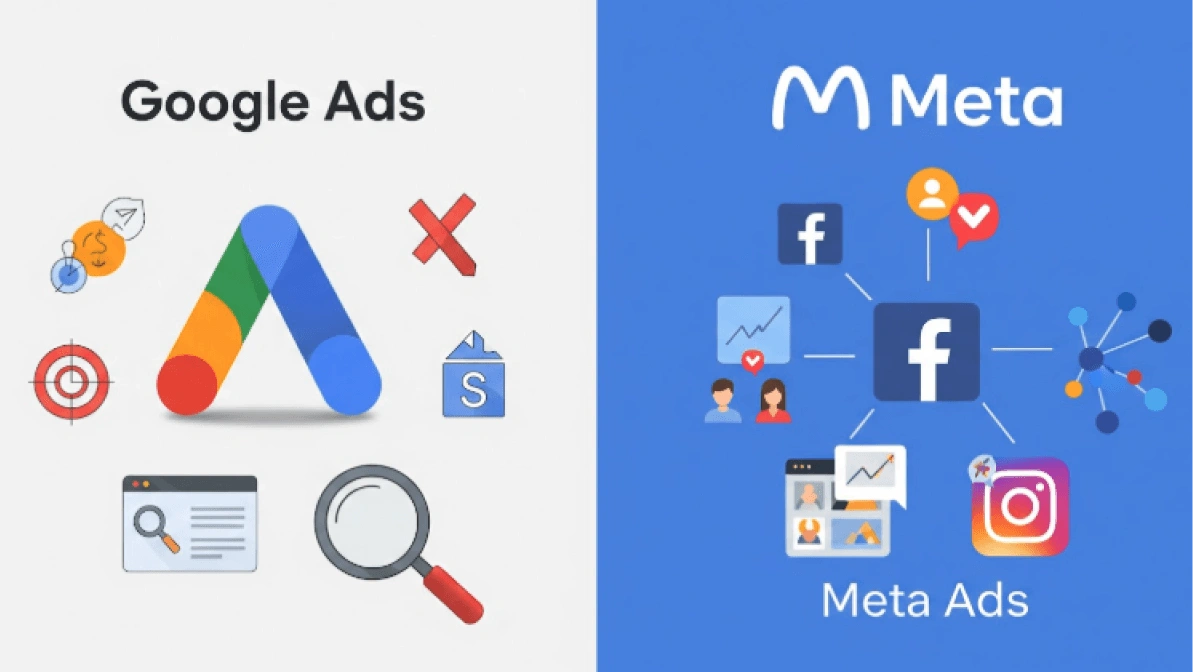
If you’re new to online advertising, you’ve probably wondered about the difference between Google Ads and Facebook Ads—now known as Meta Ads.
Both platforms are powerful tools for reaching potential customers, but they work in unique ways and serve different marketing goals.
In this beginner guide, we’ll break down Google Ads vs Meta Ads so you can choose the best option to promote your business, attract the right audience, and maximize your advertising budget.
What Are Google Ads?
Google Ads is Google’s online advertising platform that helps businesses reach potential customers through search results, YouTube videos, and partner websites.
When someone searches for a product or service, Google Ads displays relevant ads above or beside the organic results, capturing users who are actively looking for information. This intent-driven approach means your ad appears to people ready to take action, making Google Ads a powerful tool for driving traffic, generating leads, and increasing sales.
What Are Meta Ads?
Meta Ads, formerly known as Facebook Ads, are paid advertisements shown on Meta’s family of apps, including Facebook, Instagram, Messenger, and Audience Network.
These ads target users based on their interests, demographics, online behavior, and engagement patterns. Unlike Google Ads, which tap into active search intent, Meta Ads excel at building awareness and capturing attention while people scroll through their social feeds. This makes Meta Ads ideal for storytelling, visual branding, and nurturing potential customers over time.
Key Differences Between Google Ads and Meta Ads
Understanding the key differences between Google Ads and Meta Ads can help you make smarter choices for your marketing strategy. Let’s break down how they differ in user intent, targeting, ad style, costs, and where they fit in your sales funnel.
User Intent
Google Ads benefits businesses by targeting people actively searching for specific information or solutions. This means ads are shown to users ready to buy, click, or inquire. Meta Ads, meanwhile, reach users who may not be looking for your product yet but could be influenced by engaging visuals or stories.
Targeting Approach
Google Ads uses keywords and search phrases to match ads with search queries. This keyword-driven approach is perfect for capturing high-intent traffic. Facebook (Meta) Ads targeting focuses more on user data, such as interests, behaviors, and demographics, allowing you to reach niche audiences even if they’re not searching for your product.
Ad Format and Style
Google Ads appear as text-based search results or display banners on partner sites. They focus on clear calls-to-action and keyword relevance. Meta Ads, on the other hand, are highly visual, using images, videos, and interactive elements to catch attention while people scroll through feeds.
Cost and ROI
Google Ads typically have a higher cost per click due to strong competition for high-intent keywords, but the leads can be highly qualified. Meta Ads often offer lower cost per impression and are effective for broad reach and brand awareness. Balancing both can help you get the best return on investment for different campaign goals.
Funnel Stage Focus
Google Ads benefits marketers targeting the lower stages of the sales funnel, where users are closer to making a purchase. Meta Ads work well for upper and middle funnel stages, like boosting awareness and nurturing interest over time. Using both together can help guide prospects smoothly from discovery to conversion.
Benefits of Using Google Ads
Running Google Ads can give your business a competitive edge in capturing ready-to-buy customers online. Here are five Google Ads benefits worth knowing:
- High Intent Audience: Reach users actively searching for products or services, increasing the chance of conversions.
- Measurable Results: Track clicks, conversions, and ROI in real-time with detailed performance metrics.
- Flexible Budgeting: Control your daily spend and adjust bids to stay within your marketing budget.
- Wide Reach: Appear not only in Google Search but also on millions of partner sites and YouTube.
- Fast Results: Unlike organic SEO, Google Ads can drive immediate traffic and leads once your campaigns go live.
Benefits of Using Meta Ads
Meta Ads are a great option if you’re exploring where to advertise online and want to connect with people in a more social, visual way. Many marketers consider Meta one of the best PPC platforms for small business owners who need flexible budgets and strong engagement.
- Precise Audience Targeting: Meta Ads offer advanced targeting options based on user interests, behaviors, and demographics to reach your ideal customer.
- Highly Visual Content: Create eye-catching image and video ads that blend naturally into users’ social feeds.
- Cost-Effective Reach: Meta Ads help you spread brand awareness widely at a relatively low cost per impression.
- Multi-Platform Exposure: Promote your brand across Facebook, Instagram, Messenger, and more, all in one campaign.
- Boosts Engagement: Ads encourage likes, shares, comments, and clicks, making it easier to build a loyal community around your business.
When to Choose Google Ads Over Meta Ads
Deciding between Meta Ads vs Google PPC depends on your marketing goals and how soon you want to see results. While both are effective, Google Ads can be the smarter choice when you need to capture demand and convert leads fast.
Here’s a quick paid advertising platforms comparison to help you decide:
- When you want to reach users actively searching for what you offer.
- When you have high-intent keywords and want to appear at the top of search results.
- When you need quick, measurable ROI to drive sales or generate qualified leads.
- When you want to complement Meta Ads with direct-response ads for all stages of the funnel.
Choosing the Right Platform for Your Business
Understanding the strengths and differences between Google Ads and Meta Ads helps you make smarter decisions about where to invest your budget and how to reach your audience effectively.
Whether you’re drawn to the intent-driven power of Google PPC or the engaging visuals and targeting of Meta Ads, the right mix can elevate your brand and drive real results. If you want expert guidance to get the best of both worlds, LeadOrigin is the best digital marketing agency to help you explore Meta Ads and Google Ads for your business.
Ready to grow your reach? Talk to us today or visit our offices at 2100 W Loop S #1400, Houston, TX 77027 and 228 Hamilton Ave Suite 325, Palo Alto, CA 94301.