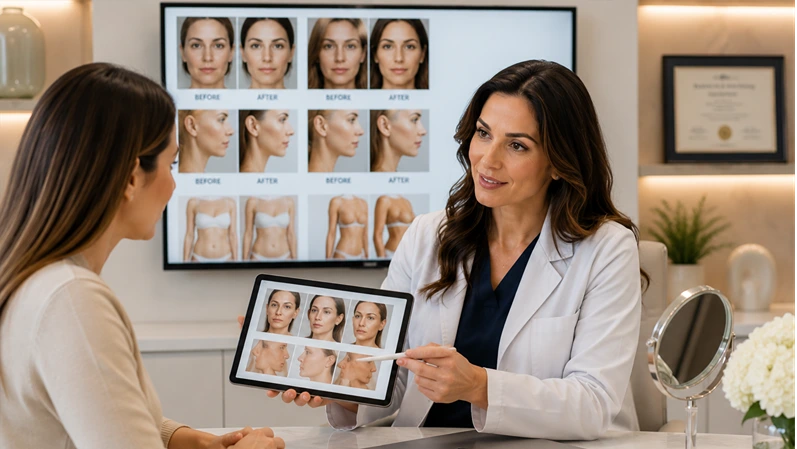
No written description of a rhinoplasty result carries the same weight as a well-documented before-and-after photograph. Visual proof in cosmetic surgery decision-making is the single most persuasive content format in the patient research process, and practices that treat their gallery as a marketing asset rather than a compliance requirement convert at a measurably higher rate. Understanding how patients use visual content and building a strategy around it is one of the most direct paths to a fuller consultation calendar.
Why Visual Content Drives Cosmetic Surgery Decisions
Patients Cannot Imagine What They Cannot See
Cosmetic surgery outcomes are inherently visual. A patient considering a breast lift or a blepharoplasty is trying to answer one question above all others: What will I look like? Written descriptions of technique, recovery, and results help with research, but they cannot answer that question. Before-and-after photography answers it directly.
The more closely a gallery patient resembles the prospective patient in body type, age, skin tone, or facial structure, the more emotionally persuasive the result becomes. A patient who sees someone who looks like them and achieves the result they want experiences a shift from abstract consideration to genuine desire. That emotional shift is what drives consultation bookings.
Visual Social Proof Is the New Word of Mouth
Before the internet, plastic surgery patients relied on personal referrals. Today, they rely on visual social proof: gallery images, patient testimonial videos, before-and-after posts on Instagram, and surgeon Reels on TikTok. The mechanism is the same as a referral, a trusted demonstration of real results, but the scale is incomparably larger.
A practice with a robust, well-organized visual content library operates a continuously running referral engine. Social media management built around consistent before-and-after content, patient story videos, and surgeon explainers keeps that engine running and compounds its reach over time.
How Patients Use Visual Proof During the Research Phase
Gallery as a Self-Qualification Tool
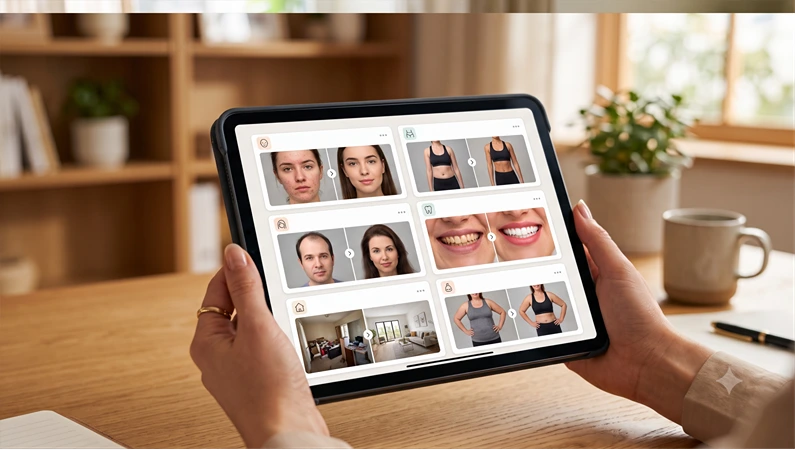
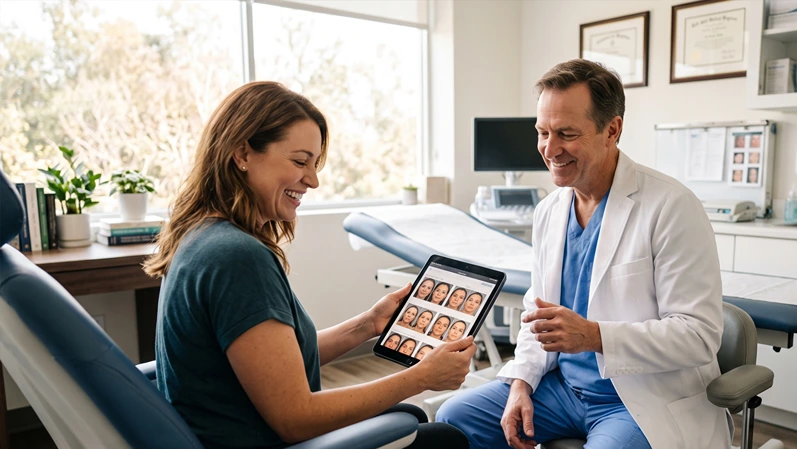
Patients do not browse galleries passively. They are actively searching for results that align with their goals. A patient considering liposuction is looking for before-and-after images of patients with a similar starting point. A patient considering a facelift is looking for results on patients in their age range. When a gallery is comprehensive enough to address these specific searches, it serves as a form of self-qualification for the practice.
This self-qualification function is valuable because it means patients who reach out after reviewing a thorough gallery are already aligned with what your practice can realistically achieve for them. That alignment makes consultations more efficient and more likely to convert.
Before-and-After Content on Social Platforms
Instagram, TikTok, and Pinterest are significant discovery channels for cosmetic surgery patients. Visual proof in cosmetic surgery decision-making plays out across all three. Patients save posts, share them with friends, and return to them multiple times before deciding to reach out. A practice with consistent, high-quality before-and-after content on social platforms captures patients at the awareness stage, before they have identified a provider, and builds familiarity over the weeks or months of their research process.
Paid social ads that feature before-and-after content consistently outperform text-based or stock-image ads in the aesthetics category. The visual result is the message. Everything else is context.
Video as the Highest-Trust Visual Format
Static photography is the foundation, but video extends its persuasive power. Patient testimonial videos that include a brief before-and-after visual, the patient’s own words about the experience, and visible emotional satisfaction combine social proof with personal narrative in a format that text and photos cannot replicate. Surgeon walkthrough videos that explain procedure goals and show results in context add a layer of clinical credibility that builds trust in both the result and the process.
Content writing paired with video content, captions, descriptions, and written testimonials that provide context for what the viewer is seeing, strengthens the persuasive impact of every visual asset in your library.
Building a Visual Proof Strategy That Converts
Photography Standards Matter
Not all before-and-after photography is equally persuasive. Inconsistent lighting, varying angles, different camera distances, and poor image quality undermine the credibility of results that may actually be excellent. Standardized photography protocols, same lighting setup, same angle conventions, same framing for each procedure type, ensure that results are fairly represented and that comparisons between before and after are visually clear.
Patients notice inconsistency in gallery photography the same way they notice inconsistency in website design. Both create a sense of carelessness that erodes trust. Investing in professional photography standards for your gallery is a direct investment in conversion performance.
Diversity in the Gallery Builds Broader Appeal
A gallery populated exclusively with ideal patients, young, slender, with dramatic results, fails to serve the majority of prospective patients who do not see themselves reflected in those images. A diverse gallery that includes patients across age ranges, body types, skin tones, and starting points is more persuasive to a broader patient population and more honest about the realistic range of outcomes your practice delivers.
Branding built around inclusivity and realism attracts patients who have been disappointed by practices that overpromise. It also generates more referrals because patients who feel their realistic result was celebrated rather than hidden are more likely to share their experience.
Consent and Context Documentation
Every before-and-after image requires proper patient consent, and the consent process itself is an opportunity to build your content library intentionally. Practices that make it easy and rewarding for satisfied patients to participate in gallery documentation, through a simple consent workflow, a professional photo session, and a follow-up touchpoint, build their visual assets faster than practices that rely on ad hoc collection.
Adding brief written context to gallery entries, the patient’s goals, the procedure performed, the recovery duration, and the timeframe of the after-photograph turns each image from a visual into a story. Stories are more persuasive than images alone because they help the prospective patient imagine their own journey, not just the result.
Frequently Asked Questions for Visual Proof in Cosmetic Surgery Decision-Making
Why is visual proof so important in cosmetic surgery marketing?
Cosmetic surgery outcomes are inherently visual, and patients cannot evaluate a surgeon’s skill or envision their own results without seeing real examples. Before-and-after photography is the most direct answer to the question every cosmetic surgery patient is asking: What will I look like? A practice with a comprehensive, high-quality gallery consistently converts more research visitors into consultation bookings than one with limited or low-quality visual content.
How should a plastic surgery gallery be organized?
By procedure, with filtering options that allow patients to browse by body area, age range, or patient profile, where possible. A gallery that is easy to navigate reduces the friction of self-qualification. Patients who can quickly find results relevant to their own situation spend more time in the gallery, develop a stronger emotional connection to the outcomes, and are more likely to book a consultation.
Does before-and-after content perform well on social media?
Yes. Visual proof in cosmetic surgery decision-making is especially powerful on image-first platforms like Instagram and Pinterest, as well as short-form video platforms like TikTok and YouTube Shorts. Before-and-after content consistently outperforms other formats in the aesthetics category for engagement, saves, and shares, thereby extending organic reach and introducing the practice to patients who are not yet actively searching.
How many before-and-after images should a plastic surgery gallery include?
There is no single threshold, but a gallery with fewer than 20 images per major procedure category limits its persuasive impact. Patients want to see enough diversity to find someone who resembles them. A thin gallery suggests limited experience or selective disclosure, both of which create doubt. The goal is a gallery large enough that most patients can find results that feel personally relevant.
Can paid ads feature before-and-after content?
Yes, with platform-specific considerations. Meta (Facebook and Instagram) has restrictions on before-and-after imagery in certain ad formats, so it is important to work within platform guidelines. Google Display and YouTube allow before-and-after content with appropriate framing. The key is to feature results that are realistic, clearly documented, and contextualized, rather than presenting them as guaranteed outcomes.
Make Visual Proof Your Most Powerful Conversion Tool
Visual proof in cosmetic surgery decision-making is not just content; it is the primary mechanism through which patients build enough confidence to book. Practices that invest in photography standards, gallery diversity, and a consistent social content strategy built around real results consistently outperform those that rely on text and reputation alone. LeadOrigin builds visual-first digital strategies for aesthetics practices that turn gallery visitors into consultation bookings. Talk to our team to build yours.