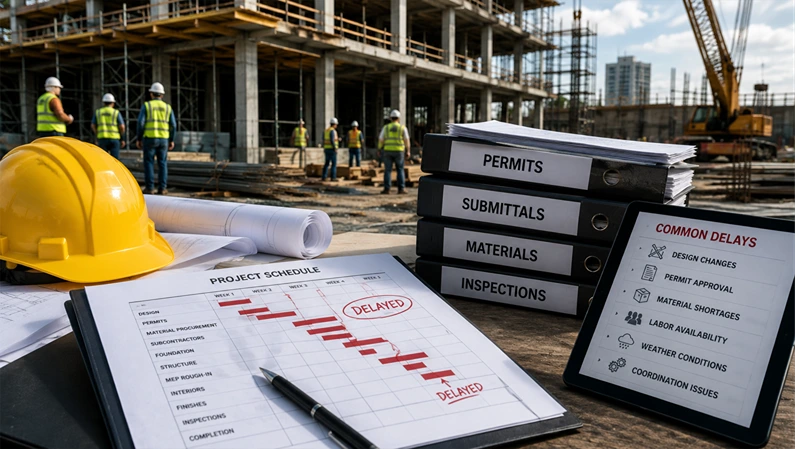
Every extra week a commercial project sits unfinished carries real cost, in financing charges, lost revenue, and mounting frustration for the business owner waiting to open their doors and start serving customers. Understanding the most common causes of delays in commercial construction gives owners and contractors alike a much better chance of catching problems before they derail an otherwise well-planned schedule.
Utility Coordination and Connection Delays
Getting a new commercial building connected to power, water, and other utilities involves coordination with outside providers who operate on their own schedules.
Utility Company Scheduling Constraints
Utility providers often have their own queue for new service connections or upgrades, and this timeline is frequently outside the contractor’s direct control, sometimes becoming a genuine schedule bottleneck near the end of an otherwise on-track project.
Coordinating Multiple Utility Providers
Larger commercial projects often need to coordinate separately with electric, gas, water, and telecommunications providers, and misalignment between these separate timelines can leave a substantially complete building waiting on a single remaining utility connection before it can actually open.
Permitting and Regulatory Delays
Approval processes outside a contractor’s direct control are among the most frequent sources of schedule slippage on commercial projects.
Longer Than Expected Plan Review Timelines
Building department review timelines vary considerably by jurisdiction and season, and busier municipalities can take significantly longer than owners initially anticipate, particularly for larger or more complex commercial projects requiring multiple department reviews.
Incomplete Submissions Triggering Review Cycles
Missing information or inconsistencies between different discipline drawings frequently send a submission back for revision, adding weeks to a timeline that a more complete initial submission could have avoided entirely.
Inspection Scheduling and Failed Inspection Delays
Required inspections at key construction milestones can themselves become a source of delay, separate from the underlying construction work.
Inspector Availability and Scheduling Backlogs
Busy building departments sometimes have limited inspector availability, meaning a project ready for inspection may need to wait several days or longer simply for an inspector’s schedule to open up, pausing subsequent work that depends on passing that inspection first.
Correcting and Rescheduling Failed Inspections
A failed inspection requires correcting the identified issue and then scheduling a follow-up inspection, effectively adding the original wait time twice for any item that does not pass on the first attempt, which is why getting inspections right the first time matters so much for schedule performance.
Weather-Related Construction Delays
Weather remains one of the most unpredictable factors affecting any outdoor construction schedule, regardless of how well a project is otherwise planned.
Seasonal Weather Patterns
Rain, extreme heat, and winter weather conditions can halt certain construction activities entirely for days or weeks at a time, and projects scheduled through particularly weather-sensitive seasons should build realistic weather contingency into their overall timeline from the start.
Unexpected Severe Weather Events
Beyond typical seasonal patterns, unexpected severe weather events can cause site damage requiring cleanup and repair before work can resume, adding both direct delay and unplanned cost to a project that otherwise had no reason to anticipate that specific disruption.
Financing and Draw Approval Delays
Cash flow interruptions caused by financing complications can pause construction just as effectively as a physical or regulatory obstacle.
Lender Draw Approval Timelines
Lenders typically require inspection and documentation before releasing funds at each project milestone, and if that approval process takes longer than the contractor’s payment expectations, work can slow while waiting for funds to become available for materials or labor.
Loan Structure Mismatches With Actual Progress
A financing structure that does not account for how a specific project will actually unfold, such as unusually large upfront material orders relative to the draw schedule, can create cash flow gaps that indirectly cause construction delays even though the physical work itself is progressing well.
Material Shortages and Supply Chain Disruptions
Getting the right materials to a job site at the right time has become a more significant scheduling challenge in recent years than it once was.
Long Lead Times for Specialized Materials
Certain specialized materials or custom-fabricated components can carry lead times of many months, and failing to order these items early enough in the process can leave a project waiting on a single delivery long after other work is otherwise ready to proceed.
Supply Chain Volatility Affecting Common Materials
Even standard materials have shown significant availability volatility in recent years, and contractors who do not proactively monitor supply conditions and adjust ordering timelines accordingly can find an entire project stalled waiting on materials that used to be reliably available on short notice.
Labor Availability and Subcontractor Scheduling
Coordinating the right skilled trades at the right time is an ongoing scheduling challenge, particularly in markets facing persistent labor shortages.
Skilled Labor Shortages
Regional shortages of skilled tradespeople can extend timelines when a contractor struggles to secure enough qualified workers for a given trade, sometimes forcing project sequencing changes that ripple through the rest of the schedule.
Subcontractor Scheduling Conflicts
Subcontractors juggling multiple simultaneous projects sometimes cannot deliver crews exactly when a project’s schedule calls for them, particularly during busy seasons when demand for skilled trades outpaces available capacity across an entire region.
Design Errors and Coordination Issues
Problems that originate in the design phase often do not surface until construction is already underway, at which point they become genuine schedule risks.
Conflicts Between Different Design Disciplines
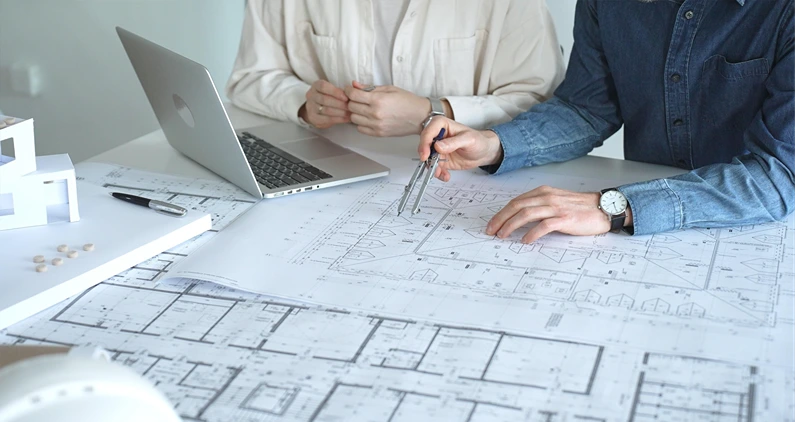
When structural, mechanical, electrical, and architectural drawings are not properly coordinated, conflicts discovered during construction, such as ductwork clashing with structural elements, require field resolution that can pause work in the affected area until a solution is finalized.
Incomplete or Ambiguous Construction Documents
Drawings that leave critical details ambiguous force contractors to seek clarification mid-construction, and waiting on that clarification while other work in the affected area cannot proceed is a common, avoidable source of delay.
Change Orders and Scope Adjustments
Changes requested after construction has begun almost always carry a schedule cost beyond their direct cost impact.
Owner-Requested Changes Mid-Construction
Even relatively minor owner-requested changes can require re-ordering materials, revising drawings, and re-sequencing work, all of which take time beyond simply implementing the change itself once approved.
Delays While Pricing and Approving Changes
The administrative process of pricing, documenting, and formally approving a change order itself takes time, and projects without an efficient change order process in place can see work paused waiting on approval for changes that should move much faster.
Learning From Delays to Improve Future Projects
Owners and contractors who take time to document what actually caused delays on a completed project gain valuable insight that improves planning on future work.
Conducting a Post-Project Schedule Review
A brief review comparing the original schedule against what actually happened, including the specific causes of any significant delays, helps identify patterns worth addressing in future project planning rather than repeating the same avoidable mistakes.
Building Institutional Knowledge Over Multiple Projects
Contractors who systematically track delay causes across multiple projects develop a much sharper sense of which risks are most likely to affect a given project type or region, allowing them to build more realistic contingency into future schedules from the very first proposal.
How Proactive Planning Reduces Delay Risk
While some delay sources are genuinely outside anyone’s control, disciplined planning meaningfully reduces both the frequency and severity of the delays that do occur.
Building Realistic Contingency Into the Schedule
A schedule with no buffer for the ordinary variability every construction project experiences is a schedule that will almost certainly slip. Building realistic contingency time in from the start, rather than treating any delay as an emergency departure from an unrealistically tight plan, keeps a project resilient without constant crisis management.
Early and Ongoing Communication With Stakeholders
Contractors who communicate potential delay risks proactively, rather than only reporting problems once they have already affected the schedule, give owners the chance to make informed decisions and adjust their own plans accordingly. Firms that build this kind of proactive communication into how they build trust with prospective clients online tend to retain client confidence even when an unavoidable delay does occur.
How Contractors Differentiate Themselves on Schedule Reliability

Schedule reliability is a genuine competitive advantage that experienced contractors should communicate clearly to prospective clients.
Demonstrating a Track Record of On-Time Delivery
Contractors who can point to a documented track record of completing projects on schedule, or close to it, give prospective owners real confidence that their own project will not become an open-ended timeline. Firms that highlight this reliability while generating qualified commercial construction leads tend to attract owners who specifically prioritize schedule certainty in their contractor selection process.
Being Transparent About Realistic Timelines Upfront
Contractors who provide honest, realistic timeline estimates during the sales process, rather than an overly optimistic number designed to win the bid, build far more durable client trust than firms that consistently underestimate and then explain delays after the fact. Owners eager to see ongoing project revenue materialize appreciate this honesty far more than a rosy initial promise that later falls apart.
Frequently Asked Questions About Delays in Commercial Construction
What is the single most common cause of commercial construction delays?
Permitting and regulatory review delays are among the most frequent culprits, since review timelines depend heavily on local building department capacity and are largely outside a contractor’s direct control.
How much schedule contingency should a commercial project include?
Recommendations vary by project complexity and risk, but many experienced project managers build in several weeks to a few months of contingency for a typical commercial project, with longer or more complex projects warranting more.
Can weather delays really be predicted and planned for?
Seasonal weather patterns can be reasonably anticipated and planned for in scheduling, though specific severe weather events remain unpredictable and require reactive contingency rather than precise advance planning.
Do material shortages still cause significant delays?
Yes, particularly for specialized or custom-fabricated materials with long lead times. Proactive early ordering and close supply chain monitoring meaningfully reduce, though do not eliminate, this risk.
How can owners help reduce delay risk on their own project?
Responding quickly to information requests, minimizing mid-construction change requests, and maintaining open communication with the contractor throughout the project all help reduce delay risk that owners have some direct influence over.
Keeping Your Project Moving on Schedule
Understanding the most common causes of delays in commercial construction, from permitting to weather to material availability, helps owners and contractors build more realistic schedules and respond effectively when disruptions inevitably occur. Contractors ready to build a reputation around schedule reliability can explore proven marketing strategies for general contractors built around demonstrating exactly this kind of dependability.