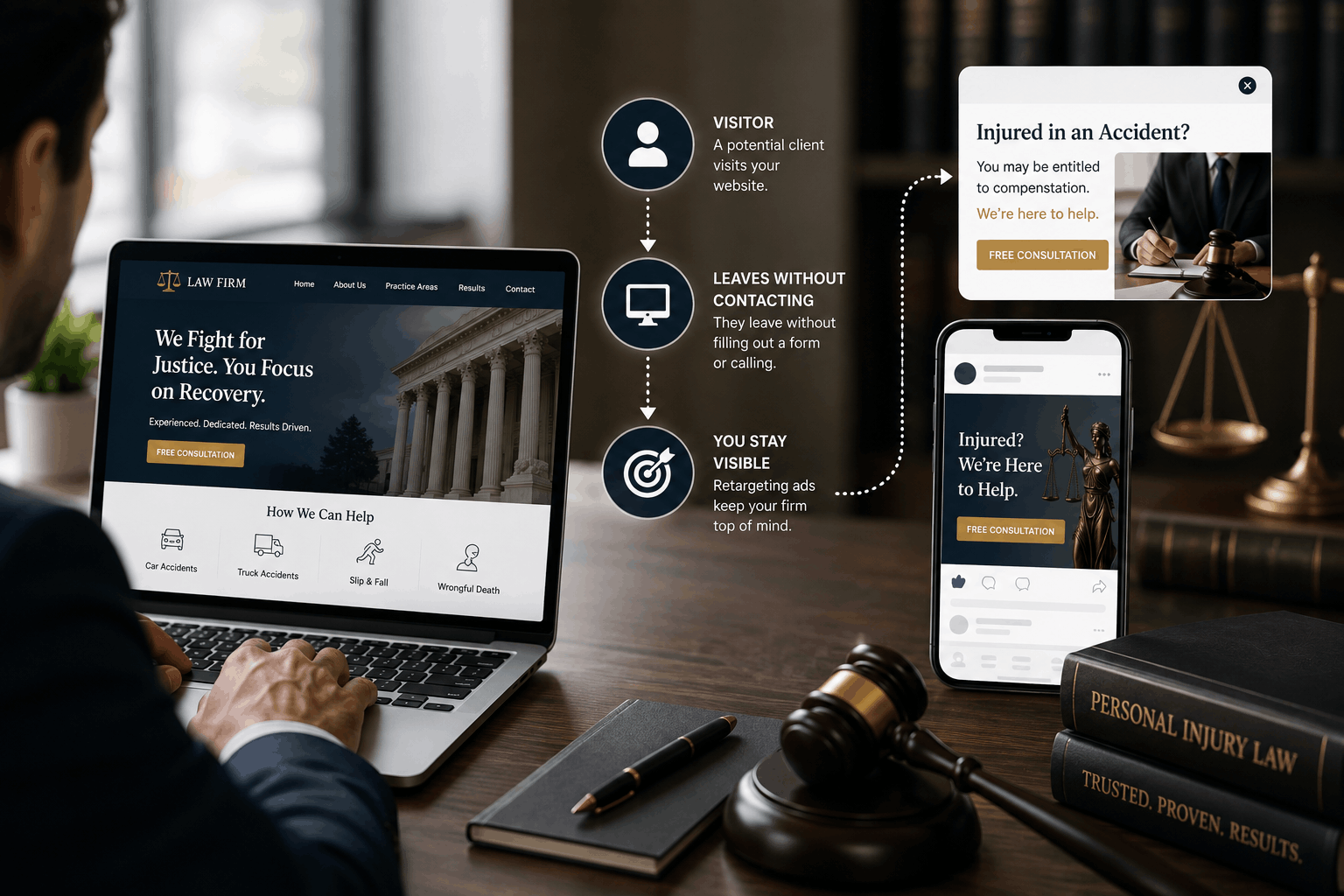
Getting someone to visit a law firm’s website is a great start, but most potential clients need a little more time before they’re ready to reach out. They may browse a few practice area pages, check attorney credentials, read reviews, and compare other firms before making a decision.
Retargeting ads for law firms help keep the firm familiar during that process by reconnecting with people who have already shown interest. With a smart law firm retargeting strategy, firms can bring those visitors back and create more opportunities for consultations and qualified leads.
What Are Retargeting Ads for Law Firms?
Retargeting allows law firms to advertise to people who have already interacted with their website or other digital content. Instead of introducing the firm to a completely new audience, these campaigns reconnect with people who already know something about the practice.
Understanding Retargeting vs. Traditional Advertising
Traditional digital advertising often focuses on reaching new prospects based on searches, demographics, interests, or other targeting criteria.
Retargeting starts later in the journey. Someone has already visited the firm’s website, watched a video, or interacted with its content. The firm can then serve relevant ads as that person continues browsing other websites or platforms.
Why Prospective Clients Rarely Convert on the First Visit
Hiring an attorney is a major decision, and many people want time to research their options.
A prospective client may compare several firms, read reviews, research their legal issue, or discuss the situation with family before scheduling a consultation. Retargeting helps keep a firm’s name familiar throughout that process.
How Law Firm Retargeting Works
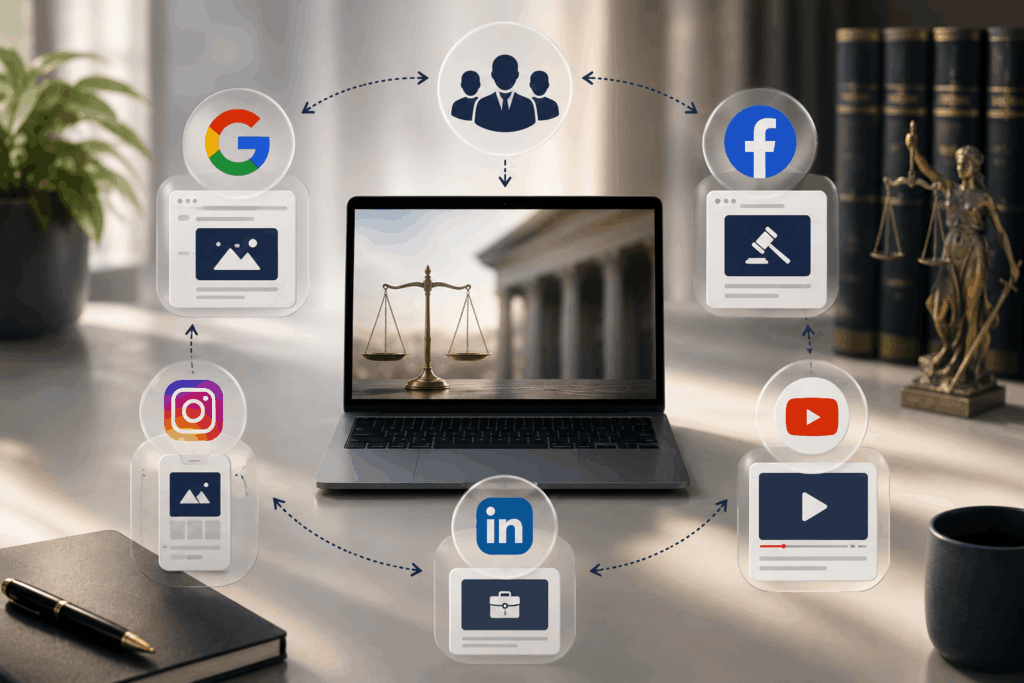
A law firm retargeting campaign creates audiences based on previous interactions with the firm’s digital properties. Ads can then reconnect with eligible users on platforms such as Google, Facebook, Instagram, or YouTube.
Relevance is important here. Someone who visited a car accident page should see messaging related to car accident representation rather than a generic firm advertisement.
Read more: Mastering Retargeting: How to Use Retargeting Ads to Boost Conversions
Why Retargeting Ads for Law Firms Are So Effective
Legal decisions rarely happen on impulse. People research, compare, think, and return to the firms that made the strongest impression.
Retargeting helps a law firm remain part of that consideration process.
Builds Trust Through Multiple Brand Impressions
Repeated exposure can make a law firm feel more familiar. When someone sees the firm’s name again after visiting its website, that recognition may help reinforce credibility.
Increases Brand Recall During Critical Decision-Making
Prospective clients may research several attorneys at once. Consistent, relevant advertising helps a firm remain recognizable when the person finally decides to reach out.
Improves Conversion Opportunities
Retargeting gives previous visitors another path back to the firm’s website. Instead of relying on one visit to produce a consultation, firms create additional opportunities for engagement.
Maximizes Existing Website Traffic
SEO and PPC require significant investment to bring qualified visitors to a website. Retargeting helps firms continue marketing to eligible visitors after that initial click.
Can Lower the Cost of Reconnecting With Prospects
Because retargeting focuses on people who have already shown interest, it can use advertising budgets differently from campaigns aimed entirely at new audiences. Actual cost per lead will still depend on the market, practice area, platform, and campaign quality.
Benefits of Law Firm Retargeting Campaigns
A thoughtful retargeting campaign can support several parts of a firm’s digital marketing strategy at once.
These key benefits can include:
- Bringing interested website visitors back
- Generating additional consultation requests
- Focusing advertising on warmer prospects
- Getting more value from SEO and PPC traffic
- Keeping the firm’s brand visible during the research process
- Reinforcing attorney experience and credibility
The real advantage comes from using existing interest instead of letting every visitor who leaves the website disappear from the marketing funnel.

Best Platforms for Retargeting Ads for Law Firms
There isn’t one perfect retargeting platform for every firm. The right mix depends on the audience, practice areas, budget, and where prospective clients spend their time online.
Google Display Network
Display campaigns can reconnect with eligible audiences across websites, apps, and other placements within Google’s advertising network.
Facebook Retargeting Ads for Law Firms
Facebook Retargeting Ads for Law Firms can reach previous website visitors and other eligible custom audiences with educational content, attorney introductions, testimonials where permitted, and consultation-focused messaging.
Instagram Remarketing Campaigns
Instagram’s visual format works well for short videos, attorney introductions, educational posts, and recognizable branding.
YouTube Video Retargeting
Video gives attorneys additional room to explain legal topics and introduce the people behind the practice. It can be especially useful for prospects who need reassurance before making contact.
LinkedIn Ads for Business Law Firms
For firms serving companies, executives, and other professionals, LinkedIn may provide useful options for reaching business-focused audiences.
Types of Law Firm Retargeting Audiences
Someone who spent several minutes on a specific practice area page has shown a different level of intent from someone who briefly visited the homepage.
Here are a few audiences law firms can consider:
- General website visitors
- Specific practice area visitors
- People who began a contact form
- Previous consultation leads, where appropriate and permitted
- Eligible email audiences
- Video viewers
Firms should always configure audiences and campaigns in accordance with platform rules, privacy requirements, professional advertising rules, and applicable laws.
Retargeting Ads for Personal Injury Lawyers
Personal injury prospects often research attorneys during a stressful period, so relevant and respectful messaging matters.
Retargeting Ads for Personal Injury Lawyers can reconnect with eligible visitors based on the legal information they previously explored.
Targeting Car Accident Visitors
Someone who visited a car accident page can receive ads that reinforce the firm’s experience with accident claims and provide an easy path back to relevant resources or a consultation page.
Following Up With Slip and Fall Prospects
Educational ads can answer common questions about premises liability, evidence, or what happens during a claim.
Wrongful Death Campaign Strategies
This subject requires particular sensitivity. Messaging should remain respectful, informative, and compliant rather than relying on fear or emotional pressure.
Motorcycle and Truck Accident Leads
Visitors researching these cases can receive content relevant to the complexities of motorcycle or commercial vehicle claims.
Workers’ Compensation Prospects
Helpful ads can direct eligible users toward resources about benefits, claims, and the legal process.
Creating High-Converting Retargeting Ads for Law Firms
A retargeting ad has already cleared one hurdle: the audience has encountered the firm before. Now the ad needs to give them a compelling reason to return.
Strong campaigns typically use:
- Clear headlines: Tell prospects immediately what the firm handles.
- Social proof: Highlight credible trust signals where advertising rules permit.
- Attorney credentials: Relevant experience, qualifications, and professional recognition can reinforce credibility.
- Client testimonials: Authentic testimonials can provide reassurance when used in compliance with applicable rules.
- Consultation information: If the firm offers free consultations, communicate that clearly.
- Direct CTAs: Make the next step obvious, such as scheduling a consultation or learning about a practice area.
Best Lawyer Remarketing Strategies That Convert
The strongest lawyer remarketing strategies treat different visitors differently.
Segment Audiences by Practice Area
A family law visitor and a personal injury visitor have completely different concerns. Their ads should reflect that.
Show Different Ads Based on User Intent
Someone who read one blog post may need educational content. Someone who reached the contact page may benefit from a clearer consultation-focused message.
Use Sequential Messaging
Rather than showing the exact same advertisement repeatedly, firms can create a sequence. The first ad might introduce the attorney, the next could answer a common question, and another could encourage a consultation.
Promote Valuable Legal Resources
Guides, FAQs, videos, and useful articles give prospects a reason to return even before they’re ready to contact an attorney.
Prioritize High-Intent Visitors
Visitors who spend meaningful time on key pages or take actions that indicate stronger interest may warrant a different campaign strategy from casual browsers.
Read more: Why Most Law Firms Waste Money on Ads
Google Retargeting Ads for Attorneys
A website visit doesn’t have to be the last time a potential client sees a law firm. Google retargeting ads for attorneys can help firms reconnect with previous visitors as they continue browsing online, keeping the firm’s name familiar while they consider their legal options.
Depending on campaign eligibility and current Google Ads features, firms can use display campaigns, responsive display ads, first-party audience tools such as Customer Match, and audience signals within broader campaigns.
The trick is finding the right balance. Staying visible can help keep a firm fresh in a potential client’s mind, but showing the same ad too often can quickly become annoying. Careful frequency and budget management helps firms stay present without overdoing it.
Facebook Retargeting Ads for Law Firms
Social media gives law firms another chance to stay familiar after someone leaves their website. Facebook retargeting ads for law firms, along with Instagram campaigns, can reconnect with eligible audiences through content that feels more visual and engaging than a standard search ad.
Firms can use educational videos, attorney introductions, helpful legal resources, lead campaigns, and other content that gives potential clients a reason to take another look.
The messaging should also match what the person originally showed interest in. Someone who visited a personal injury page will likely respond to different information than a business owner who spent time researching commercial litigation. Creating separate audiences helps firms keep each ad relevant instead of sending everyone the same generic message.
Legal advertising can come with additional platform rules and restrictions, particularly around sensitive topics and audience targeting. Firms should make sure their targeting, data use, creative, and lead-generation practices follow current Meta policies and applicable legal advertising requirements.
Landing Pages That Improve Retargeting Performance
Getting the second click is great. What happens after it matters even more.
A strong retargeting landing page should:
- Match the message and practice area featured in the ad
- Keep contact forms short and straightforward
- Display relevant attorney credentials
- Include appropriate reviews or testimonials
- Work well on mobile devices
- Make the next step easy to find
Common Retargeting Mistakes Law Firms Should Avoid
Retargeting can lose its effectiveness quickly when every visitor receives the same message.
Common mistakes include showing one ad too frequently, combining unrelated audiences, overlooking mobile usability, directing prospects to generic pages, and failing to track meaningful conversions.
Another mistake is focusing entirely on clicks. A high click-through rate sounds impressive, but signed cases and qualified consultations tell a law firm far more about actual campaign performance.
Read more: How Personal Injury Lawyers Can Generate Higher-Quality Case Leads
Measuring the Success of Retargeting Ads for Law Firms
Good marketing decisions start with good data. Instead of relying on impressions alone, firms should connect advertising activity to meaningful business outcomes.
Important metrics include:
- Click-through rate (CTR): How often users click after seeing the ad
- Cost per lead: Advertising spend required to generate an inquiry
- Conversion rate: Percentage of visitors who complete the desired action
- Return on ad spend (ROAS): Revenue attributed to advertising compared with ad spend
- Cost per signed case: The actual cost of acquiring a new client
- Lifetime client value: Particularly useful for practice areas with repeat or ongoing client relationships
These numbers help firms decide which audiences, platforms, messages, and practice areas deserve additional investment.
How Retargeting Supports SEO and Content Marketing
SEO may bring someone to the firm’s website for the first time. Retargeting gives the firm another opportunity to continue that relationship.
A visitor might discover an attorney through a high-ranking article, leave after reading it, and later encounter relevant advertising. This extends the value of content that the firm has already invested in creating.
Retargeting can also complement local SEO by reinforcing brand familiarity among people who have previously encountered the firm online. Over time, a coordinated approach helps SEO, content, PPC, and retargeting support the same client acquisition strategy.
Future Trends in Law Firm Retargeting
Retargeting continues to change as advertising platforms adopt AI and the digital advertising industry adjusts to tighter privacy expectations.
AI-powered audience analysis and creative optimization can help advertisers identify patterns and test messaging more efficiently. Predictive tools may also help prioritize audiences based on their likelihood of taking meaningful actions.
At the same time, privacy changes make first-party data increasingly important. Firms that responsibly build their own consent-based contact databases and collect accurate marketing data will have a stronger foundation as third-party tracking becomes less central to digital advertising.
Overall, current trends show that successful retargeting will rely increasingly on useful first-party data, thoughtful audience segmentation, relevant creative, and responsible data practices.
Why Law Firms Should Invest in Retargeting Ads
A potential client who leaves a website hasn’t necessarily lost interest. They may simply need another day, another answer, or another reason to feel comfortable reaching out.
Retargeting Ads for Law Firms help firms stay visible during that decision-making period while getting additional value from the traffic their SEO, content, and paid search campaigns already generate.
LeadOrigin helps law firms connect retargeting with a broader digital marketing strategy, including SEO, paid advertising, landing page optimization, content, and lead generation. Instead of treating each channel separately, the goal is to create a clearer path from the first website visit to the consultation request.
Want to bring qualified prospects back before they choose another firm? Contact LeadOrigin today to build a retargeting strategy that keeps your law firm visible and turns existing website traffic into more opportunities.

Frequently Asked Questions
How do retargeting ads help personal injury lawyers generate more clients?
Retargeting Ads for Personal Injury Lawyers reconnect with eligible people who previously visited a firm’s website or engaged with its content. Relevant ads can bring those prospects back to practice area pages, legal resources, or consultation forms when they’re ready to take the next step.
Are Google retargeting ads or Facebook retargeting ads better for attorneys?
Neither platform is automatically better for every firm. Google can provide broad reach across its advertising ecosystem, while Facebook and Instagram offer strong visual and social advertising opportunities. Many firms can benefit from testing both and comparing qualified leads and signed cases rather than clicks alone.
How long should a law firm run retargeting campaigns?
Retargeting can run continuously as part of an ongoing marketing strategy, but audience duration, frequency, creative, and budgets should be reviewed regularly. Firms should also adjust campaigns based on the typical decision timeline for each practice area.
How much do retargeting ads for law firms cost?
Costs vary based on location, competition, audience size, platform, campaign objective, and practice area. Instead of evaluating cost alone, law firms should measure cost per qualified lead and cost per signed case to understand actual campaign value.
What audience should a law firm retarget first?
High-intent website visitors are often a useful place to start. These may include eligible users who visited specific practice area pages, spent meaningful time on the website, viewed consultation information, or began a contact process without completing it. Firms should build these audiences in compliance with applicable privacy rules, advertising regulations, and platform policies.