
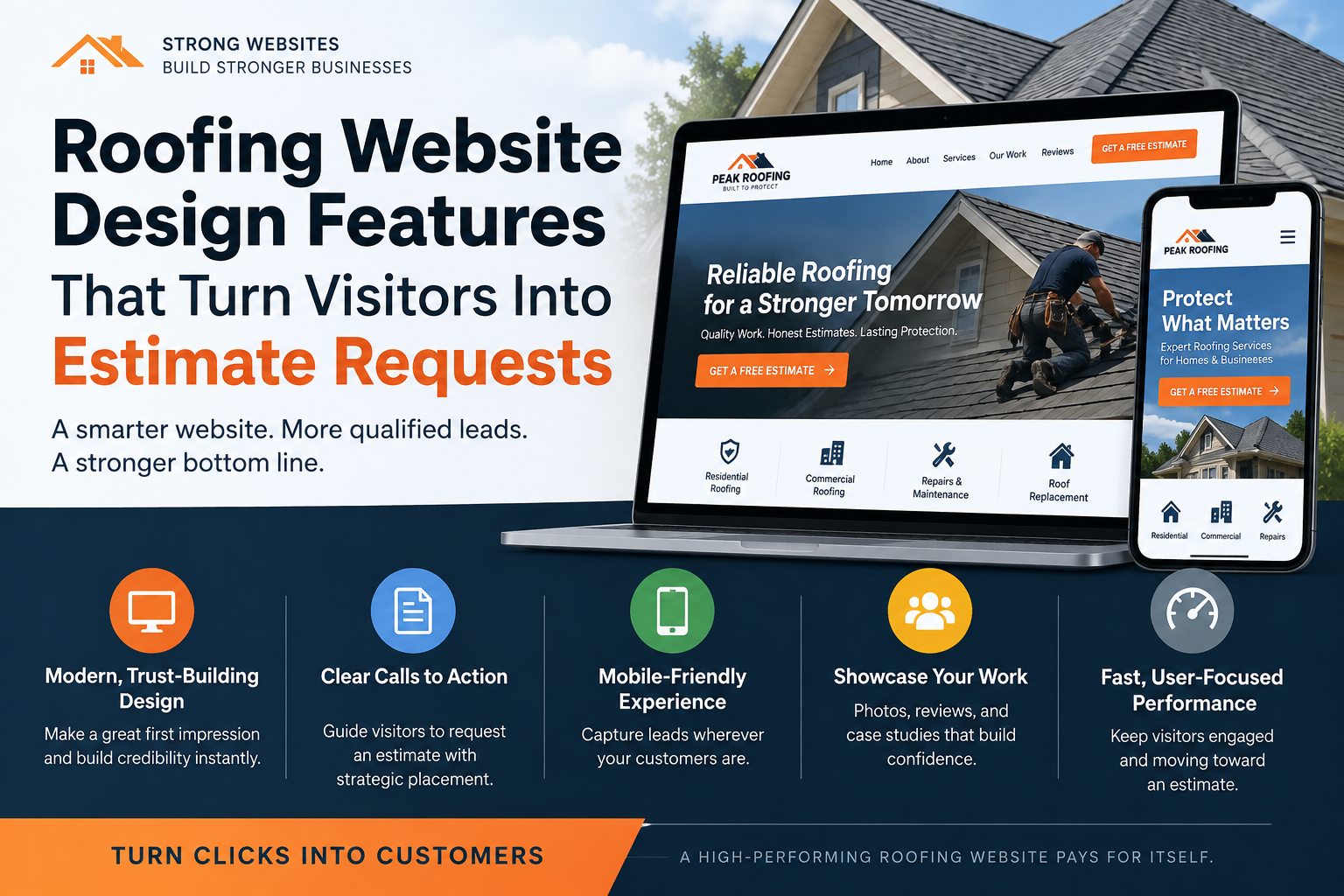
A homeowner visiting a roofing contractor website is usually there for a reason, like a leak, storm damage, or a roof that needs replacing. Good roofing website design makes it easy for them to find the right service and request an estimate without searching around. Clear CTAs, simple forms, reviews, and helpful service pages can improve roofing website conversion while turning more visitors into roofing estimate requests.
Here are the features that can make roofing lead generation easier.
Why Roofing Website Design Matters for Lead Generation
A website often plays a big role in how homeowners decide which roofing company to contact. A good roofing contractor website gives them the information they need while making the path from research to inquiry simple.
Turning Roofing Website Traffic Into Qualified Leads
Roofing lead generation starts with attracting people who actually need the services being offered. Once they arrive, relevant service and location pages can answer their questions and guide them toward contacting the company when they are ready.
What Homeowners Expect From a Roofing Contractor Website
Homeowners usually want to know what services are available, where the contractor works, how experienced the company is, and how to request an estimate.
Reviews, project photos, licenses, warranties, and straightforward contact information can also help them decide if a contractor is worth calling.
1. Clear Estimate Request Calls-to-Action in Your Roofing Website Design
Homeowners should never have to search around for a way to request an estimate. A clear CTA gives them an obvious next step once they are ready to talk.
Where to Place Estimate Request Buttons
Estimate buttons should appear in high-visibility areas such as the header, hero section, service pages, project galleries, and near the bottom of important pages.
Simple CTAs like “Request an Estimate” or “Get a Roofing Estimate” tell visitors exactly what happens when they click.
Avoid Too Many Competing Calls-to-Action
Too many different CTAs can make the website harder to follow. A roofing website conversion strategy should keep estimate requests as the main goal, with phone calls or other contact methods available as secondary options.
2. A Simple Roofing Estimate Request Form
Long forms can make requesting an estimate feel like work. Keep the initial form short and collect only the information needed to start the conversation.
What Information Should a Roofing Estimate Form Ask For?
A basic form can ask for:
- Name
- Phone number or email
- Property address
- Roofing service needed
- Short description of the problem
Additional details can always be collected after the homeowner submits the request.
Make Roofing Estimate Forms Mobile-Friendly
Forms should be easy to complete from a phone. Use large fields, simple menus, and as few required questions as possible.
3. Roofing Service Pages Built Around Customer Needs
Individual service pages help homeowners find information about the exact problem they are trying to solve. They also give roofing companies more opportunities to rank for relevant searches.
Important Roofing Service Pages to Include
Depending on the contractor, useful pages may cover:
- Roof replacement
- Roof repair
- Roof inspections
- Storm damage
- Emergency roofing
- Residential roofing
- Commercial roofing
Each page should explain the service, common reasons someone may need it, and what the customer can expect.
Add Estimate CTAs to Every Roofing Service Page
Once a homeowner has read about a service, the next step should be easy. Include a clear estimate CTA within the page and again near the end.
4. Local Service Area Pages for Roofing Lead Generation
Roofing is a local service, so homeowners need to know quickly if the company serves their area. Location pages can support both local SEO and roofing lead generation.
What to Include on Roofing Location Pages
A useful location page can include services available in the area, local contact information, completed projects, reviews from nearby customers, and an estimate request CTA.
The content should actually help homeowners in that location rather than simply repeating a generic service page.
Avoid Creating Thin or Duplicate Roofing Location Pages
Changing only the city name across dozens of pages adds little value. Each location page should contain useful, relevant information about roofing services in that specific market.

5. Trust Signals That Strengthen Your Roofing Contractor Website
Roofing can be a major home expense, so homeowners want some reassurance before handing over their contact information.
Roofing Certifications, Licenses, and Insurance
Relevant licenses, manufacturer certifications, professional affiliations, and insurance information should be easy to find. Only credentials the contractor actually holds should be displayed.
Customer Reviews and Roofing Testimonials
Real customer reviews can show visitors what working with the company is actually like. Reviews that mention specific services, communication, timelines, or completed work can be especially useful.
Years of Experience and Completed Roofing Projects
Experience can also help establish credibility. Contractors can highlight years in business, number of completed projects, or experience with specific roofing systems when those claims can be supported.
6. Roofing Project Galleries and Before-and-After Photos
Homeowners want to see the work. A strong project gallery gives them visual proof of what the roofing company can do.
What Information to Add to Roofing Project Examples
Photos become more useful when they include some context. Mention the roofing service, material used, general location, problem addressed, or scope of the project when appropriate.
Add a Roofing Estimate CTA Below Project Galleries
A visitor who likes what they see may already be close to reaching out. Put an estimate CTA near the gallery so they can take the next step immediately.
7. Mobile-Friendly Roofing Website Design
Someone standing in the kitchen looking at a ceiling leak probably is not opening a laptop first. Roofing websites need to work well on phones.
Make Phone Numbers Click-to-Call
Phone numbers should be easy to tap from a mobile device. This is especially useful for homeowners dealing with urgent roofing problems.
Keep Navigation Simple on Mobile Devices
Keep menus short and make important pages easy to reach. Services, locations, reviews, contact information, and estimate requests should not be buried several clicks deep.
Read more: Website Design for Local Businesses That Actually Brings in Leads
8. Fast Website Speed for Better Roofing Website Conversion
A slow website can make potential customers leave before they even see the contractor’s services. Speed is especially important for mobile visitors.
Ways to Improve Roofing Website Speed
Compress large project photos, remove unnecessary plugins and scripts, use modern image formats, and choose reliable hosting. Regular performance checks can also help identify new issues as the site grows.
9. Clear Roofing Pricing and Financing Information
Roofing prices can vary widely, so listing one fixed number may not make sense. Still, homeowners usually want some idea of what affects the cost.
Explain What Affects Roofing Costs
Roof size, materials, labor, roof condition, accessibility, removal of existing materials, and the scope of repairs can all affect pricing.
Explaining these factors helps homeowners understand why an estimate may be necessary.
Promote Roofing Financing Options
If financing is available, make that information easy to find. Explain the basic options and give visitors a way to ask about financing when requesting their estimate.
10. Roofing Warranties and Guarantees That Reduce Customer Concerns
A roof is a major investment, so warranty information can play an important role in the decision.
Make Warranty Information Easy to Understand
Explain the types of warranties available, what they generally cover, and how long coverage may last. Avoid making homeowners dig through technical language to understand the basics.
Connect Warranty Information With Your Estimate CTA
After explaining warranties, give homeowners an easy way to ask questions or request an estimate. They may want to discuss warranty options before choosing materials or moving forward.
11. Roofing Reviews and Social Proof Near Conversion Points
Reviews should not be limited to a single testimonial page. Putting relevant social proof near forms and CTAs can give visitors extra reassurance when they are deciding if they should reach out.
Types of Roofing Reviews That Help Drive Conversions
Reviews about roof replacements, repairs, storm damage, communication, timelines, and workmanship can all be useful. Recent reviews from customers in the same service area can also make the feedback feel more relevant.
Read more: How to Use Social Proof to Increase Sales
12. Emergency Roofing Information for High-Intent Visitors
Visitors searching for emergency roof repair usually need help quickly. The website should make it obvious what they should do next.
Make Emergency Roofing Contact Options Easy to Find
Display the appropriate emergency phone number or contact option prominently. Clearly explain availability so customers know when they can expect a response.
Create a Dedicated Emergency Roofing Page
An emergency page can explain what qualifies as an urgent roofing problem, what customers should do while waiting for help, the areas served, and how to contact the contractor.
13. Live Chat, Text Messaging, and Multiple Contact Options
Some homeowners prefer calling, while others would rather text, chat, or fill out a form. Offering a few practical contact options can make reaching the roofing company easier.
Keep the Estimate Request as the Primary Goal
Multiple contact methods should support the main conversion goal rather than compete with it. The site should still guide visitors toward requesting an estimate or speaking with the roofing company.
14. Conversion Tracking for Your Roofing Website
A roofing company needs to know if its website is actually producing leads. Conversion tracking connects website activity with real customer actions.
Roofing Website Conversions Worth Tracking
Useful roofing website conversion events can include estimate form submissions, phone calls, click-to-call actions, chat conversations, text message clicks, and appointment requests.
Identify Which Roofing Pages Generate the Most Leads
Tracking conversions by page can show which services, locations, and traffic sources produce roofing estimate requests. Contractors can use that information to improve weaker pages and put more marketing resources behind what is already working.
Read more: Lead-Focused Website Design: Turning Traffic Into Real Opportunities

Common Roofing Website Design Mistakes That Reduce Estimate Requests
Some websites look polished but still make it surprisingly difficult to become a lead. Common problems include:
- Hiding estimate forms or phone numbers
- Using long or complicated contact forms
- Having too many competing CTAs
- Creating vague service pages
- Using slow, oversized images
- Making the mobile experience difficult
- Leaving out reviews and trust signals
- Creating duplicate location pages
- Hiding financing or warranty information
- Failing to track calls and form submissions
Fixing these issues can make the website easier to use and give more visitors a reason to take the next step.
How to Build a Roofing Website Design That Generates More Estimate Requests
Effective roofing website design brings SEO, useful content, trust signals, strong calls-to-action, and conversion tracking together. Homeowners should be able to quickly understand what the contractor does, see proof of its work, and request an estimate without jumping through hoops.
LeadOrigin helps roofing companies build digital marketing strategies focused on attracting the right traffic and turning more of that traffic into leads. For roofing businesses looking to improve their website, SEO, paid campaigns, and roofing website conversion strategy, talk to the LeadOrigin team about building a stronger path from search to estimate request. Contact us today!
Frequently Asked Questions
What should a roofing website include?
A roofing website should include clear service pages, service area information, estimate request forms, phone numbers, reviews, project photos, company credentials, warranty information, and strong calls-to-action. It should also be fast, mobile-friendly, and easy to navigate.
How can a roofing website generate more leads?
A roofing website can generate more leads by attracting relevant local traffic and making it easy for visitors to request an estimate. Clear CTAs, simple forms, strong service pages, reviews, local SEO, fast performance, and conversion tracking can all support roofing lead generation.
What is the most important feature of a roofing contractor website?
A clear way to request an estimate is one of the most important features of a roofing contractor website. Visitors should be able to quickly find a form, phone number, or other contact option when they are ready to speak with the company.
Should a roofing website have an online estimate form?
Yes. An online estimate form gives homeowners a convenient way to contact the roofing company without making a phone call. The form should be short, mobile-friendly, and ask only for the information needed to start the estimate process.
Should roofing companies show prices on their website?
Roofing companies can provide pricing guidance without promising a fixed price. Explaining typical cost ranges or the factors that affect roofing costs can help homeowners understand what to expect before requesting a personalized estimate.