A single facelift, mommy makeover, or breast revision can be worth more than a month of ad spend, which is exactly why wasted clicks hurt so much. Cosmetic surgery Google Ads reward practices that build separate, intent-specific campaigns and punish accounts that lump every procedure together under broad keywords. Below are the campaign ideas that consistently turn high-ticket searches into booked consultations.
Why High-Ticket Procedures Need Their Own Campaign Logic
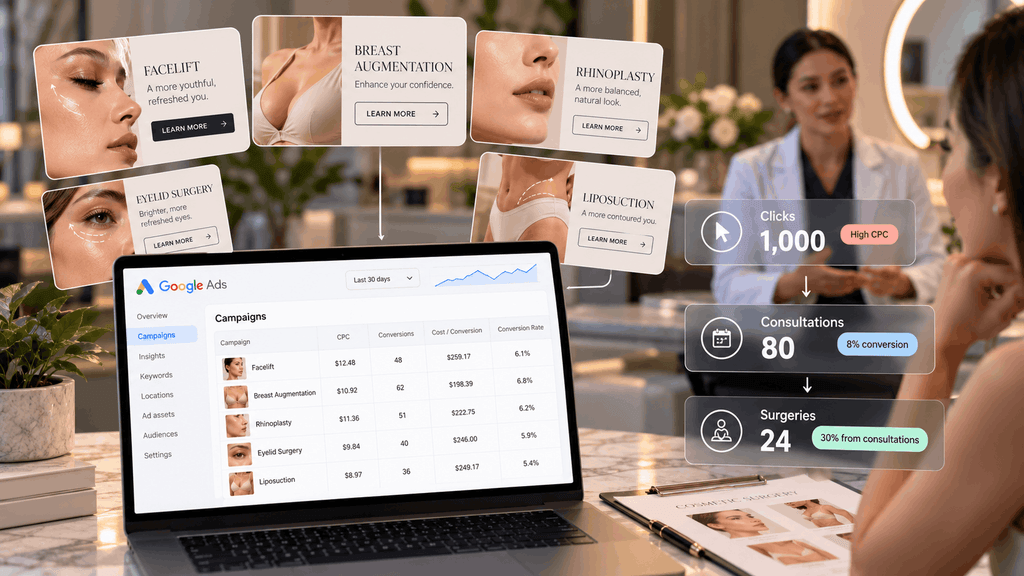
Click costs in cosmetic surgery are among the highest in local advertising, and competition is heaviest in large metro markets. At those prices, the question is not how many clicks you get but how many become consultations and then surgeries.
High-ticket procedures also carry long decision cycles. A patient researching a facelift may search dozens of times over several months. Your account needs to be built so budget flows to the searches closest to booking, while earlier research is handled cheaply or left to organic content.
That is why generic setups fail. A single campaign bidding on “plastic surgery” lets automated systems decide where the money goes, and it usually goes to the cheapest, least qualified traffic. A structured paid search strategy puts those decisions back in your hands.
Campaign Ideas for High-Ticket Cosmetic Procedures
Procedure-Specific Search Campaigns
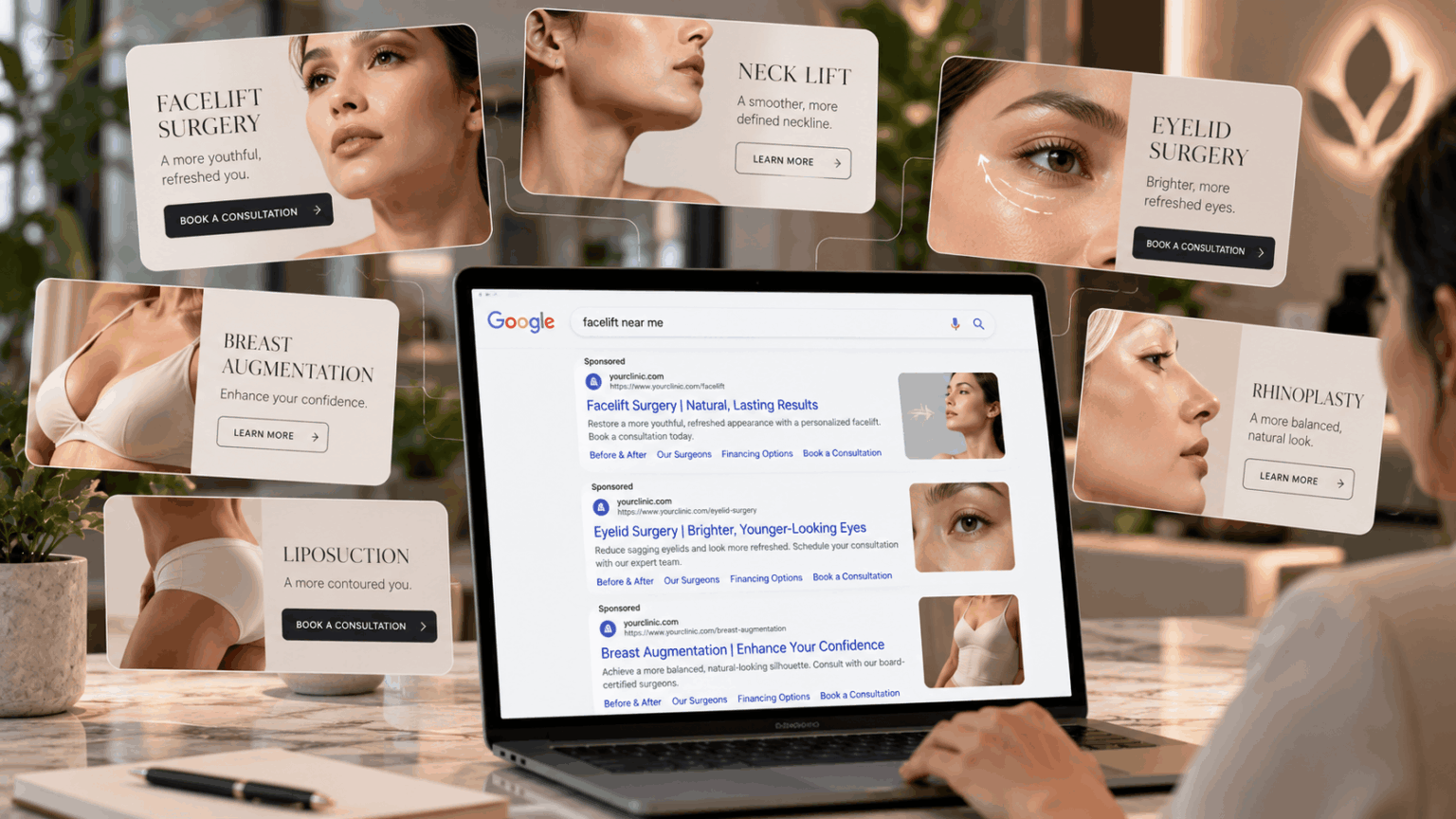
Give each major procedure its own campaign: facelift, rhinoplasty, breast augmentation, tummy tuck, mommy makeover. Separate budgets stop one high-volume procedure from starving the others, and separate reporting shows which service line actually pays back.
Inside each campaign, build tight ad groups by intent: the procedure plus “surgeon,” the procedure plus a location, and the procedure plus “consultation.” Ad copy should mirror each theme, and every ad group should point to its own landing page.
Cost and Financing Intent Campaigns
Searches that include “cost,” “price,” or “financing” come from patients who have mostly decided and are checking fit. These deserve their own campaign because the landing page and message are different. Send them to a page that explains what shapes the price, gives a realistic range or quote process, and shows monthly payment options.
Some practices worry that cost searchers are bargain hunters. Most are not. Filter true discount seekers with negative keywords instead of avoiding cost intent entirely.
Location-Targeted Campaigns for Each Market
Patients rarely travel far for a consultation, so location settings matter. Set a realistic radius around each office, exclude areas that click but never book, and review location performance reports monthly. Practices with multiple offices should run a campaign per location so budgets and results stay separate.
Combine this with a strong organic presence. A patient who sees your ad and your Google Business Profile in the same search trusts you faster, which is why paid campaigns work best alongside solid local SEO.
Surgeon Name and Brand Protection Campaigns
Patients who search your surgeon’s name or practice name are the warmest traffic you will ever get. A low-cost brand campaign keeps competitors from appearing above you on those searches and gives you control over the message, such as highlighting a consultation offer or a new procedure.
Virtual Consultation Campaigns
For procedures with long decision cycles, a lower-commitment first step can lift conversion rates. Campaigns that promote a virtual consultation or photo-based assessment let patients start the conversation from home. Qualify them with a short form and move serious candidates to an in-person visit.
Revision and Specialty Procedure Campaigns
Revision rhinoplasty, breast implant revision, and secondary facelift searches have lower volume but very high intent and less competition. Patients searching these terms often have a specific problem and are ready to act. A small, dedicated campaign with specialist messaging can deliver some of the best cost per consultation in the account.
Video Campaigns for Consideration
YouTube and Demand Gen campaigns work better for education than immediate bookings. Short surgeon videos explaining recovery, candidacy, or what to expect at a consultation build familiarity with patients who are still researching. Treat these as a supporting layer inside a wider paid advertising plan, not a replacement for search.
Negative Keywords That Protect a Premium Budget
Every irrelevant click in this category is expensive. Build a negative keyword list before launch and review the search terms report weekly.
Common exclusions include career terms such as “jobs,” “salary,” “residency,” and “school,” along with discount terms such as “free,” “cheap,” and “groupon.” Many practices also exclude searches for procedures they do not perform, nonsurgical treatments if the campaign is surgical, and terms signaling interest in travel abroad for surgery.
Match types matter here too. Broad match combined with weak negatives is the fastest way to spend a premium budget on searches that were never going to book. Start with the phrase and exact match, expand carefully, and let the search terms report guide every change.
Ad Copy That Filters Before the Click
Every click costs money, so the ad itself should do some qualifying. Copy that mirrors the search and speaks plainly about who the procedure is for attracts the right patient and gives the wrong one a reason to keep scrolling.
Lead with the procedure and location the patient searched for, then add the details that matter at this price point: board certification, years performing the procedure, consultation availability, and financing. Avoid discount language. Phrases like “lowest price” or “limited-time deal” pull in the bargain hunters your negative keywords are trying to block, and they undercut the trust a surgical patient is looking for.
Assets carry much of the load. Sitelinks to the before-and-after gallery, the financing page, and the consultation booking page give ready patients a direct route. Call assets suit mobile searchers who prefer to phone, and location assets reassure patients that the office is close. Test headlines regularly, but judge them on consultations booked rather than click-through rate alone. In cosmetic surgery Google Ads, a headline with fewer clicks and more bookings is the better ad.
Working Within Google’s Healthcare Advertising Policies
Healthcare ads face stricter review than most categories. Google evaluates ad text, images, and landing pages, and it can limit or disapprove ads that make exaggerated claims or use restricted imagery. Certain trademarked product names may be limited in ad copy, and personalized targeting such as remarketing is restricted for many health-related topics.
Review Google’s healthcare and medicines policies and its personalized advertising rules before launch, and check them again whenever you add a new procedure or creative. Keep claims factual, avoid guarantees, and place before-and-after galleries on your website with patient consent rather than in ads. Rules also differ by country, so practices advertising across borders need to check each market.
Landing Pages That Match the Ad
The ad earns the click, and the landing page earns the consultation. Sending paid traffic to a homepage or a general services page wastes a large share of spend.
Each campaign should have a page that matches its promise. A facelift consultation ad leads to a facelift page with the procedure in the headline, surgeon credentials, gallery previews, recovery expectations, financing options, and a short form above the fold. Remove the main navigation so visitors have one path forward, and make sure the page loads fast on a phone. A conversion-focused website design approach treats these pages as part of the campaign, not an afterthought.
Bidding and Budget Setup for Cosmetic Surgery Google Ads
Automated bidding only works as well as the conversion data it receives. New accounts, or accounts with messy tracking, often do better starting with manual CPC or a tightly capped strategy while the team tests keywords, ads, and landing pages.
Once the account records a steady stream of real conversions, strategies such as Maximize Conversions or Target CPA become useful. The key is feeding them the right signal. Counting every page view or chat open as a conversion teaches the system to find people who click, not people who book.
Set budgets by working backward from what a consultation is worth to your practice. If you know your consultation-to-surgery rate and average case value, you can calculate an acceptable cost per consultation and judge each campaign against it.
Tracking What Actually Matters
Clicks and form fills are only the beginning. Strong cosmetic surgery Google Ads accounts track the full path from search to surgery.
Call tracking attributes phone inquiries to the keyword and ad that generated them, which matters because many cosmetic patients prefer to call. Form tracking should record which campaign and landing page produced each submission. The most valuable step is importing offline conversions from your CRM, so Google knows which clicks became consultations held and surgeries booked. That feedback loop is what lets automated bidding optimize toward revenue instead of raw lead volume.
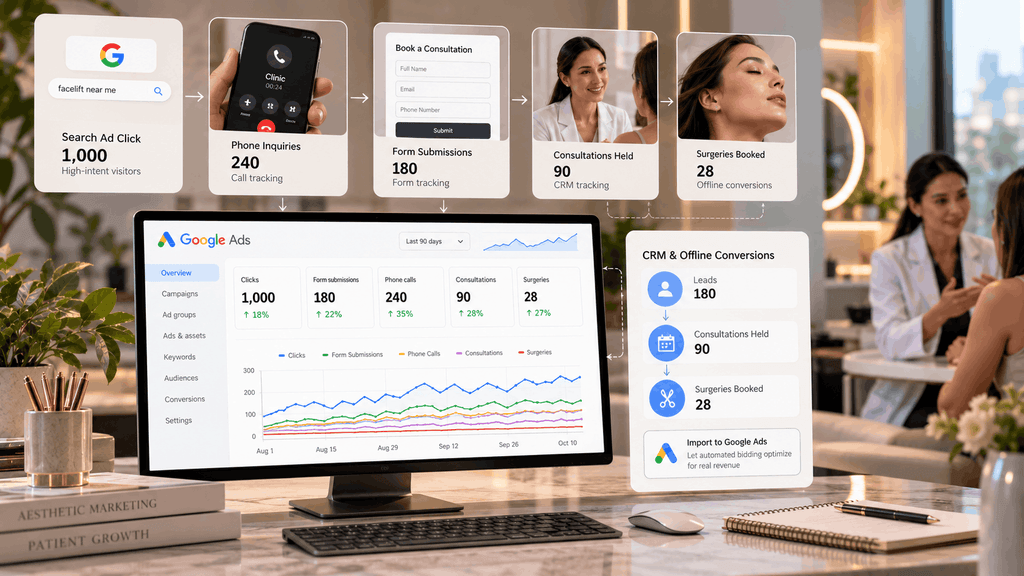
Review results by procedure and campaign each month. Budget should follow cost per booked surgery, not cost per click. Practices that manage cosmetic surgery Google Ads this way typically find that a few campaigns produce most of the revenue, and they scale those while trimming the rest. You can see how this approach plays out in our client results.
Cosmetic Surgery Google Ads: Questions Practices Ask
How much should a practice budget for Google Ads?
Budget depends on your market, the procedures you promote, and local competition. Work backward from an acceptable cost per consultation, start with enough spend to gather meaningful data on your priority procedures, and scale once you can see which campaigns book surgeries.
Can plastic surgeons use remarketing on Google?
Remarketing is restricted for many health-related categories under Google’s personalized advertising policies. Check the current rules for your procedures and market before building audience lists, and focus on capturing patients through strong search campaigns and landing pages.
Should each procedure have its own campaign?
For high-ticket procedures, yes. Separate campaigns give each procedure its own budget, ad copy, landing page, and reporting, so you can see which service lines are profitable and prevent one procedure from absorbing all the spend.
How long before a new campaign delivers consultations?
Well-built search campaigns often generate inquiries within the first few weeks. Reaching a stable, efficient cost per consultation usually takes around three months of data, testing, and negative keyword refinement.
Is Performance Max a good fit for cosmetic surgery?
It can work for mature accounts with clean conversion tracking, but it offers less control over where ads appear. Most practices should build strong search campaigns first and test Performance Max only after reliable conversion data is flowing.
Scaling High-Ticket Procedures With Smarter Paid Search
The practices that win in paid search are not the ones spending the most. They separate campaigns by procedure and intent, protect budgets with disciplined negatives, and measure success in booked surgeries. LeadOrigin is an award-winning agency with over $1 billion in revenue generated for clients, and our paid media team builds accounts around those principles. Contact LeadOrigin to plan a Google Ads strategy for your highest-value procedures.