

Commercial roofing lead generation helps contractors connect with property owners, facility managers, and businesses that need roof installation, repairs, or maintenance. Unlike residential roofing, commercial projects often involve larger budgets, longer sales cycles, and multiple decision-makers.
Getting consistent leads requires a marketing strategy that reaches the right businesses and gives them a reason to choose your company. This guide covers 10 practical commercial roofing marketing strategies, along with ways to improve lead quality and measure results.
What Is Commercial Roofing Lead Generation?
Commercial roofing lead generation is the process of attracting potential customers who need roofing services for commercial, industrial, or institutional properties. These services may include roof installation, replacement, inspections, repairs, preventive maintenance, and restoration.
Effective lead generation connects roofing contractors with businesses that have an actual need for these services. That means reaching the right decision-makers, communicating your capabilities clearly, and making it easy for prospects to request an estimate or consultation.
How Commercial Roofing Leads Differ From Residential Roofing Leads
Residential roofing typically involves homeowners making decisions about their own properties. Commercial roofing projects, however, may require approval from property managers, business owners, facility directors, or procurement teams.
Commercial buyers also tend to evaluate contractors differently. Along with pricing, they may consider insurance requirements, safety procedures, experience with specific roofing systems, project timelines, and the ability to minimize business disruptions.
Because of these differences, commercial roofing marketing needs to emphasize technical expertise, reliability, and experience handling larger projects.
Who Are the Ideal Clients for Commercial Roofing Companies?
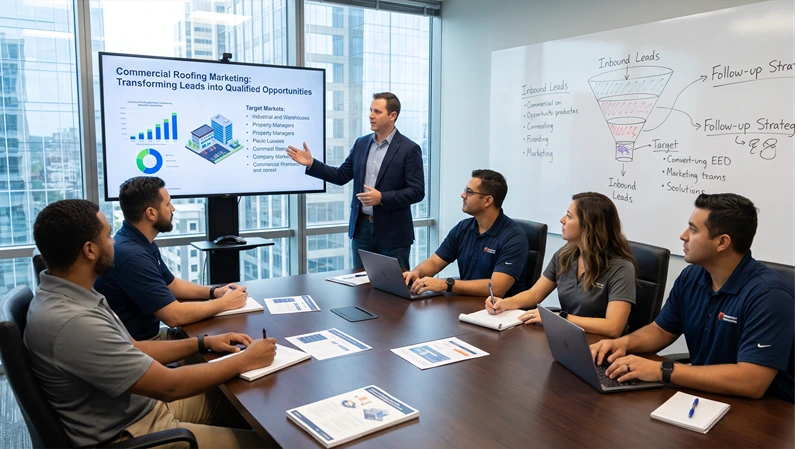
The right customers depend on your company’s services, project capacity, and geographic coverage. Common commercial roofing clients include:
- Commercial property owners and real estate investors
- Property management companies
- Facility and maintenance managers
- General contractors and construction companies
- Warehouse and industrial facility operators
- Retail centers, office buildings, and hospitality businesses
- Schools, healthcare facilities, and other institutions
Identifying these audiences helps you create marketing messages that address their specific roofing needs.
Why Commercial Roofing Lead Generation Matters for Business Growth
Commercial roofing projects can provide substantial revenue, but opportunities may take months to move from the initial inquiry to a signed contract. Relying only on word-of-mouth referrals can leave contractors with an unpredictable project pipeline.
A consistent lead generation strategy helps your business stay visible while potential customers research contractors, compare proposals, and plan future roofing work. It also creates opportunities to build relationships before an urgent repair or replacement is needed.
Rather than chasing every inquiry, successful commercial roofing lead generation focuses on attracting qualified prospects who match your services, service area, and project requirements.
10 Effective Commercial Roofing Lead Generation Strategies
There are several ways to reach commercial roofing customers, but the most effective approach usually combines online visibility, targeted outreach, and strong industry relationships.
1. Invest in Commercial Roofing SEO to Increase Online Visibility
Commercial roofing SEO helps your website appear in search results when potential customers look for roofing contractors and services in your area.
Start by creating dedicated pages for your primary services, such as commercial roof replacement, flat roof repair, TPO roofing, and roof maintenance. Include relevant service locations and explain the types of properties and roofing systems your company handles.
Target commercial-specific searches such as “commercial roofing contractor in Houston” or “warehouse roof repair” rather than relying entirely on broad roofing keywords.
A strong SEO strategy should also include:
- Clear page titles and meta descriptions
- Service pages with useful technical information
- Internal links between related roofing services
- Fast-loading, mobile-friendly website pages
- Local business information and consistent contact details
Commercial roofing SEO takes time, but it can generate ongoing inquiries from businesses actively researching roofing services.
2. Optimize Your Google Business Profile for Local Commercial Roofing Leads
Your Google Business Profile helps potential customers find your company through Google Search and Maps. It can be particularly useful when property managers or business owners search for nearby roofing contractors.
Make sure your profile includes accurate business information, appropriate service categories, operating hours, and a link to your website. Upload photographs of completed commercial projects and keep your service areas updated.
Customer reviews also matter. Encourage satisfied commercial clients to share feedback about your workmanship, communication, and project management.
A complete, regularly maintained profile can improve your local presence and make it easier for prospective customers to contact your team.
3. Build High-Converting Commercial Roofing Landing Pages
Getting visitors to your website is only useful if they can quickly find the information they need.
Create landing pages for specific services or campaigns, such as commercial roof inspections, emergency repairs, or industrial roof replacement. Each page should explain the service, highlight relevant experience, and provide a clear way to request an estimate.
Strong commercial roofing landing pages typically include:
- A headline identifying the service and location
- A brief explanation of your capabilities
- Photos or examples of completed projects
- Relevant licenses, certifications, and insurance information
- A simple contact form and visible phone number
- A clear call to action
Keep forms straightforward, but collect enough information to identify the property type, location, and requested service.
4. Use Google Ads for Commercial Roofing Lead Generation
Google Ads can help contractors reach businesses already searching for commercial roofing services. Unlike SEO, paid search campaigns can begin generating visibility shortly after launch.
Focus your campaigns on commercial-intent keywords such as “commercial roof repair contractor” or “flat roof replacement company.” Use geographic targeting to reach customers within your actual service area.
Negative keywords can help reduce irrelevant traffic from residential roofing searches, job seekers, and DIY inquiries.
Send visitors to a landing page that matches the advertisement rather than directing every click to your homepage. Track calls, form submissions, and qualified opportunities to understand which campaigns are generating useful leads.
5. Develop a Commercial Roofing Content Marketing Strategy
Commercial property owners often research roofing problems before contacting a contractor. Helpful website content can introduce your business during that research process.
Create articles that answer common questions about roof maintenance, repair costs, replacement timelines, and roofing materials.
For example, useful topics might include:
- Signs a commercial flat roof needs replacement
- TPO vs. EPDM roofing for commercial buildings
- How often commercial roofs should be inspected
- What affects commercial roof replacement costs
Well-written content supports commercial roofing SEO while demonstrating your knowledge of the issues commercial property owners face.
6. Leverage LinkedIn and B2B Networking for Roofing Contractor Lead Generation
LinkedIn provides opportunities to connect directly with commercial real estate professionals, facility managers, and business decision-makers.
Build a professional company profile that highlights your services, completed projects, and areas of expertise. Share project updates, maintenance insights, and information relevant to commercial property management.
You can also connect with local property managers, general contractors, and commercial real estate professionals.
Keep your outreach relevant and professional. Instead of sending generic sales pitches, focus on building relationships and demonstrating how your services address their property maintenance needs.
7. Build Referral Partnerships With Commercial Property Professionals
Referrals remain valuable in commercial roofing because property owners often rely on recommendations from professionals they already trust.
Develop relationships with commercial property managers, general contractors, building inspectors, real estate brokers, and facility maintenance providers.
These professionals may encounter clients who need roofing repairs, inspections, or replacements. Maintaining strong relationships can help your company become a trusted contact when those needs arise.
Stay in touch, deliver reliable work, and make it easy for partners to refer suitable projects.
8. Use Email Marketing to Nurture Commercial Roofing Leads
Not every commercial roofing prospect is ready to hire a contractor immediately. Some may be planning next year’s maintenance budget or evaluating future replacement options.
Email marketing helps you stay connected during that decision-making process.
Share useful information such as seasonal inspection reminders, maintenance recommendations, project updates, and service announcements. Segment your contacts based on property type, past inquiries, or service needs so the messages remain relevant.
For example, a facility manager who requested an inspection might appreciate a follow-up about preventive maintenance planning.
Keep emails helpful and avoid overwhelming prospects with repeated sales messages.
9. Showcase Commercial Roofing Projects, Reviews, and Testimonials
Commercial buyers want evidence that your company can handle projects similar to theirs. Project portfolios, case studies, and customer testimonials help establish that credibility.
Highlight completed work with details such as the property type, roofing system, project scope, and challenges addressed.
For example, a warehouse roof replacement case study could explain how your team coordinated the project while minimizing disruptions to daily operations.
Include photographs and customer feedback when you have permission to share them. Specific examples provide stronger proof of your capabilities than general claims about quality.
10. Use Commercial Roofing Lead Generation Platforms and Industry Directories
Industry directories and contractor platforms can provide another way for commercial buyers to discover your business.
Look for reputable construction directories, local business associations, and commercial contractor networks that serve your target market. Some platforms also publish bidding opportunities or connect contractors with property owners.
Before paying for listings or leads, evaluate the platform’s audience, pricing, geographic coverage, and lead verification process.
Track which directories generate qualified inquiries so you can focus on the ones that provide worthwhile opportunities.
Read more: How a Fast Website Can Boost Local SEO and Lead Generation
How to Build a Successful Commercial Roofing Marketing Strategy
Using several lead generation channels can improve your reach, but those efforts need a clear plan. Start with your ideal customers, then choose marketing activities that match how they search for and evaluate roofing contractors.
Identify Your Ideal Commercial Roofing Customers
Consider which projects are most profitable and practical for your company. You might specialize in industrial facilities, retail properties, office buildings, or commercial roof maintenance.
Define your preferred project size, roofing systems, service locations, and customer types. This helps prevent spending marketing resources on inquiries your business cannot effectively serve.
Choose the Right Commercial Roofing Marketing Channels
Different channels serve different purposes. SEO and Google Ads can reach customers actively searching for contractors, while LinkedIn, referrals, and email marketing support longer-term business relationships.
Start with channels that match your available budget and resources. Expand once you understand which activities generate qualified opportunities.
Establish a Consistent Lead Follow-Up Process
Commercial roofing inquiries can lose momentum when follow-up is delayed or inconsistent. Establish a process for responding to new leads, gathering project details, scheduling inspections, and preparing proposals.
A customer relationship management (CRM) system can help your team track conversations, upcoming appointments, and outstanding estimates.
Prompt, organized communication also gives potential customers an early impression of how your company manages projects.
Create a Commercial Roofing Marketing Budget
Set a budget based on your revenue targets, average project value, and available marketing resources. Account for website maintenance, SEO, paid advertising, content creation, and any lead generation platforms you use.
Review spending against qualified opportunities and closed projects. This helps you invest in activities that contribute to revenue rather than simply generating traffic.
Read more: Seasonal Content Ideas for Residential Roofing Companies
How to Measure Commercial Roofing Lead Generation Success
Lead generation should produce business opportunities, not just website visits or form submissions. Tracking the right metrics helps you understand which marketing activities are bringing in potential customers.
Key Performance Indicators for Commercial Roofing Marketing
Some of the most useful metrics include:
- Qualified leads: Inquiries that match your services, location, and project requirements
- Cost per qualified lead: Marketing spending divided by the number of qualified inquiries
- Lead-to-estimate rate: The percentage of leads that progress to an inspection or estimate
- Estimate-to-contract rate: The percentage of proposals that become signed projects
- Customer acquisition cost: Total marketing and sales costs associated with acquiring a new customer
- Revenue by marketing channel: Project revenue attributed to SEO, paid ads, referrals, and other sources
Review these metrics regularly to identify opportunities for improvement.
How to Track and Improve Lead Quality
Record where each inquiry originated and collect important details such as property type, project location, service requirements, and expected timeline.
This information helps distinguish serious commercial opportunities from unrelated or low-value inquiries.
If a campaign generates plenty of leads but few qualified projects, review its keywords, targeting, landing page messaging, and contact forms. Small adjustments can improve lead quality without necessarily increasing advertising spending.
Read more: Review Management Strategies for Roofing Companies
Common Commercial Roofing Lead Generation Mistakes to Avoid
Even established roofing contractors can waste marketing resources when their campaigns attract the wrong audience or fail to convert interested prospects.
Targeting Residential Roofing Keywords Instead of Commercial Roofing Keywords
Broad roofing keywords may attract homeowners looking for residential services. Use commercial-specific terms that reflect the roofing systems, property types, and services your business handles.
Neglecting Local SEO and Google Business Profile Optimization
An outdated website or incomplete Google Business Profile can make your company harder to find. Keep your business information accurate and create location-relevant service content.
Failing to Follow Up With Commercial Roofing Leads
Commercial buyers often contact several contractors before making a decision. Delayed responses, missed calls, and inconsistent follow-ups can cost your business valuable opportunities.
Relying on Only One Lead Generation Channel
Depending entirely on referrals or paid advertising can create gaps in your project pipeline. Combining search visibility, industry relationships, and targeted outreach provides a broader foundation for generating leads.
Focusing on Lead Quantity Instead of Lead Quality
A large number of inquiries means little if most prospects need residential services or projects outside your coverage area. Prioritize leads that match your capabilities and have a realistic chance of becoming customers.
Turn Commercial Roofing Marketing Into More Qualified Opportunities
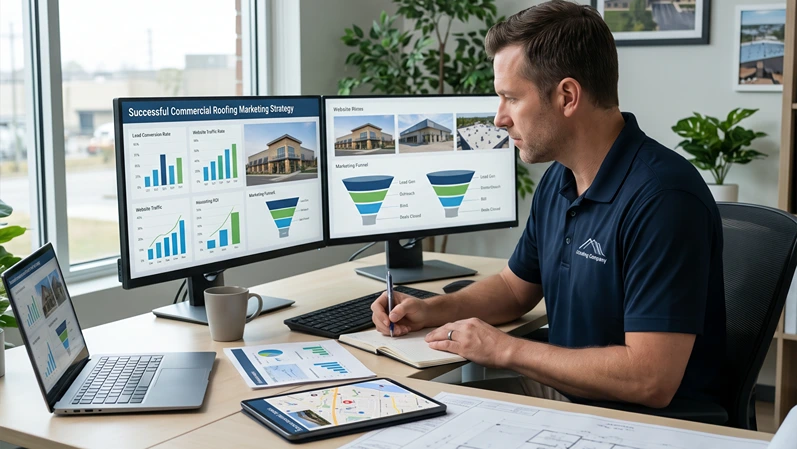
Generating commercial roofing leads requires a consistent approach to reaching the right decision-makers and giving them a reason to contact your business. SEO, Google Ads, targeted content, and industry partnerships can all contribute, but the real value comes from turning those inquiries into qualified projects.
That also means paying attention to what happens after someone reaches out. Clear service pages, prompt follow-ups, and reliable lead tracking help prevent potential opportunities from getting lost.
LeadOrigin helps businesses strengthen their online presence and develop digital marketing strategies that support lead generation. For commercial roofing contractors, that can mean improving search visibility, reaching relevant prospects, and making better use of marketing resources.
Want to attract more commercial roofing clients? Contact LeadOrigin to discuss your marketing needs and explore ways to generate more qualified leads for your roofing business.
Frequently Asked Questions
How Do Commercial Roofing Companies Generate Leads?
Commercial roofing companies generate leads through SEO, Google Ads, Google Business Profile optimization, industry referrals, LinkedIn networking, and targeted content marketing. Combining these channels helps contractors reach property owners, facility managers, and businesses looking for roofing services.
What Is the Best Marketing Strategy for Commercial Roofing Contractors?
An effective commercial roofing marketing strategy combines commercial-specific SEO, local search visibility, targeted advertising, and professional referral relationships. The right mix depends on the contractor’s service area, project specialties, budget, and ideal customers.
How Can Commercial Roofing Contractors Get More Commercial Clients?
Commercial roofing contractors can attract more clients by targeting commercial roofing keywords, building relationships with property managers and general contractors, showcasing completed projects, and following up consistently with qualified inquiries.
Does SEO Work for Commercial Roofing Companies?
Yes. Commercial roofing SEO helps contractors appear in search results when businesses look for roof repair, installation, replacement, or maintenance services. Targeted service pages, location-specific content, and an optimized Google Business Profile can improve visibility among relevant prospects.
How Much Does Commercial Roofing Lead Generation Cost?
Commercial roofing lead generation costs vary based on location, competition, marketing channels, and campaign scope. SEO may involve ongoing content and website expenses, while paid advertising typically includes media spending and management fees. Contractors should evaluate cost per qualified lead and customer acquisition cost rather than relying on a fixed industry-wide estimate.