Most HVAC companies sell maintenance plans the same way: a technician mentions it at the end of a service call, the homeowner says they will think about it, and the opportunity disappears. Even customers who do sign up often let their plans lapse because nobody reminds them of the value. Strategic email marketing for HVAC companies changes that pattern by turning one-time service customers into members, keeping members engaged, and making renewals feel automatic.
Maintenance agreements create recurring revenue, smooth out seasonal swings, and build loyal customers who call you first when it is time to replace a system. Email is one of the most cost-effective ways to grow and protect that revenue. Here is how to build a program that works.
Why Maintenance Plans and Email Belong Together
Maintenance plans run on timing. Tune-ups happen twice a year, renewals come up annually, and equipment ages on a predictable schedule. Email lets you show up at each of those moments without relying on technicians or office staff to remember every customer.
Email also gives you room to explain value. A plan’s benefits, such as priority scheduling, seasonal tune-ups, repair discounts, and fewer breakdowns, are hard to communicate in a rushed conversation at the end of a service call. A short, well-timed sequence can explain them clearly and give homeowners time to decide.
Build and Segment Your List
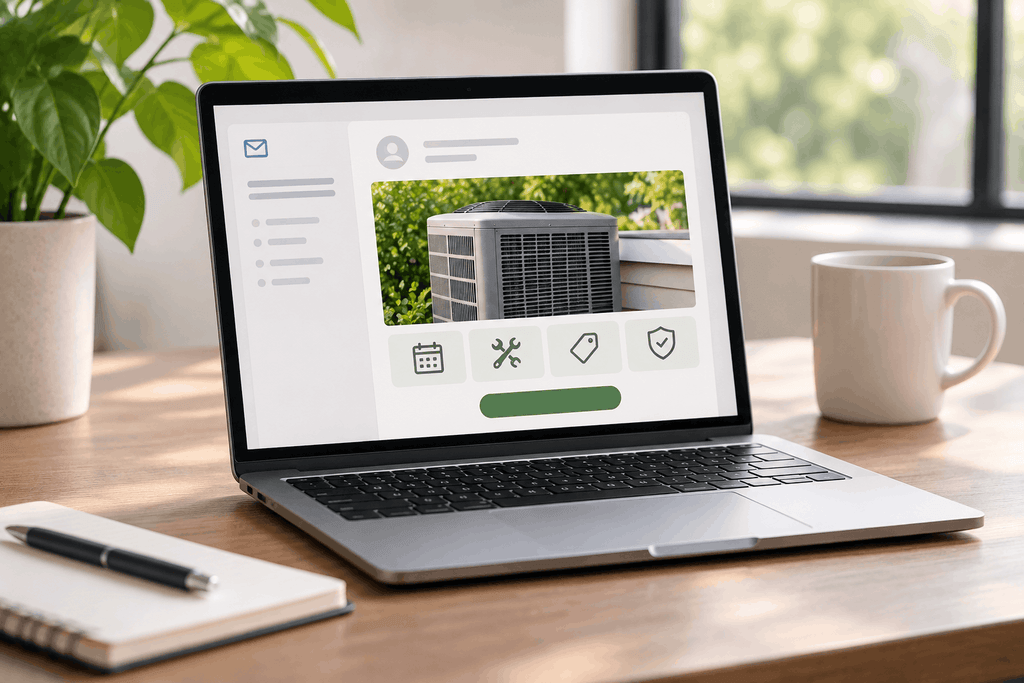
Your best email list already exists inside your field service software. Every service call, estimate, installation, and online booking produces a customer record. Collect email addresses consistently at booking and on invoices, and make sure customers understand you will send service reminders and updates. Keep records of how and when each contact joined your list.
Segmentation is what makes HVAC email effective. Sending the same message to everyone wastes the opportunity. Useful segments include active plan members, members approaching renewal, lapsed members, customers who have never joined a plan, customers with recently installed systems, customers with aging equipment, and commercial clients. Each segment needs a different message, timing, and call to action.
Email Marketing for HVAC Maintenance Plans: Core Sequences
Automated sequences do most of the work. Each one triggers from a specific event in the customer’s history, so the right message arrives at the right moment. These are the sequences that make email marketing for HVAC plans pay off.
Post-Service Conversion Sequence
Customers who just paid for a repair are the most receptive audience for a maintenance plan. Within a few days of the visit, send a short sequence that thanks them, explains how regular maintenance helps catch problems early, and outlines plan benefits such as priority scheduling and repair discounts. Keep the tone helpful rather than pushy. A second email a week or two later can share a customer story or a simple comparison of plan costs versus common repair costs, based on your actual pricing.
New Installation Onboarding Sequence
Homeowners who just invested in a new system want to protect it. Welcome them with care tips, explain what routine maintenance involves, and introduce your plan as the easiest way to keep the system running efficiently. Some manufacturer warranties include maintenance requirements, so encourage customers to review their warranty terms and keep service records. Accurate information here builds trust and gives the plan a clear purpose.
Member Welcome Sequence
New members should immediately feel the value of joining. Send a welcome email that explains every benefit, how to schedule tune-ups, how priority service works, and who to contact. Follow up with a short email showing how to get the most from the plan. Members who understand their benefits are far more likely to use them and renew.
Seasonal Tune-Up Reminders
Send AC tune-up reminders in spring and furnace tune-up reminders in fall, with a direct online booking link. Schedule reminders before the busy season so you can fill shoulder-season capacity. Pairing email with a short text reminder often improves booking rates, and SMS marketing works well for this when customers have opted in to receive texts.
Renewal Sequence
Start renewal emails well before the expiration date, then follow up as it approaches. Lead with a value recap: tune-ups completed, discounts saved, and priority service used. If your plans renew automatically, make sure your notices and cancellation process follow the automatic renewal laws in the states where you operate, since many states set specific disclosure and notice requirements.
Win-Back Sequence for Lapsed Members
Members who let their plan expire are still warm contacts. A short sequence that reminds them what they are missing, highlights an upcoming season, and makes rejoining easy can recover a meaningful share of lapsed revenue. Ask for feedback too, since the reasons members leave often point to fixable issues. If price is the common objection, consider offering a lighter plan tier rather than discounting the main plan, so returning members still see clear value at a level that fits their budget.
Aging Equipment Sequence
Customers with systems approaching the end of their typical lifespan need a different message. A plan helps them get the most out of older equipment, and regular visits give your technicians a chance to assess when replacement makes financial sense. Send this segment content about extending system life, warning signs of decline, and how members get priority estimates when the time comes. This sequence protects plan revenue today and builds a pipeline of replacement opportunities.
Annual Value Recap
Once a year, send each member a personalized summary of what their plan delivered: visits completed, issues caught early, and savings on repairs. This single email reinforces the decision to join and makes the next renewal much easier.
Mix Helpful Content Into the Calendar
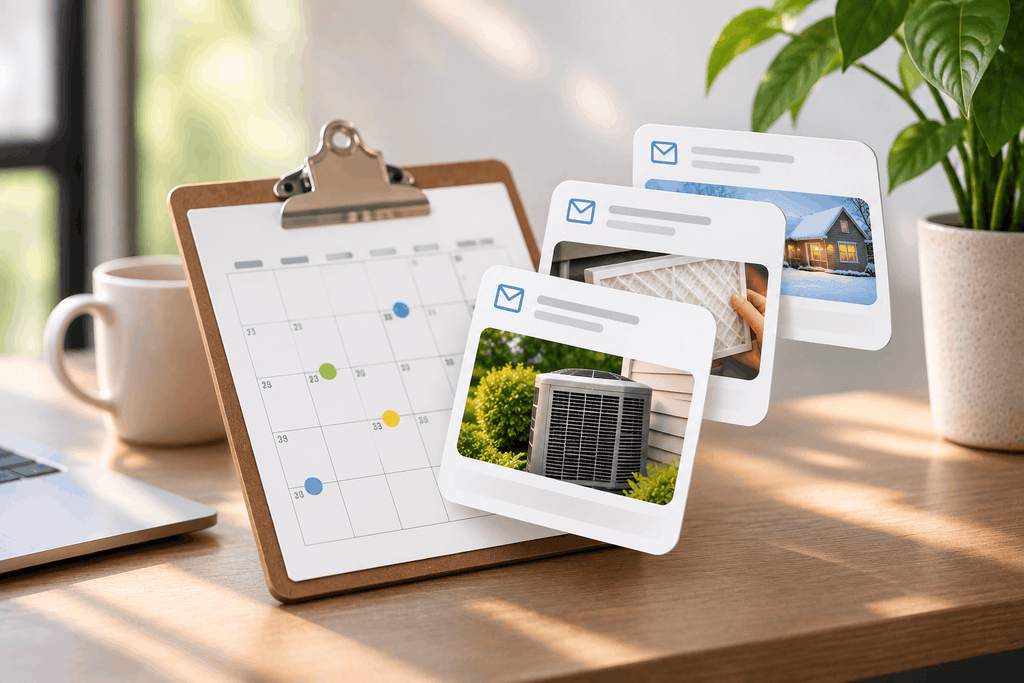
If every email asks for money, engagement drops. Between plan offers and reminders, send occasional useful content: how to change a filter, what to check before calling for service, how to lower energy bills during a heat wave, or how to prepare a system for winter. Helpful emails keep open rates healthy, which supports deliverability, and they position your company as a trusted advisor rather than a seller. Reusing your best blog articles makes this easy, and content writing support can keep a steady supply of seasonal tips ready.
Write Emails Homeowners Actually Read
HVAC customers are busy, so clarity beats creativity. Use subject lines that state the benefit or action plainly, such as “Time to book your spring AC tune-up” or “Your maintenance plan renews next month.” Keep each email focused on one call to action. Write in plain language and avoid technical jargon unless you explain it.
Personalization helps. Use the customer’s name, reference their equipment or last service date when available, and send from a recognizable name, such as the company owner or the customer’s regular technician. Most emails are opened on phones, so keep layouts simple, buttons large, and text short. Professional email marketing design and copy keep messages consistent with your brand across every sequence.
Stay Compliant and Deliverable
Commercial email in the United States must follow the CAN-SPAM Act, which requires accurate sender information, honest subject lines, a valid physical mailing address, and a working way to opt out that you honor promptly. Major mailbox providers also set requirements for bulk senders, including email authentication through SPF, DKIM, and DMARC, easy unsubscribes, and low spam complaint rates.
Protect deliverability by cleaning your list regularly, removing bounced and long-inactive addresses, and sending only to customers who expect to hear from you. Sudden large sends to old, unengaged lists are a common cause of emails landing in spam folders.
Connect Email to Your Field Service Software
The most effective programs run on automation tied to real customer data. Trigger sequences from events in your field service or CRM system: a completed repair, a new installation, a plan signup, an approaching expiration date, or equipment reaching a certain age. Automation ensures every customer gets the right message on time, even during peak season when office staff have no time for manual follow-up.
Make sure every email links to a simple plan signup or booking page. A confusing or slow page will undo even the best email. Clear website design for plan signup pages, with benefits, pricing, and a short form, turns email clicks into new members.
Measure Plan Revenue, Not Just Opens
Open rates are increasingly unreliable because of mailbox privacy features, so focus on outcomes. Track how many non-members join a plan after receiving the post-service sequence, your renewal rate, tune-up booking rates from reminders, win-back recovery, and revenue generated per email sent. Watch unsubscribe and spam complaint rates as warning signs. These numbers show whether email marketing for HVAC maintenance plans is growing recurring revenue or just filling inboxes.
Email Marketing for HVAC Maintenance Plans: Common Questions
How often should HVAC companies email maintenance plan members?
Members typically need fewer, more useful emails: a welcome sequence, seasonal tune-up reminders in spring and fall, renewal notices, and an annual value recap. Occasional helpful tips are fine, but avoid weekly promotions. Every email should give members a clear reason to open it.
What is the best time to offer a maintenance plan by email?
Shortly after a repair or new installation, when the customer is most aware of their system’s value and potential problems. A short post-service sequence sent within days of the visit tends to convert best, followed by seasonal reminders that reintroduce the plan before peak demand.
Should HVAC maintenance plans renew automatically?
Automatic renewal can improve retention, but it comes with legal obligations. Many states have automatic renewal laws that require clear disclosures, consent, renewal reminders, and simple cancellation. Review the rules for each state you serve and send clear renewal notices so customers are never surprised by a charge.
Do HVAC companies need SMS as well as email?
Email works well for explaining plan value and sending recaps, while text messages are effective for short, time-sensitive reminders like tune-up scheduling. Many companies use both. Texts require clear consent, so collect opt-ins separately and include easy opt-out instructions.
What metrics matter most for HVAC email campaigns?
Focus on plan conversion rate from post-service emails, renewal rate, tune-up bookings from reminders, and revenue per email. Unsubscribe and spam complaint rates help you spot problems early. Successful email marketing for HVAC companies is measured in members gained and retained, not opens.
Turning One-Time Customers Into Members
Maintenance plans are one of the most reliable growth levers in HVAC, and email is the engine that sells, supports, and renews them. Segment your list, automate the key sequences, keep messages clear and compliant, and measure success in recurring revenue. LeadOrigin is a full-service, award-winning agency that helps home service companies build email programs tied to real business results. Contact our team to start growing your maintenance plan revenue.