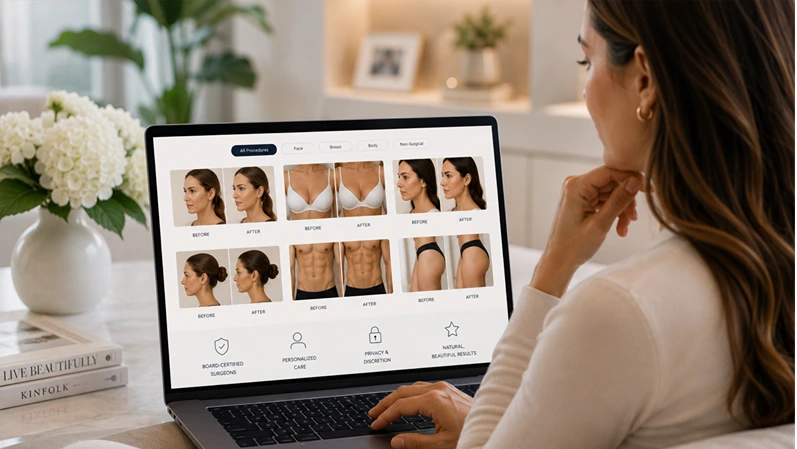
Before a prospective patient books a consultation, they want evidence. They want to see real results from real procedures performed by the surgeon they are considering. Before-and-after galleries are the most direct form of that evidence, and for plastic surgery practices, they are one of the highest-converting assets in a digital marketing strategy.
What Before-and-After Galleries Actually Do for a Practice
They Reduce the Perceived Risk of the Decision
Any cosmetic or reconstructive procedure involves an element of vulnerability. Patients place significant trust in surgeons, both financially and physically. Seeing a gallery of results from similar procedures performed on patients with comparable anatomy reduces the uncertainty that keeps prospects from committing.
A well-organized before-and-after gallery tells a prospective patient: these results are achievable, this surgeon has done this before, and this outcome is not hypothetical. That shift from abstract possibility to visual proof is what drives consultation bookings.
They Differentiate One Practice from Another
Most plastic surgery practices have similar credentials on paper. What sets them apart in a competitive market is the visible quality and volume of their results. A practice with a robust, searchable, well-photographed gallery creates a meaningful competitive gap that no amount of awards language can replicate.
Website design plays a significant role here. Galleries that are easy to filter by procedure, body area, or patient profile convert significantly better than static image dumps buried on a single page.
Building a Gallery That Actually Converts

Photography Standards Are Non-Negotiable
The quality of the photography in a before-and-after gallery directly affects how prospects perceive the quality of the surgical work. Inconsistent lighting, varying angles, different clothing choices, and poor image resolution undermine the credibility of even exceptional outcomes.
Establish a consistent photography protocol for every procedure. Same lighting setup, same angles, same background, same timeframe for post-op photos. This consistency lets the results speak without distraction.
Organize by Procedure and Patient Profile
A visitor looking at rhinoplasty results does not want to scroll through breast augmentation photos to find relevant comparisons. Organize your gallery so that a prospect can navigate directly to the procedure they are considering and filter by features that are relevant to them.
This structure also improves your onsite SEO. Individual procedure gallery pages that are properly optimized with relevant keywords give you additional entry points in search results beyond your main service pages.
Include Context Without Violating Privacy
Every photo in a public gallery must be covered by a signed patient release. Beyond compliance, consider adding brief anonymized context: the procedure performed, the patient’s primary concern going into surgery, and the timeframe of the after photo. This context helps prospects self-identify and makes the gallery far more persuasive than images alone.
How Galleries Support Your Broader Digital Strategy
SEO Value of Gallery Pages
Before-and-after gallery pages generate organic traffic when properly structured. Prospects searching for terms like “rhinoplasty results” or “tummy tuck before and after” are high-intent visitors. If your gallery pages are indexed, image-tagged, and supported by relevant copy, they attract this traffic directly.
A strong SEO strategy for a plastic surgery practice treats gallery pages as standalone landing assets, not supplementary content. Each major procedure should have a dedicated gallery page with keyword-optimized headings, alt text on every image, and a CTA linked to the consultation request form.
Social Media Reach
Before-and-after content performs strongly on Instagram, TikTok, and Pinterest. Consented gallery images paired with a brief description of the patient’s journey generate high engagement and organic sharing. This extends the reach of results that would otherwise only be visible to website visitors.
Social media management for plastic surgery practices requires a consistent cadence of gallery content interspersed with educational posts and staff highlights to keep audiences engaged without the feed feeling repetitive.
Paid Advertising Applications
Gallery images can be used in paid social campaigns, though platform-specific restrictions on before-and-after imagery must be reviewed carefully. Meta, for example, restricts before-and-after images that imply physical transformation in certain ad placements.
Working with a paid social ads team that understands healthcare advertising compliance ensures that gallery assets are leveraged effectively within allowable parameters, rather than risking account restrictions.
Common Mistakes That Undermine Gallery Effectiveness

Using Too Few Photos
A gallery with 10 to 15 photos looks sparse and raises questions about the practice’s experience. Prospects interpret a small gallery as limited volume. Build toward a gallery of 50 or more results for each major procedure category to demonstrate genuine expertise.
Ignoring Mobile Display
The majority of plastic surgery research happens on mobile devices. A gallery that looks polished on a desktop but breaks on a phone screen loses prospects at the moment of highest engagement. Mobile-first design is not optional for this content type.
Not Linking to Consultation Booking
Every gallery page should include a prominent, easy-to-access consultation request link. Prospects who have just reviewed results are primed to take the next step. A gallery that ends without a CTA leaves conversion potential on the table.
Frequently Asked Questions About Before-And-After Galleries In Plastic Surgery Marketing
Do all before-and-after photos require patient consent?
Yes. Every photo used in any marketing channel, including your website, social media, paid ads, and print, requires a signed release from the patient. The release should specify all channels where the image may appear. Consult a healthcare attorney to ensure your release form meets HIPAA and state-specific requirements.
How often should a gallery be updated?
Add new results on a rolling basis, ideally at least monthly. Fresh content signals activity and keeps the gallery relevant for returning visitors. It also gives search engines new material to index, which supports your SEO performance over time.
Should before-and-after galleries be gated or public?
Public galleries drive more organic traffic and reduce friction for first-time visitors. Gated galleries require prospects to provide contact information before viewing results, which generates leads but reduces overall gallery exposure. Most practices benefit from a hybrid: a portion of the gallery public, with a gated “extended results” section that captures emails.
Can before-and-after photos be used in Google Ads?
Google Ads allows before-and-after images in search and display campaigns, though ad copy that makes misleading claims about results is restricted. Always have a compliance review process before launching any campaign featuring outcome imagery.
What procedures benefit most from gallery-based marketing?
Procedures with highly visible, measurable outcomes benefit the most: rhinoplasty, breast augmentation, tummy tuck, liposuction, facelifts, and body contouring. For less visible procedures like injectables, video testimonials often work better than static imagery.
Start Filling Your Consultation Calendar With Before-and-After Gallery Marketing
Before-and-after galleries are not decorative additions to a plastic surgery website; they are core conversion tools that directly influence whether a prospect books a consultation or moves on to a competitor. The practices that invest in professional photography, organized gallery structure, and smart digital distribution consistently generate more consultations from their digital presence. LeadOrigin builds data-driven marketing strategies for healthcare and aesthetic practices, turning results into revenue. Contact our team to build a gallery-led marketing strategy for your practice.