A patient deciding whether to undergo a cosmetic procedure is not just evaluating a service. They are deciding whether to trust someone with their body, their appearance, and their health. Building online trust for patients considering life-changing procedures is the foundation of every effective plastic surgery marketing strategy, and practices that do it well consistently outperform those focused only on visibility and volume. Trust is not a soft outcome. It is a conversion metric.
Why Trust Is the Primary Purchase Driver in Plastic Surgery
The Decision Is Irreversible
Most consumer purchases carry low stakes. A bad restaurant meal is forgotten by morning. A poor haircut grows out in a month. Plastic surgery is different. The permanence of the decision, even with revision options, raises the psychological stakes of choosing a provider to a level that few other service categories reach. Patients respond to that elevated stakes environment by extending their research window, scrutinizing every digital touchpoint, and placing enormous weight on trust signals before they ever reach out.
Practices that understand this dynamic build their entire digital presence around trust-building rather than just lead generation. The result is not fewer inquiries; it is better-qualified inquiries from patients who have already decided they want to work with you.
Trust Signals Are Evaluated Before the First Phone Call
By the time a patient calls your practice or fills out a contact form, they have already evaluated your website, read your reviews, reviewed your gallery, researched your surgeon’s credentials, and possibly visited your social media. Building online trust for patients considering life-changing procedures means optimizing every one of those touchpoints for trust, not just traffic.
Search engine optimization gets you found. Trust signals get you chosen. Both matter, but practices that invest in visibility without investing in trust see high traffic and low conversion, a combination that signals a gap in the patient experience.
The Trust Signals That Move Plastic Surgery Patients
Transparent Communication About Risks and Realistic Outcomes
One of the fastest ways to build trust with a prospective patient is to be honest about what a procedure cannot do. Practices that acknowledge limitations, realistic recovery expectations, candidacy criteria, and the range of possible outcomes signal that they prioritize patient welfare over booking volume. That honesty is disarming in a marketing environment where most messaging overpromises.
Content writing that includes balanced, honest information about procedure risks alongside benefits positions your practice as the trustworthy adult in a room full of glossy marketing. Patients who find that transparency before the consultation arrive more realistic, more prepared, and more likely to follow through.
Consistent Positive Reviews Across Multiple Platforms
A single platform with fifty reviews is less persuasive than consistent reviews across Google, RealSelf, Healthgrades, and your own website. Multi-platform review presence signals that patient satisfaction is not curated or controlled, that real patients across different contexts are having good experiences and choosing to say so. Review management for plastic surgery practices should include a systematic approach to generating, monitoring, and responding to reviews across every platform where patients are likely to look.
Response behavior matters as much as review volume. A surgeon who responds thoughtfully to negative reviews, acknowledging concerns and demonstrating care, builds more trust than one with a perfect score and no responses. Patients read the responses. They are evaluating not just past patient outcomes but how the practice handles difficulty.
A Clear, Accessible Privacy Policy and Patient Communication Standards
Patients submitting personal information through a consultation request form are making a small act of trust before the big one. A website that clearly explains how patient information is handled, what to expect after submitting a form, and how quickly the practice will respond reduces the anxiety of reaching out. These are small details with outsized trust impact.

Building Trust Through Every Digital Channel
Your Website as a Trust Architecture
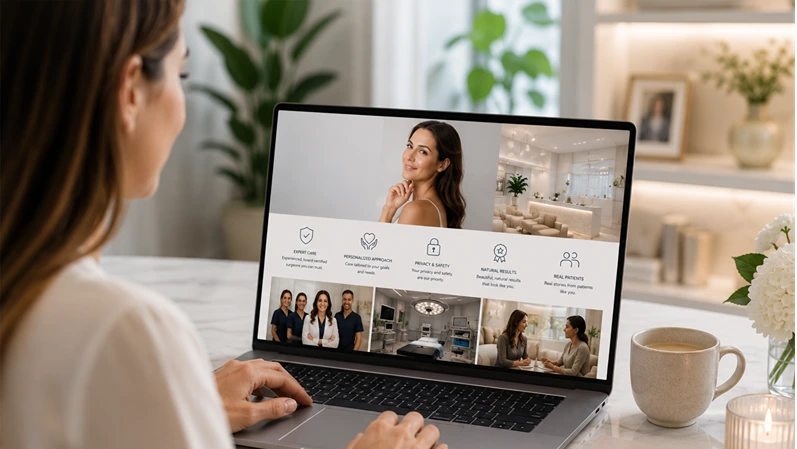
Every element of your website contributes to or detracts from the trust a patient feels. Clean, professional design; prominent credentials; detailed procedure content; a well-organized, diverse gallery; specific patient testimonials; and a clear, low-friction path to consultation all function as trust infrastructure. Website design for plastic surgery practices should be evaluated not just for aesthetics but for the sequence of trust signals a visitor encounters as they navigate.
A patient who lands on your homepage and within thirty seconds can see your surgeon’s board certification, a gallery of real results, a five-star review excerpt, and a simple path to book a consultation has encountered five trust signals before reading a single paragraph of body copy. That density of trust communication reduces hesitation and accelerates the decision to reach out.
Social Media as a Trust-Building Channel, Not Just a Traffic Channel
Most plastic surgery practices use social media primarily for reach. The practices that build the deepest patient trust use it primarily for relationship. Behind-the-scenes content that shows the care and precision of the surgical environment, surgeon Q and A sessions that demonstrate knowledge and accessibility, and patient story content that follows the full journey from consultation to result all build a level of familiarity that purely promotional content cannot.
Social media management built around authentic, educational, and humanizing content creates an audience of prospective patients who feel they already know the practice before they book. That pre-existing familiarity dramatically reduces the trust gap that most practices are trying to bridge in the consultation itself.
Paid Advertising That Leads With Trust
Most plastic surgery paid ads lead with procedures, offers, or urgency. The practices that generate the highest-quality leads through paid channels lead with trust signals: board certification, years of experience, patient outcomes, and transparent messaging about what the consultation experience looks like. Paid advertising that pre-qualifies patients through trust messaging attracts a more serious, more committed patient profile and reduces the rate of consultations that do not convert.
Maintaining Trust Through the Patient Journey
The Post-Consultation Follow-Up
Trust built during the research phase can be eroded quickly by a poor post-consultation experience. A patient who leaves a consultation feeling unclear about next steps, unsure whether the surgeon listened, or uncertain about the timeline will not book, regardless of how impressive your website is. The consultation follow-up, a personalized email that addresses the patient’s specific questions and outlines the path forward, extends the trust built online into the in-person experience.
Ongoing Communication During Recovery
Patients who feel supported during recovery become the most powerful trust assets a practice has. They leave detailed reviews, share their experience on social media, and refer friends and family. Building online trust for patients considering life-changing procedures does not end at booking; it continues through every post-procedure touchpoint. Practices that treat recovery communication as a marketing function, not just a clinical one, generate the organic social proof that makes future patient trust-building easier.
Frequently Asked Questions for Building Online Trust for Plastic Surgery Patients
What are the most important trust signals for plastic surgery patients?
Board certification, detailed patient reviews across multiple platforms, a diverse and well-documented before-and-after gallery, transparent procedure and risk content, and a professional, well-designed website are the highest-impact trust signals. Patients evaluate all of these before reaching out, and a weakness in any one area can cost the practice a patient who was otherwise ready to book.
How long does it take to build online trust for a plastic surgery practice?
Trust-building is cumulative and ongoing, not a one-time project. A practice that consistently publishes educational content, collects and responds to reviews, maintains a growing gallery, and invests in a professional website compounds its trust signals over months and years. The practices with the strongest trust presence today started building it before their competitors did.
Does responding to negative reviews actually help build trust?
Yes. Patients read review responses as carefully as the reviews themselves. A thoughtful, professional response to a negative review demonstrates that the practice takes patient concerns seriously and handles difficulty with integrity. That demonstration of character builds trust with prospective patients who are evaluating how the practice behaves when things are not perfect.
How does paid advertising contribute to trust-building?
Paid ads that lead with trust signals, credentials, patient outcomes, and transparent messaging about the consultation experience, attract more qualified patients and set accurate expectations before the first contact. Ads that overpromise or lead with urgency-based offers may generate clicks but attract patients whose expectations are misaligned, resulting in lower consultation conversion rates.
Can social media content build enough trust to influence consultation bookings?
Yes, especially for patients who discover a practice through social platforms during the early awareness stage. A prospective patient who has been following a surgeon’s educational and behind-the-scenes content for several weeks before booking a consultation arrives with a level of familiarity and pre-established trust that significantly increases conversion likelihood. Social media trust-building is a long game, but its compounding impact on consultation quality is measurable.
Turn Online Trust Into Consultations That Convert
Building online trust for patients considering life-changing procedures is the most important long-term investment a plastic surgery practice can make in its digital marketing strategy. LeadOrigin helps aesthetics practices across Texas and nationwide build the content, reputation, and digital presence infrastructure that turns patient trust into consistent consultation volume. Talk to our team to get started.