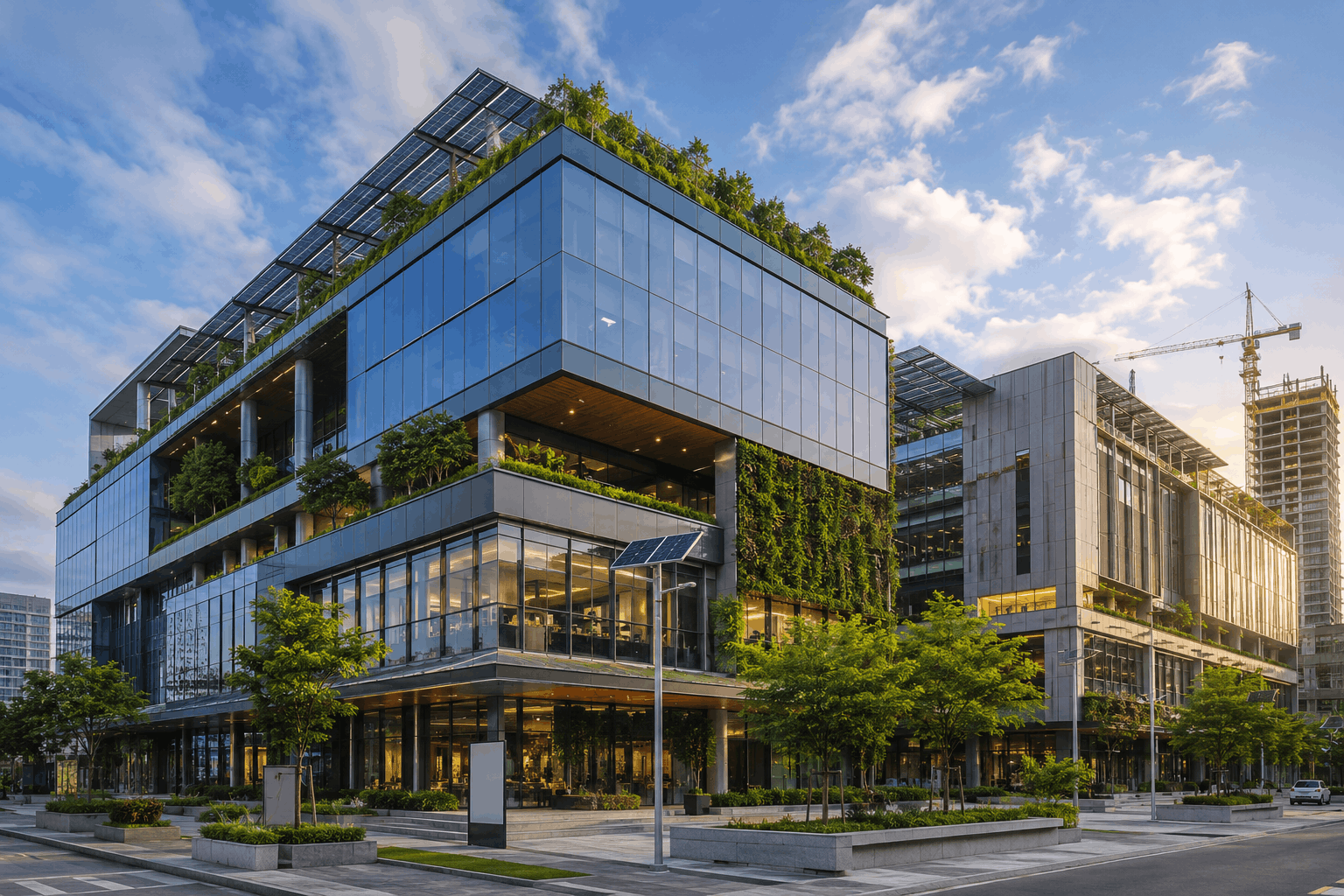
The commercial construction industry looks meaningfully different than it did even five years ago, shaped by new technology, shifting tenant expectations, and growing pressure to build more efficiently in the face of rising material and labor costs. Staying aware of the commercial building trends driving these changes helps business owners and contractors alike make smarter, more future-proof decisions on their next project.
Data-Driven Design and Construction Analytics
Access to better data throughout the design and construction process is changing how decisions get made at nearly every project stage.
Building Information Modeling as Standard Practice
Building information modeling, once considered an advanced capability, has become standard practice on most commercial projects, allowing design teams to catch conflicts between systems digitally before they become expensive problems discovered on-site during actual construction.
Predictive Analytics for Schedule and Cost Management
Contractors increasingly use historical project data to predict schedule risks and cost overruns before they materialize, allowing for proactive adjustments rather than reactive scrambling once a problem has already affected the project timeline or budget.
Sustainable and Energy-Efficient Design
Environmental performance has moved from a niche preference to a mainstream expectation across nearly every commercial building category.
Energy Codes Are Becoming More Demanding
Building codes in many jurisdictions now require significantly better energy performance than they did a decade ago, pushing standard practice toward better insulation, more efficient mechanical systems, and tighter building envelopes as the baseline rather than an upgrade option.
Materials With a Lower Environmental Footprint
Mass timber, recycled steel, and low-carbon concrete alternatives are increasingly specified on commercial projects, driven both by regulatory pressure and by tenant demand for buildings that align with their own sustainability commitments and public reporting requirements.
Designing for Climate Resilience
Extreme weather events in recent years have pushed resilience from a specialized consideration into a mainstream design priority across many regions.
Building Envelopes Designed for Extreme Weather
Design teams increasingly specify building envelopes and structural systems rated for more severe wind, flood, or temperature extremes than local codes historically required, anticipating both changing weather patterns and stricter future code requirements.
Backup Power and Redundant Systems
Commercial buildings increasingly incorporate backup power systems and redundant mechanical infrastructure, reducing the operational disruption a business faces during grid outages or other utility interruptions that have become more frequent in many regions.
Smart Building Technology Integration
Buildings are increasingly designed with technology infrastructure built in from the start rather than added as an afterthought once construction is complete.
Integrated Building Management Systems
Modern commercial buildings increasingly include integrated systems that monitor and adjust lighting, HVAC, and security in real time, reducing operating costs while giving building owners far more visibility into how their facility actually performs day to day.
Designing for Future Technology Needs
Forward-looking projects now build in additional conduit, power capacity, and network infrastructure specifically to accommodate technology upgrades that have not even been identified yet, avoiding costly retrofits a few years down the road as building technology continues to evolve quickly.
Modular and Prefabricated Construction
Building components assembled off-site before final installation is becoming a much larger part of how commercial projects get built.
Faster Timelines Through Off-Site Fabrication
Prefabricating structural components, wall panels, or entire modular units in a controlled factory setting while site work happens simultaneously can meaningfully compress overall project timelines compared to building everything sequentially on-site.
Improved Quality Control
Factory-controlled fabrication conditions reduce the weather delays and inconsistent quality that can affect traditional on-site construction, giving owners more predictable results alongside the faster schedule this approach typically delivers.
Flexible and Adaptable Space Design
Tenant needs change faster than they used to, and building design increasingly reflects that reality rather than assuming a fixed, permanent use.
Designing for Multiple Future Uses
Commercial spaces increasingly incorporate design elements, like movable partition systems and standardized structural grids, that make it easier to reconfigure a space for a different tenant or use case without a major, costly renovation.
Mixed-Use Development Continues Expanding
Combining retail, office, and residential elements within a single development continues gaining popularity, driven by both economic efficiency and a genuine shift in how people want to live and work within walking distance of daily needs.
Health and Wellness-Focused Design
Tenant and employee wellbeing has become a more explicit design consideration, particularly following heightened attention to indoor air quality in recent years.
Improved Indoor Air Quality Standards
Enhanced filtration, increased fresh air exchange rates, and touchless fixtures are increasingly standard specifications rather than premium upgrades, reflecting sustained tenant demand for healthier indoor environments.
Access to Natural Light and Outdoor Space
Building designs increasingly prioritize natural light penetration and access to outdoor amenity space, both of which research consistently links to improved occupant wellbeing and have become genuine competitive differentiators in commercial leasing markets.
How Trend Adoption Varies by Region and Building Type
Not every trend applies equally across all markets and project types, and understanding regional context helps owners set realistic expectations.
Climate and Local Code Differences Shape Priorities
A project in a region prone to hurricanes or extreme heat prioritizes different resilience and efficiency features than one in a milder climate, and local building codes increasingly reflect these regional differences rather than applying a single national standard.
Building Type Influences Which Trends Matter Most
An office building’s technology and flexibility needs differ substantially from a warehouse or industrial facility’s priorities, meaning the trends most relevant to a specific project depend heavily on the building’s intended use rather than applying uniformly across every commercial category.
Labor Shortages Driving Construction Innovation
Persistent skilled labor shortages across the construction industry are accelerating adoption of approaches that reduce dependence on large on-site labor forces.
Automation and Robotics on Job Sites
Robotic equipment for tasks like bricklaying, concrete finishing, and site surveying is moving from experimental pilot programs into more mainstream use, helping contractors maintain productivity despite ongoing labor availability challenges.
Prefabrication as a Labor Solution
Beyond its schedule benefits, prefabrication also reduces the on-site labor force needed for a given project, since much of the assembly work happens in a controlled factory setting with a more consistent, specialized workforce.
How Owners Can Evaluate Contractors on Trend Readiness
Business owners planning a project benefit from directly assessing how well a prospective contractor understands and applies these emerging trends.
Asking About Recent Project Examples
Owners should ask contractors directly for recent examples where sustainable materials, smart technology, or modular methods were incorporated into a project, rather than accepting general claims of staying current with industry direction.
Weighing Trend Adoption Against Proven Reliability
While staying current with trends matters, owners should balance that against a contractor’s fundamental track record of reliability and quality, since a contractor without solid fundamentals will not deliver good results no matter how current their material or technology knowledge happens to be. Reviewing how a firm approaches construction website content and lead quality often reveals whether a contractor backs up trend awareness with genuine substance or just marketing language.
Rising Material Costs Reshaping Design Decisions
Volatile material pricing continues to influence design and specification decisions across the industry in ways that were less pronounced a decade ago.
Value Engineering Becomes a Standard Practice
Owners and design teams increasingly build value engineering review into the standard design process from the start, rather than treating it as a reactive measure only considered once a budget problem has already emerged.
Alternative Material Specifications
Design teams increasingly specify alternative materials with more price stability or availability, building in flexibility rather than locking a design to a single material choice that might face significant price or supply volatility by the time construction begins.
How Contractors Position Themselves Around Emerging Trends
Contractors who understand and communicate these shifts effectively are better positioned to win business from owners who want a forward-thinking partner on their project.
Demonstrating Trend Awareness in Marketing
Contractors who showcase experience with sustainable materials, smart building integration, or modular construction in their marketing content signal to prospective clients that they stay current with industry direction rather than defaulting to outdated methods. Firms focused on generating qualified commercial construction leads benefit from clearly communicating this kind of forward-looking expertise from the first page a prospective client visits.
Building Credibility Through Case Studies
Detailed case studies showing how a contractor successfully incorporated an emerging trend, whether prefabrication, smart technology, or sustainable materials, into a completed project give prospective clients concrete proof rather than abstract claims. Contractors focused on staying booked out with strong, well-qualified projects consistently find that this kind of specific, trend-aware content outperforms generic service pages.
Frequently Asked Questions About Commercial Building Trends
Is sustainable construction actually more expensive?
Not necessarily long-term. While some sustainable materials carry a modest upfront premium, many deliver lower operating costs over the building’s life, and the price gap has narrowed considerably as demand and supply have both increased.
How much faster is modular construction compared to traditional building?
Timelines vary by project, but modular and prefabricated approaches can meaningfully compress schedules by allowing site work and off-site fabrication to happen simultaneously rather than sequentially.
Do smart building systems require significant ongoing maintenance?
Modern integrated systems generally require less hands-on maintenance than older, disconnected building systems, since centralized monitoring can flag issues proactively rather than waiting for a manual inspection to catch a problem.
Are labor shortages likely to continue affecting construction timelines?
Many industry analysts expect skilled labor availability to remain a challenge in the near term, which is part of why automation and prefabrication continue gaining traction as practical solutions.
How can a business owner incorporate these trends into a smaller commercial project?
Even smaller projects can incorporate flexible design elements, efficient building systems, and value engineering practices without requiring the scale of a major development, and a knowledgeable contractor can help identify which trends make sense for a specific project’s size and budget.
Building for Where Construction Is Headed
Understanding these commercial building trends helps owners make design and construction decisions that hold up well beyond the day a project is completed, rather than becoming outdated within a few years. Contractors ready to position themselves as forward-thinking partners on these exact trends can explore proven marketing strategies for general contractors built around demonstrating this kind of industry expertise’s Texas and nationwide. Talk with our team about turning inconsistent bid requests into a predictable pipeline.