
Paid ads can bring in strong leads, but they can also burn through budget fast when the strategy is off. Personal injury firms deal with expensive keywords, tough competition, and a big gap between getting a lead and signing a good case. Strong personal injury law firm advertising comes down to tighter targeting, better landing pages, clear tracking, and a solid intake process.
Here are the mistakes that tend to hurt performance most.
Why Advertising Can Be Challenging for Personal Injury Firms
Personal injury is one of the more competitive legal categories in paid search. That means firms usually have less room for sloppy targeting, weak messaging, or poor follow-up.
High Competition for Personal Injury Keywords
High-intent terms can get expensive quickly. If the campaign targets broad keywords without enough control, the firm may pay for clicks from people who are not a good fit.
That makes keyword structure, location targeting, and landing page relevance especially important for law firm PPC.
The Difference Between Leads and Qualified Cases
A form submission is not the same as a viable case. Some leads may fall outside the firm’s service area, involve the wrong case type, or fail to meet basic qualification criteria.
Good personal injury lead generation tracks what happens after the inquiry, not just how many leads came in.
1. Personal Injury Firms Targeting Keywords That Are Too Broad
Broad keywords can attract plenty of traffic while producing weak lead quality. A term like “injury lawyer” may pull in searches with very different intent.
Firms should focus more heavily on specific practice areas, locations, and high-intent searches that match the cases they actually want.
Failing to Use Negative Keywords
Negative keywords help block irrelevant searches. Without them, ads may appear for jobs, legal definitions, school-related searches, DIY legal questions, or unrelated case types.
Search term reports should be reviewed regularly so wasted spend does not pile up quietly.
2. Personal Injury Firms Targeting the Wrong Locations
Location targeting should match where the firm can actually serve clients. Broad geographic settings may send ads into areas that do not make sense operationally or legally.
Firms should compare lead quality by city, county, and region instead of assuming every nearby location performs the same.
3. Sending Paid Traffic to a Generic Homepage
A homepage has too many jobs. It introduces the firm, covers several practice areas, and usually gives visitors multiple directions to go.
Paid traffic needs something more focused. If someone clicks an ad for a truck accident lawyer, the landing page should immediately talk about truck accident cases.
Creating Dedicated Landing Pages for Personal Injury Campaigns
Dedicated pages should match the keyword and ad as closely as possible. They should also make the next step obvious.
Strong landing pages usually include:
- A relevant headline
- Practice-area-specific information
- Attorney credentials
- Reviews or testimonials where allowed
- Short contact forms
- Click-to-call options
- Clear consultation information
The less digging the visitor has to do, the better.
4. Using Generic Ad Copy That Does Not Differentiate the Firm
“Experienced personal injury lawyer” could describe almost every competitor in the market. Generic copy gives the searcher very little reason to choose one firm over another.
Strong personal injury advertising should focus on relevant differentiators, such as location, practice-area experience, consultation options, or other accurate reasons the firm may be a good fit.
Matching Ad Messaging to Search Intent
Someone searching for a motorcycle accident lawyer should see messaging that matches that case type. The ad, keyword, and landing page should all feel like one continuous conversation.
This kind of alignment also makes the campaign easier to evaluate and improve.
5. Ignoring Mobile Users in Personal Injury Advertising
A lot of legal searches happen on phones, especially after an accident or urgent event. If the site loads slowly, buttons are hard to tap, or forms are too long, leads can disappear fast.
Mobile pages should load quickly, keep forms short, and make the phone number easy to find. Click-to-call should feel effortless.
6. Using Weak or Unclear Calls to Action
“Learn more” may be fine for educational content, but high-intent PPC usually needs a clearer next step. Visitors should know exactly what to do if they want help.
Calls to action can include scheduling a consultation, calling the firm, or submitting a short case review form. Keep the wording direct and easy to spot.
7. Personal Injury Firms Failing to Track Conversions Properly
Clicks do not show whether a campaign is actually working. Firms need to track calls, forms, consultations, and signed cases.
Without proper attribution, it becomes hard to know which keywords and campaigns deserve more budget.
Tracking Lead Quality Beyond the Initial Conversion
A campaign can look great on paper and still produce poor cases. That is why personal injury lawyer marketing should connect ad data with intake and CRM information.
Track which leads are qualified, which ones schedule, and which ones actually sign. That gives a much clearer view of true campaign value.
8. Treating Every Personal Injury Practice Area the Same
Car accidents, medical malpractice, slip-and-fall cases, and wrongful death claims do not behave the same way in paid search. They can have different search volume, competition, case value, and conversion rates.
Lumping everything together makes it harder to control budget and messaging.
Building Separate Campaigns for High-Priority Case Types
Separate campaigns allow firms to assign different budgets, keywords, landing pages, and ads to each practice area. This also makes performance easier to compare.
High-priority case types can then receive more budget when the data supports it.

9. Increasing Ad Spend Without Improving the Conversion Funnel
More traffic will not fix a weak landing page, slow intake team, or confusing consultation process. It usually just makes the same problems more expensive.
Before raising the budget, firms should look at every step from click to signed case.
Why Intake Speed Matters for Personal Injury Leads
High-intent prospects often contact several firms. A slow response gives competitors more time to get there first.
The intake team should respond quickly, understand qualification criteria, and make scheduling simple. Strong personal injury lead generation depends just as much on intake as it does on advertising.
10. Running Ads Without Continuous Testing and Optimization
Paid campaigns need regular attention. Search behavior changes, competitors adjust bids, and creative performance shifts over time.
Firms should keep testing keywords, ads, landing pages, bids, and audiences. Small improvements across several areas can add up quickly.
11. Focusing on Cost Per Lead Instead of Cost Per Signed Case
A $50 lead sounds better than a $200 lead until the cheaper leads never turn into clients. Cost per lead is useful, but it should not be the final metric.
Cost per signed case gives a much better picture of real business performance. Firms should also look at case quality and projected value when deciding which campaigns deserve more budget.
12. Relying on Paid Ads Without a Broader Personal Injury Marketing Strategy
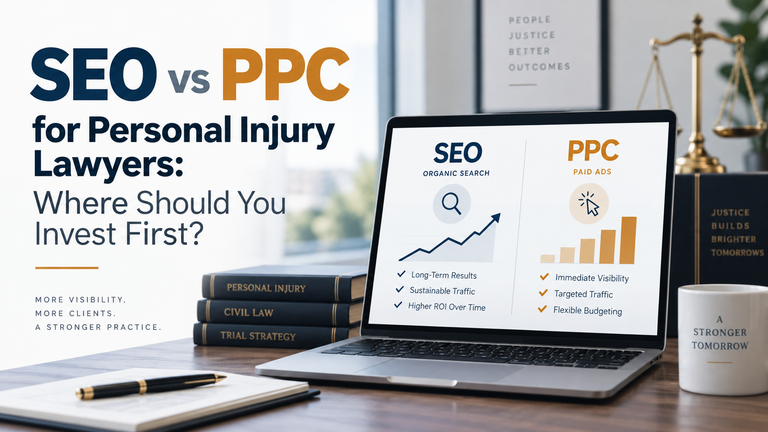
Paid ads can generate immediate visibility, but they work better when the firm also has strong organic visibility, reviews, content, and local presence.
A broader personal injury law firm advertising and marketing strategy gives prospects more trust signals when they research the firm after seeing an ad.
Combining PPC and SEO for Personal Injury Firms
PPC captures immediate demand, while SEO can build organic visibility over time. Together, they can cover more of the search journey.
Content, local SEO, reviews, and retargeting can also support the same personal injury lawyer marketing strategy rather than operating as separate efforts.
How Personal Injury Firms Can Improve Advertising Performance
The biggest improvements usually come from fixing the basics first. Better targeting, relevant landing pages, faster intake, stronger tracking, and regular testing can all improve results without simply increasing spend.
Firms should also review campaigns based on qualified cases, not just traffic or raw leads. That keeps the focus on the opportunities that actually matter.

Key Advertising Metrics Personal Injury Firms Should Monitor
A few core metrics can show if the campaign is moving in the right direction. The strongest view combines ad performance with intake and revenue data.
| Metric | What It Shows |
| Cost per click | What the firm pays for each ad click |
| Conversion rate | How often visitors become leads |
| Cost per qualified lead | What it costs to generate a viable inquiry |
| Cost per signed case | What the firm spends to acquire a new client |
| Return on ad spend | How much revenue the advertising produces |
These numbers should be reviewed together. A campaign with higher click costs can still be worth keeping if it consistently produces better cases.
LeadOrigin helps law firms connect law firm PPC, landing pages, tracking, SEO, and broader personal injury law firm advertising into one strategy. The goal is to help firms spend more intelligently and focus on the campaigns that actually produce qualified opportunities.
Want to improve ad performance without simply throwing more money at the problem? Talk to LeadOrigin about building a personal injury marketing strategy around better targeting, stronger conversion paths, and signed-case data.
Frequently Asked Questions
What Are the Most Common Advertising Mistakes Personal Injury Firms Make?
Common mistakes include broad keyword targeting, weak location settings, generic landing pages, poor tracking, slow intake, and focusing on lead volume instead of signed cases. Many personal injury firms also waste budget by failing to test and optimize campaigns regularly.
How Much Should Personal Injury Firms Spend on Advertising?
There is no universal budget. Spend should depend on the market, case value, competition, acquisition goals, and how much the firm can profitably spend to acquire a signed case.
What Are the Best Advertising Channels for Personal Injury Firms?
Paid search is usually strong for high-intent demand, while paid social can support awareness and retargeting. SEO, local search, reviews, and content also play an important role in a broader personal injury lawyer marketing strategy.
Should Personal Injury Firms Use Separate Landing Pages for PPC Campaigns?
Yes. Dedicated landing pages usually create a better match between the ad and the visitor’s intent. They also make it easier to track performance by practice area and campaign.
How Can Personal Injury Firms Improve the Quality of PPC Leads?
Use tighter keyword targeting, negative keywords, accurate location targeting, practice-area-specific landing pages, and strong intake qualification. Tracking qualified leads and signed cases also helps firms shift budget toward campaigns that produce better outcomes.