
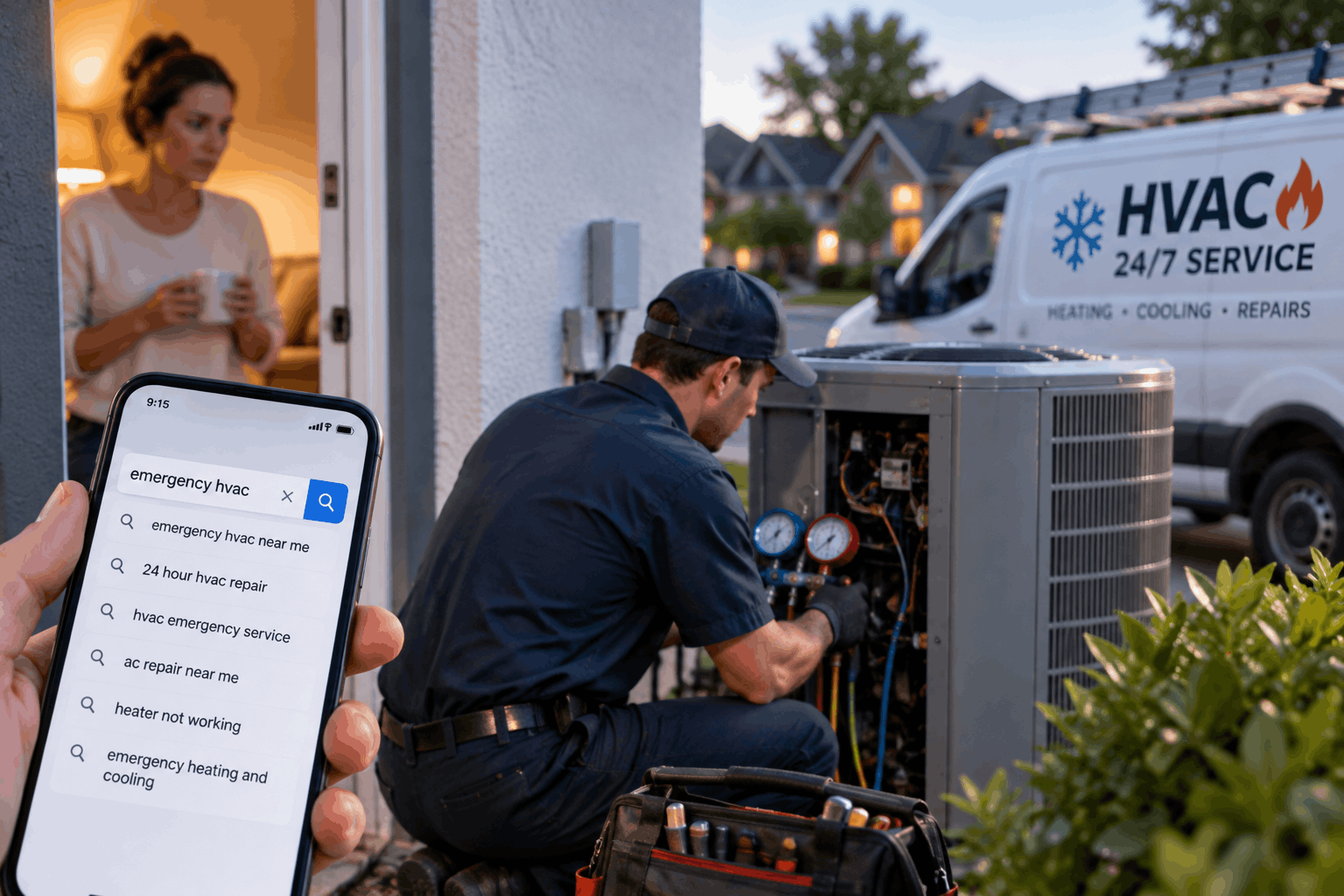
When a furnace dies at 11 p.m. in January, nobody compares shops. They search, they call the first three results, and they book whoever answers. Emergency HVAC keywords represent the highest-intent traffic in the entire trade, and most contractors chase generic service terms while leaving that urgent volume to whoever bid on it. The opportunity is not just ranking, it is being findable and reachable at the exact moment a homeowner has stopped caring about price.
Why Emergency Terms Behave Differently
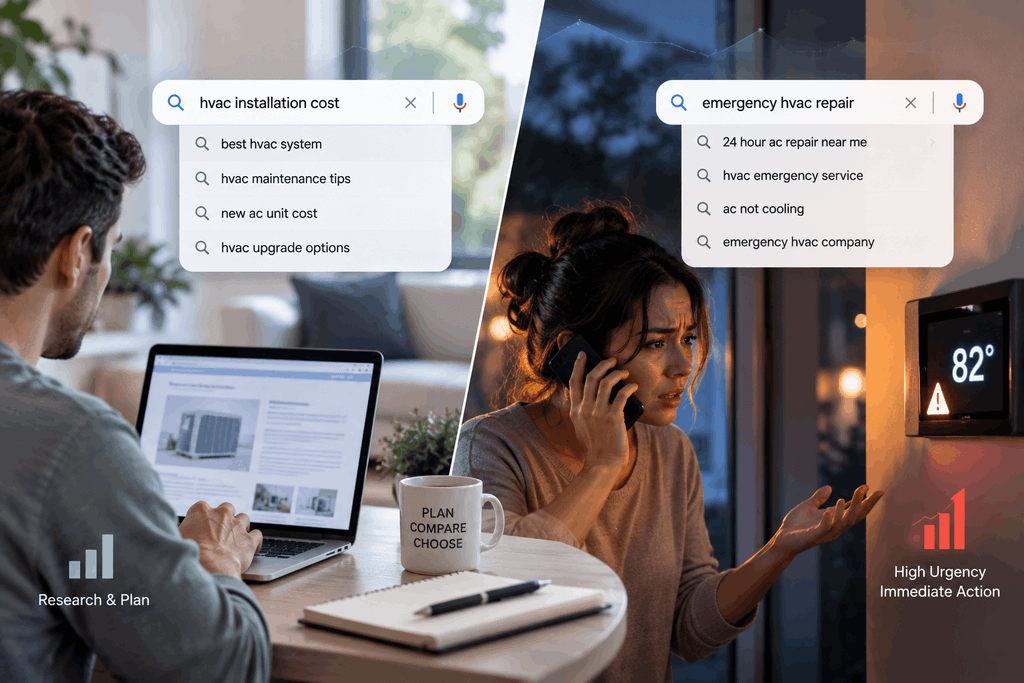
Search behavior during a system failure has almost nothing in common with a homeowner researching a replacement.
Intent Is Immediate and Non-Negotiable
Someone searching for AC repair might be gathering quotes over two weeks. Someone searching for emergency AC repair tonight will book within the hour. Conversion rates on urgent terms routinely run three to five times higher than on general service terms, and the calls skew toward jobs that get approved on the spot because comfort has already failed.
Ticket values run higher too. Emergency calls carry after-hours rates, customers rarely push back on diagnostic fees, and a failed system in extreme weather converts to replacement far more often than a scheduled inspection.
The Search Happens on a Phone, Fast
These searchers are not browsing on a laptop. They are standing in a cold house holding a phone, and the entire decision happens in under two minutes. Whatever appears at the top of the map results and offers a tappable phone number wins. Site depth, content quality, and brand recognition matter far less here than speed, position, and the ability to answer.
Volume Is Spiky, Not Steady
Emergency search volume tracks weather, not calendars. A single freeze event can produce more urgent searches in 48 hours than the previous two months combined. Contractors who treat these terms as a steady-state campaign miss the point. The goal is to be positioned before the spike, because there is no time to build visibility once it starts.
Mapping the Emergency Keyword Landscape
The category is broader than most contractors assume, and the less obvious variations often carry the least competition.
Urgency Modifiers
The core patterns combine a service with a time or urgency signal: emergency AC repair, 24 hour HVAC repair, same day furnace repair, after hours heating repair, weekend AC service, holiday HVAC repair. Each behaves as a distinct term with its own competitive picture, and contractors who build separate pages or ad groups for them capture volume that a single emergency page cannot.
Failure Symptom Searches
Homeowners often describe the problem rather than naming the service. AC not blowing cold air, furnace blowing cold air, AC frozen over, heat not working in house, HVAC making loud noise, furnace short cycling. These carry serious volume, are far less competitive than the direct emergency terms, and reach the homeowner slightly earlier in the panic cycle, which is often before they have called anyone.
Symptom content is also the strongest bridge between emergency capture and long-term visibility. A page explaining why a furnace blows cold air, ending with a clear path to emergency service, earns rankings that persist between weather events. Building that library is a straightforward onsite SEO exercise that pays year-round.
These pages have become more valuable, not less, as AI assistants absorb research queries. A homeowner asking an assistant why their AC is frozen gets an answer assembled from sources those systems consider credible, and contractors publishing genuinely useful diagnostic content are the ones being cited. The homeowner who reads that explanation and then searches for a local company is arriving with your name already attached to the problem.
Location and Proximity Variations
Near me searches dominate this category. HVAC repair near me, emergency furnace repair near me, AC repair open now. These are resolved almost entirely through local signals rather than page content, which shifts the work toward profile optimization and proximity rather than keyword placement.
City and neighborhood variations still matter for contractors covering wide service areas, since a company appearing for one suburb but not the next is leaving whole segments of a metro uncovered.
Equipment and Season-Specific Terms
Heat pump not heating, boiler emergency repair, commercial HVAC emergency service, and similar terms serve narrower audiences with less competition and often higher ticket values. Commercial emergency terms in particular are frequently ignored by residential-focused contractors despite carrying substantially larger jobs.
Winning the Local Pack
For urgent searches, map results capture the majority of clicks. Organic rankings below them matter far less than most contractors expect.
Hours, Attributes, and Proximity
The single most impactful change many contractors can make is setting their Google Business Profile to reflect actual 24-hour availability. A profile showing 8 a.m. to 5 p.m. is filtered out of open now searches entirely, regardless of ranking. If you genuinely answer at night, the profile must say so.
Beyond hours, service attributes, complete category selection, current photos, and consistent business information across directories drive local pack placement. Contractors serving wide areas benefit from a structured local SEO approach with location pages backing up the profile, since proximity remains a ranking factor you cannot fully overcome with optimization alone.
Reviews Decide the Tie
When three contractors all appear and all claim 24-hour service, the homeowner picks by rating and review count in about four seconds. Recent reviews mentioning fast response, night calls, and same-day arrival do disproportionate work here because they answer the exact question the searcher has.
Answer the Phone
None of this matters if calls go to voicemail. A substantial share of emergency calls that reach voicemail are never returned by the customer, who simply dials the next result. Whether the answer is an after-hours service, a rotating on-call phone, or an AI chat and intake system that captures details and dispatches, the call must be answered live. Contractors who fix nothing else but this typically see emergency revenue jump immediately.
Pairing Paid Search With Organic Coverage
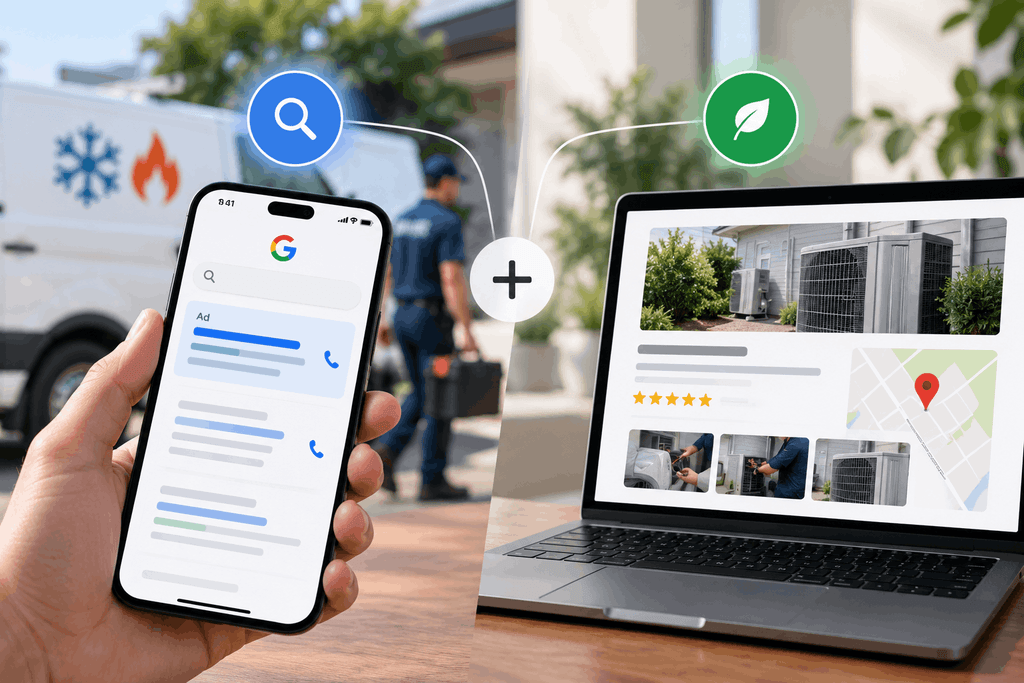
Organic and map visibility take months to build. Paid search buys position during the exact hours it matters.
Dayparting Around Failure Windows
Emergency campaigns should not run evenly across the week. Bid aggressively during evenings, overnight hours, weekends, and holidays when competitors pause their campaigns and cost per click frequently drops while conversion rates climb. A paid search program structured around those windows produces a materially lower cost per booked job than a flat 24-hour schedule.
Weather-Triggered Budget Shifts
The most effective contractors adjust budgets against the forecast rather than the calendar. A hard freeze warning three days out is the signal to raise caps, expand radius, and refresh ad copy. Waiting until the phones ring means paying peak prices while competitors who prepared are already booked.
Emergency HVAC keywords also reward call-only campaigns during overnight hours, since a homeowner at 2 a.m. wants a phone number, not a landing page.
Build a Page Designed for Panic
Emergency traffic sent to a general services page converts poorly. The homeowner has to scan, navigate, and find a number while stressed, and a meaningful share of them leave instead. A dedicated emergency page removes every decision: the phone number appears at the top as a tappable button, response time is stated in the first line, service hours are explicit, and the coverage area is named.
Everything else comes off the page. No hero video, no financing carousel, no long about section. Load time matters enormously here because these visitors arrive on cellular connections and abandon within seconds. Contractors who rebuild this single page with conversion-focused design often double the call rate on identical traffic.
Converting the Emergency Customer Into a Long-Term One
The emergency call is the most expensive customer you will ever acquire and the easiest one to lose.
Capture the Relationship at the Job
An emergency customer has no loyalty to you and no reason to remember your name in six months. Getting them onto a maintenance agreement, into your email list, or scheduled for a follow-up inspection before the technician leaves converts a one-time transaction into an ongoing relationship. Without that step, you pay premium acquisition costs again the next time their system fails.
Follow Up While the Memory Is Fresh
A message the next morning asking whether the system is running well, followed by a review request, does two things at once. It generates the reviews that win the next emergency search, and it keeps your name in front of a customer who may be facing a replacement decision within a year.
Track Emergency Revenue Separately
Blending urgent calls into overall service reporting hides how well this segment performs. Tag emergency jobs at intake so you can see call volume by hour, close rate on after-hours calls, average ticket, and how many convert to replacement within 12 months. That last figure usually surprises owners and justifies far more aggressive investment than the initial job value suggests.
Frequently Asked Questions About Emergency HVAC Keywords
Are emergency terms worth the higher cost per click?
Usually yes. Cost per click runs higher, but conversion rates and average ticket values run higher still. Judge these campaigns on cost per booked job rather than cost per click, since the two metrics tell opposite stories here.
How long does it take to rank organically for urgent terms?
Local pack visibility can improve within weeks through profile optimization and review generation. Organic rankings for symptom and city-modified terms typically take four to six months of consistent content and technical work.
Should a contractor advertise 24-hour service without actually offering it?
No. Claiming availability you cannot deliver produces negative reviews, wasted spend, and profile suspensions. Either build genuine coverage through an on-call rotation or answering service, or compete on same-day rather than overnight terms.
What is the biggest mistake contractors make with emergency campaigns?
Turning them off during slow weather. Rankings and quality scores degrade during pauses, and the spike arrives with no warning. Maintaining a reduced but continuous presence costs less than rebuilding position after every gap.
Do symptom searches convert as well as direct emergency terms?
Slightly less often, but they cost far less and reach the homeowner earlier. A well-built symptom page frequently captures the customer before they have called any competitor, which makes the lower conversion rate a favorable trade.
Getting Positioned Before the Next Weather Event
Emergency demand is not created by marketing, it is captured by whoever is visible and reachable when a system fails. That means accurate hours, a strong local profile, a symptom content library, paid coverage during the hours competitors sleep, and a phone that gets answered. LeadOrigin builds these systems for contractors across Texas and nationwide, tying visibility directly to booked jobs rather than impressions. If your phones stay quiet during the weeks they should be busiest, talk with the LeadOrigin team about where the gap is.