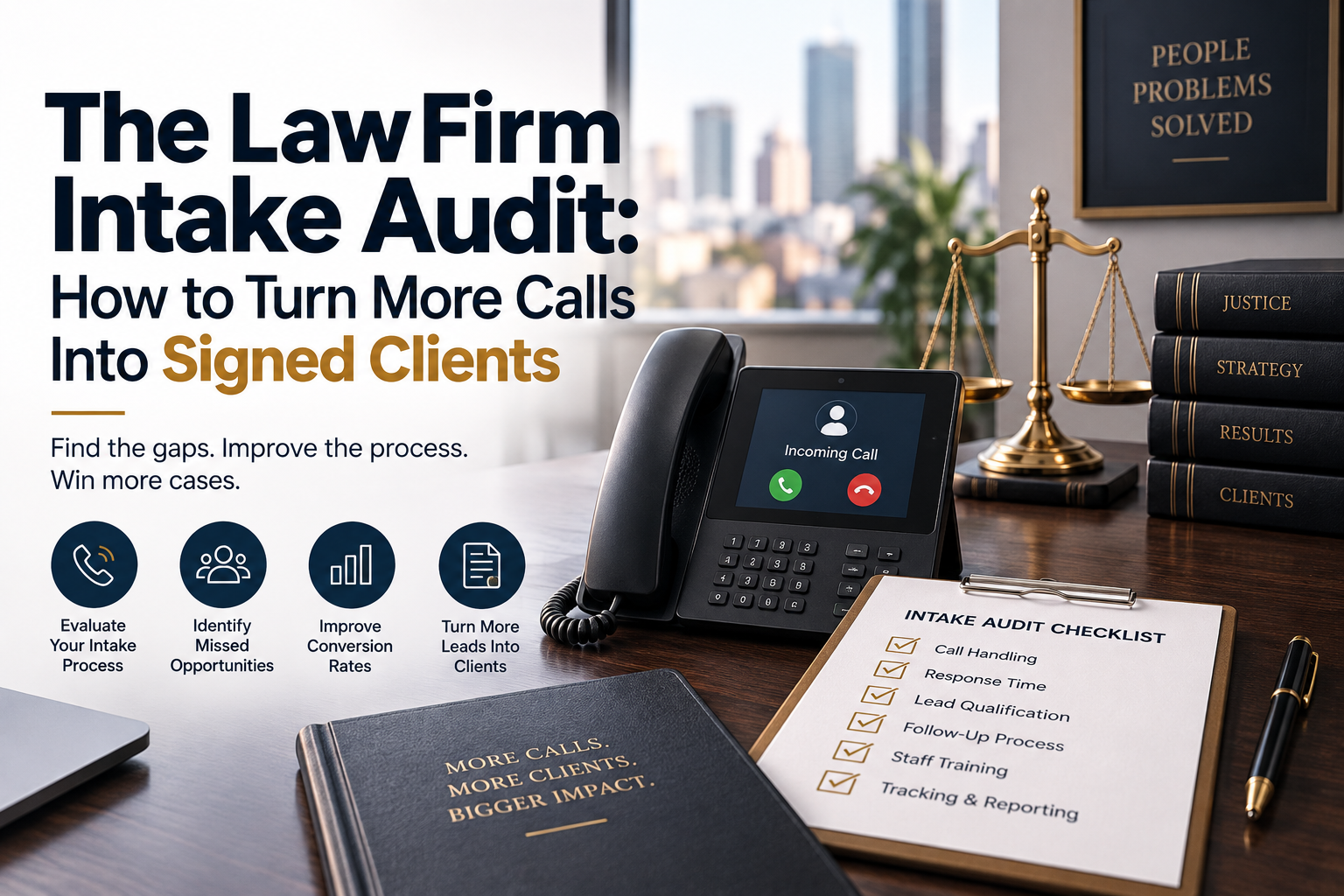
A law firm intake audit looks at what happens after a potential client calls, submits a form, or contacts the firm. It can uncover missed calls, slow responses, weak follow-up, booking friction, and other problems that hurt law firm lead conversion. A closer look at the full legal intake process can show where potential clients are dropping out and what needs to improve.
Here’s what to review from the first inquiry to the signed agreement.
What Is a Law Firm Intake Audit?
A law firm intake audit is a structured review of how a firm receives, qualifies, follows up with, and converts prospective clients. It looks at the entire law firm intake process, including phone calls, online leads, consultation booking, follow-up, CRM activity, and signed-client data.
The goal is to find gaps that may be causing qualified prospects to leave before hiring the firm.
What Should a Law Firm Intake Audit Measure?
The audit should measure performance throughout the intake funnel, including call answer rates, response times, contact rates, qualified leads, consultations booked, show rates, signed clients, and follow-up activity.
Looking at each stage separately makes it easier to find the actual bottleneck.
Who Should Be Involved in the Law Firm Intake Audit?
Anyone who influences the journey from lead to client should be involved. Depending on the firm, this may include intake specialists, receptionists, attorneys, marketing teams, managers, and outside marketing partners.
Why Your Law Firm Intake Process Can Make or Break Lead Conversion
A firm can invest heavily in SEO, paid ads, referrals, and other marketing channels, but those efforts only create opportunities. The intake process determines what happens once those opportunities reach the firm.
Marketing Generates Opportunities, but Intake Converts Them
Marketing can get someone to call or submit a form. The law firm client intake team still needs to answer, understand what the prospect needs, qualify the lead, and guide the person toward the next step.
A breakdown anywhere in that process can turn a good marketing lead into a missed opportunity.
The Cost of Losing High-Intent Legal Leads
Many legal leads reach out when they already need help. If calls go unanswered or follow-up takes too long, prospects may simply contact another firm.
This means poor intake can waste both a potential case and the marketing dollars used to generate the inquiry.
How a Better Legal Intake Process Improves Marketing ROI
A stronger intake process helps the firm convert more of the leads it already receives. Before increasing marketing spend, firms should know how effectively their current leads are being handled.
Step 1: Audit How Your Law Firm Handles Incoming Calls
Phone calls are often one of the most direct ways prospective clients contact a firm. Start the audit by looking at what happens when the phone rings.
Measure Your Call Answer Rate
Track how many inbound calls are answered by a person or appropriate intake system. A high number of unanswered calls can point to staffing, scheduling, routing, or after-hours coverage problems.
Identify When Calls Are Being Missed
Look beyond the overall missed-call number. Find out if calls are being lost during lunch, evenings, weekends, high-volume periods, or when employees are already on other calls.
Review Average Hold and Answer Times
Prospects should not have to spend several minutes waiting to speak with someone. Review how long callers wait before getting an answer and how often they abandon the call.
Test the Caller Experience Yourself
Call the firm at different times and go through the process like a potential client. Check how quickly someone answers, how the caller is greeted, what questions are asked, and how clearly the next step is explained.
Read more: Why Call Tracking Matters for Personal Injury Lead Generation
Step 2: Evaluate Speed to Lead in Your Law Firm Client Intake
Calls are only part of the intake picture. Form submissions, chats, emails, and other inquiries also need a quick response.
How Quickly Does Your Team Respond to New Leads?
Measure the time between a new inquiry and the first meaningful contact attempt. Look at averages as well as individual leads that waited much longer.
Why Response Time Matters for Law Firm Lead Conversion
A person looking for legal help may contact several firms within a short period. A fast response gives the firm an opportunity to start the conversation while the prospect is still actively looking for help.
Set Response-Time Benchmarks
Create clear expectations for how quickly different types of inquiries should receive a response. Then track actual performance against those benchmarks.

Step 3: Review Your Legal Intake Scripts and Call Quality
An intake script should create consistency without making conversations sound robotic. The audit should look at both what employees ask and how they communicate.
Does the Intake Team Ask the Right Qualification Questions?
Intake staff should collect enough information to determine if the matter may fit the firm’s practice areas and criteria. Avoid making prospects answer unnecessary questions before they can move forward.
Does the Intake Script Sound Human?
Rigid scripts can make sensitive legal conversations feel transactional. Give intake staff a clear structure while allowing enough flexibility to listen and respond naturally.
Are Intake Specialists Clearly Explaining the Next Step?
Prospects should leave the conversation knowing what happens next. This may mean scheduling a consultation, sending documents, waiting for attorney review, or receiving another call.
Review Recorded Calls for Quality Assurance
When legally permitted, recorded calls can help firms review communication quality, script use, qualification, missed opportunities, and training needs.
Step 4: Audit Your Law Firm Lead Qualification Process
Not every inquiry will be a good fit. A clear qualification process helps the firm separate strong opportunities from leads that should be declined or nurtured.
Define What Makes a Qualified Lead
Create clear criteria based on factors such as practice area, case type, location, timing, conflicts, and other firm-specific requirements.
Separate Qualified, Unqualified, and Nurture Leads
Use consistent categories so employees know what should happen next. Some prospects may not be ready to hire today but could still require follow-up.
Track Why Leads Are Being Disqualified
Record the reason when a lead does not qualify. Over time, this data can show if marketing campaigns are attracting the wrong audience or if certain lead sources consistently produce poor-fit inquiries.
Step 5: Review Your Consultation Booking Process
Once a qualified prospect is ready to speak with an attorney, booking the consultation should be simple.
How Easy Is It for Prospects to Book a Consultation?
Review how many steps it takes to go from the intake conversation to a confirmed appointment. Long waits, unnecessary back-and-forth, or limited scheduling options can create friction.
Reduce Friction Between the Intake Call and Appointment
When possible, let intake staff book available consultations during the initial conversation. Clear scheduling options can keep the prospect moving forward while they are already engaged.
Track Consultation Booking Rate
Compare qualified leads with consultations booked. A low booking rate can point to scheduling problems, unclear next steps, or issues with the intake conversation itself.
Step 6: Audit Your Consultation Show Rate
Booking a consultation is only useful if the prospect attends. The next part of the audit should look at what happens between scheduling and the appointment.
Why Prospects Miss Legal Consultations
People may forget, have scheduling conflicts, lose interest, or hire another firm before the appointment. Reviewing no-shows can help identify patterns.
Use Appointment Confirmations and Reminders
Email or text confirmations can give prospects the date, time, location, virtual meeting link, and any instructions they need.
Make Rescheduling Easy
A scheduling conflict should not automatically mean losing the lead. Give prospects a simple way to choose another available time.
Step 7: Analyze Your Law Firm Intake Follow-Up Process
Many prospects will not answer the first callback or sign after the first conversation. A structured follow-up process keeps those opportunities from disappearing too quickly.
What Happens When a Prospect Does Not Answer?
The intake team should have a clear next step after an unanswered call. Without one, leads can easily sit untouched in the CRM.
Create a Structured Follow-Up Cadence
Set expectations for when additional calls, texts, or emails should be sent. The cadence should fit the practice area, prospect intent, applicable rules, and the firm’s communication policies.
Follow Up With Prospects Who Have Not Signed
A prospect who completed a consultation but has not signed may still be considering the firm. Appropriate follow-up can answer remaining questions and clarify the next step.
Know When to Stop Following Up
Follow-up should have limits. Firms need clear rules for when a lead should be closed, moved into a longer-term nurture process, or removed from active follow-up.
Step 8: Measure Your Legal Intake Conversion Rate
Once the intake stages are mapped, firms can measure how effectively leads move through them.
What Is a Law Firm Intake Conversion Rate?
A legal intake conversion rate measures the percentage of leads that complete a specific intake action. Depending on what the firm wants to evaluate, this could mean the percentage of leads contacted, consultations booked, consultations attended, or qualified leads that become signed clients.
Track Conversion at Each Stage of the Intake Funnel
Avoid relying on one overall percentage. Track movement from lead to contact, contact to qualified lead, qualified lead to consultation, consultation to show, and consultation to signed client.
This makes it much easier to see where the biggest drop-off occurs.
Calculate Cost Per Signed Client
Marketing cost per lead only tells part of the story. Firms should also calculate how much they spend to generate an actual signed client from each marketing source.
Step 9: Audit Your CRM and Intake Technology
Good intake depends on good information. If leads are missing, duplicated, or poorly documented, the firm cannot accurately measure performance.
Is Every Lead Being Entered Into the CRM?
Calls, forms, chats, referrals, and other inquiries should be recorded consistently. Missing leads create blind spots in reporting and follow-up.
Review Lead Statuses and Pipeline Stages
CRM stages should match the firm’s actual intake process. Keep them clear enough that employees know exactly where each prospect stands.
Automate Repetitive Intake Tasks
Automation can help with confirmations, reminders, follow-up tasks, lead assignment, and other repetitive work. It should support employees without making the client experience feel impersonal.
Integrate Call Tracking With Your CRM
Connecting call data with lead records can help firms see which marketing sources generated calls and what ultimately happened to those opportunities.

Step 10: Identify Where Prospects Drop Out of Your Law Firm Intake Funnel
Once the data is available, look for the stage with the biggest loss. Different patterns usually point to different problems.
High Lead Volume but Low Contact Rate
This may indicate missed calls, slow response times, poor contact information, or weak follow-up.
High Contact Rate but Low Consultation Booking
The problem may be qualification, the intake conversation, scheduling friction, or the quality of leads being generated.
High Consultation Rate but Low Signed-Client Rate
Review consultation quality, case fit, follow-up, pricing or fee communication, and other factors that may affect the decision to hire the firm.
Read more: From Clicks to Calls: Designing High-Converting Funnels
Law Firm Intake KPIs You Should Track Every Month
A monthly intake report should focus on metrics that show how leads move toward becoming clients. Useful KPIs include:
- Total new leads
- Call answer rate
- Missed calls
- Average response time
- Contact rate
- Qualified lead rate
- Consultation booking rate
- Consultation show rate
- Legal intake conversion rate
- Signed clients
- Cost per lead
- Cost per signed client
- Conversion rate by marketing source
Tracking the same metrics consistently makes it easier to spot changes before they become larger problems.
Read more: Intake Marketing Strategies That Help Law Firms Sign More Clients
Common Law Firm Intake Audit Problems to Look For
A law firm intake audit often uncovers small process problems that add up over time. Common issues include:
Calls Going Straight to Voicemail
High-intent callers may move on if they cannot reach anyone. Review coverage during busy periods and outside normal business hours.
Intake Staff Failing to Call Leads Back Quickly
A form submission sitting untouched for hours can lose momentum. Response expectations should be clear and measurable.
No Consistent Intake Script
Without a basic structure, employees may ask different questions or give prospects different information.
Too Many Questions Before Booking a Consultation
Qualification is important, but an overly long intake can frustrate prospects. Collect what is needed to determine the next step.
Poor Documentation in the CRM
Incomplete notes make follow-up harder and reduce the accuracy of intake reporting.
No Follow-Up After the First Attempt
One unanswered phone call should not automatically close a potentially valuable lead. Firms should have a clear follow-up process.
No Tracking Between Marketing Source and Signed Case
Knowing where leads came from is useful. Knowing which sources actually produce signed clients is much more valuable.
Intake Performance Is Based on Lead Volume Instead of Signed Clients
A large number of inquiries can look impressive while producing very little business. Intake performance should ultimately connect marketing activity with qualified leads and signed clients.
How Often Should You Conduct a Law Firm Intake Audit?
Law firms should monitor key intake metrics every month and conduct a deeper audit periodically, such as quarterly or after major changes to marketing, staffing, technology, or intake procedures.
An audit is also useful when lead volume is increasing but signed-client numbers are not keeping pace.
How to Improve Your Law Firm Intake Process After the Audit
The audit should end with clear actions, not another report that sits untouched. Start with the problems that have the greatest effect on law firm lead conversion.
Fix the Largest Conversion Bottleneck First
If the firm is missing a large percentage of calls, improving consultation reminders will not solve the main problem. Find the biggest drop-off and address it first.
Standardize Intake Procedures
Create clear processes for answering inquiries, qualifying leads, booking consultations, updating the CRM, and following up. Employees should know what is expected at every stage.
Train Intake Staff Regularly
Use real intake data and, where permitted, recorded calls to identify coaching opportunities. Training should cover communication, qualification, CRM use, scheduling, and follow-up.
Use Automation Without Losing the Human Element
Automated reminders and follow-up tasks can make the law firm intake process more consistent. Sensitive conversations and complex legal questions should still receive the appropriate human attention.
Review Performance by Marketing Channel
Compare each source based on qualified leads, consultations, signed clients, and cost per signed client. This gives the firm a much clearer picture of which marketing channels are actually producing business.
LeadOrigin helps law firms connect marketing performance with what happens after a lead comes in. By reviewing lead generation, conversion tracking, and the legal intake process together, firms can identify gaps that may be keeping marketing opportunities from becoming signed clients.
Want to see where leads may be slipping through the intake process? Contact LeadOrigin to discuss ways to improve law firm lead conversion and get more value from the leads the firm is already generating.
Frequently Asked Questions
What should be included in a law firm intake audit?
A law firm intake audit should review call handling, response times, lead qualification, intake scripts, consultation booking, show rates, follow-up, CRM data, conversion rates, and signed-client performance. It should also track where prospects drop out of the intake funnel.
How do you measure law firm intake performance?
Law firm intake performance can be measured using call answer rate, response time, contact rate, qualified lead rate, consultation booking rate, consultation show rate, legal intake conversion rate, signed clients, and cost per signed client.
What is a good law firm intake conversion rate?
There is no single law firm intake conversion rate that applies to every firm. Conversion rates vary by practice area, lead source, case criteria, pricing, and how the firm defines a qualified lead, so firms should track their own baseline and compare performance by stage and marketing source.
Why do law firms lose leads during the intake process?
Law firms commonly lose leads because of missed calls, slow responses, complicated intake procedures, poor qualification, scheduling friction, inconsistent follow-up, or unclear next steps. Tracking each stage of the legal intake process can show where those losses occur.
How can law firms improve their intake conversion rate?
Law firms can improve intake conversion by answering leads quickly, simplifying qualification and consultation booking, training intake staff, creating consistent follow-up procedures, using CRM automation, and tracking where prospects leave the intake funnel.