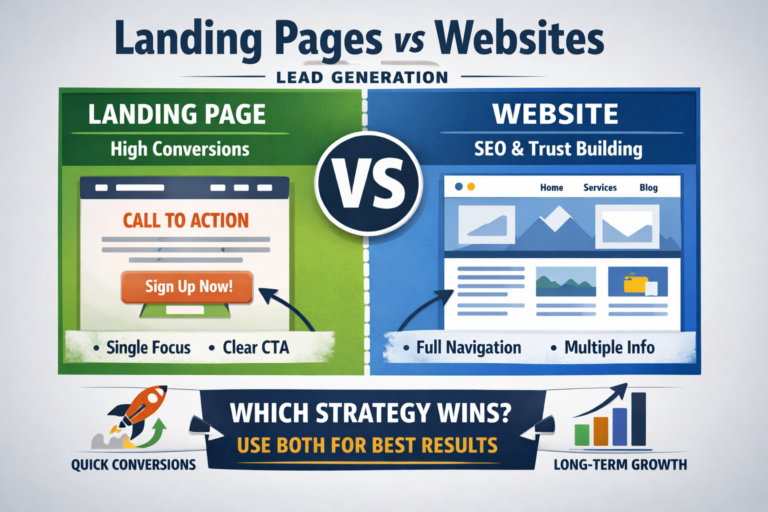

A website can look great and still fail at the one thing it’s supposed to do: generate leads. Many businesses invest in design, branding, and traffic, then wonder why inquiries stay flat. The missing piece is often lead-focused website design.
A lead-focused site is built around action. Every page, section, and message is designed to guide visitors toward the next step. Instead of hoping people figure out what to do, the site makes it obvious, easy, and comfortable to engage. That’s the difference between a website that gets compliments and one that consistently drives results.
Why “Pretty” Websites Don’t Always Generate Leads
A website can look amazing and still struggle to bring in leads. That usually happens when design focuses on appearance but ignores how people actually move, think, and decide online. Lead-focused website design looks past surface-level visuals and pays attention to what helps visitors feel confident enough to take action.
Design vs. Performance: Understanding the Difference
Design is what catches the eye. Performance is what keeps someone clicking. A lead generation website design blends both, but performance carries more weight. Visitors need to understand what you offer quickly, why it matters to them, and what to do next. When design choices support that flow, conversions feel natural instead of forced.
Common Design Mistakes That Kill Conversions
It’s easy to overload a website without realizing it. Too many animations, sliders, pop-ups, or competing messages can distract visitors instead of guiding them. Other sites hide key information behind clever layouts or bury CTAs where no one sees them. Even small issues like slow load times or unclear buttons can quietly push people away.
Why Traffic Without Conversion Is a Wasted Investment
Getting traffic feels good, but traffic alone doesn’t grow a business. Without web design for lead conversion, visitors come and go without leaving a trace. A strong lead-focused website gives every visitor a clear path forward, so marketing efforts actually turn into inquiries, calls, and booked appointments.
The Psychology of High-Converting Websites
High-performing websites are built around how people think, not just how pages look.
How User Intent Shapes Design Decisions
Visitors arrive with different goals depending on where they come from. Some want quick answers. Others want reassurance before committing. Lead generation website design & development aligns page structure, messaging, and CTAs with those intentions so visitors feel guided instead of pushed.
The Role of Trust, Credibility, and Social Proof
People hesitate when they feel uncertain. Testimonials, reviews, and case studies reduce that hesitation by showing real experiences and outcomes. Trust signals answer unspoken questions and make taking action feel safer.
Reducing Cognitive Load to Increase Action
Too many choices slow decisions. Clean layouts, short sections, and focused messaging reduce mental effort. When pages feel easy to scan and understand, visitors move forward with less resistance.
Core Elements of Lead-Focused Website Design
Every high-converting website shares a few essential building blocks.
Clear Value Proposition Above the Fold
Visitors should immediately understand who the site is for and what problem it solves. A clear headline paired with supporting copy sets expectations and encourages deeper engagement.
Strategic Call-to-Action Placement
CTAs work best when they appear at moments of readiness. Placing buttons after value is delivered improves click-through rates and keeps visitors moving naturally through the page.
Conversion-Optimized Page Layouts
Effective layouts guide attention from headline to benefit to action. Web design of lead generation uses spacing, contrast, and alignment to support that journey without overwhelming users.
Visual Hierarchy That Guides User Behavior
Design elements should work together to highlight what matters most. When hierarchy is clear, visitors know where to focus and what to do next without thinking twice.
Designing Pages That Actually Convert
Different pages play different roles in the conversion process.
High-Converting Homepage Structure
A homepage introduces the brand, builds trust, and points visitors toward the right next step. Clear sections, strong messaging, and intentional CTAs keep users from feeling lost.
Landing Pages Built for One Goal Only
Landing pages perform best when distractions are removed. A single message, one offer, and one action keep attention focused and increase conversion rates.
Service Pages That Sell Without Feeling Salesy
Strong service pages explain the problem, outline the solution, and show proof. Clear benefits and real examples build confidence without pressure or exaggerated claims.
Forms That Capture Leads Without Friction
Forms often decide whether interest turns into action.
How Many Fields Are Too Many?
Short forms convert better because they feel easy to complete. Asking only for essential information lowers resistance and increases submissions.
Microcopy That Reassures and Converts
Small bits of text near forms reduce anxiety. Simple explanations about privacy or next steps help visitors feel comfortable submitting information.
Placement and Timing of Lead Capture Forms
Forms perform best after visitors understand the value being offered. Placing them too early can feel intrusive, while placing them after clarity increases completion rates.
Mobile-First Design for Lead Generation
Mobile users behave differently, and websites must adapt.
Why Mobile Users Convert Differently
Mobile visitors scan quickly and expect fast answers. Messaging needs to be concise, and CTAs should be easy to tap without zooming or scrolling.
Thumb-Friendly Navigation and CTAs
Buttons and menus should be designed for one-handed use. Friction on mobile leads to quick exits, even if the content is strong.
Speed, Responsiveness, and Conversion Rates
Load speed directly affects conversions. Responsive design keeps layouts consistent and usable across devices, preventing drop-offs caused by frustration.
Using Content to Turn Visitors Into Leads
Content builds connection and moves visitors closer to action.
Messaging That Speaks Directly to Pain Points
Clear, relatable language shows visitors they’re understood. When messaging reflects real challenges, trust builds quickly.
Lead Magnets That Attract Qualified Prospects
Guides, checklists, and resources provide value while capturing contact information. The right offer filters for serious prospects instead of casual browsers.
Aligning Content With Conversion Goals
Content should support lead generation, not distract from it. Each page should gently guide visitors toward the next logical step.

Trust Signals That Increase Conversion Rates
Trust removes hesitation at critical moments.
Testimonials, Reviews, and Case Studies
Real stories show real outcomes. Seeing how others benefited reassures visitors and validates decision-making.
Security Badges, Guarantees, and Certifications
Visual trust markers matter, especially during form submissions. These cues reinforce safety and professionalism.
Consistent Branding Across the Website
Consistency builds credibility. When visuals, tone, and messaging align, visitors feel confident they’re dealing with a reliable business.
Designing With Conversions in Mind From Day One
Lead-focused website design works best when conversion is part of the strategy from the start. Design, content, and structure should work together to guide visitors toward action without friction.
LeadOrigin helps businesses turn websites into dependable growth tools through thoughtful lead generation website design and development. So rather than surface-level visuals, we make sure to focus on clarity, usability, and real-world performance.
Need expert help to build a website that actually converts? Clients across Houston, Austin, and Dallas, TX work with our team to build websites that support long-term growth. Visit us at any of our offices at 2100 W Loop S #1400, Houston, TX 77027, and 228 Hamilton Ave, Suite 325, Palo Alto, CA 94301.
A website should do more than look good. When it’s built with leads in mind, it becomes a steady, reliable driver of business momentum. Contact LeadOrigin today to get started.