

Roofing contractors need to show up when homeowners search for roof repairs, replacements, or inspections in their area. But having a website and a Google listing doesn’t automatically put your business ahead of the competition. Google’s local search ranking factors determine which roofing companies appear in nearby searches, and some carry more weight than others. Here’s how local SEO for roofing contractors works, what affects your rankings, and what you can do to attract homeowners who are ready to hire.
Why Local SEO Matters for Roofing Contractors
Most homeowners aren’t browsing roofing websites for fun. They’re looking for someone to fix a leak, inspect storm damage, or replace an aging roof. If your business doesn’t appear when they search, there’s a good chance they’ll call a competitor instead.
Local SEO helps your roofing company appear in relevant Google searches, particularly those tied to a specific city or location. It also helps customers find the information they need before deciding who to contact.
How Homeowners Search for Roofing Contractors Online
Homeowners typically search using phrases like “roof repair near me,” “roof replacement in Houston,” or “emergency roofing contractor.” These searches often signal that someone has a specific problem and wants a local professional to handle it.
Google may show a map with nearby businesses, followed by regular website results. Appearing in either gives your company an opportunity to reach potential customers, although the ranking factors aren’t exactly the same.
Benefits of Local SEO for Roofing Companies
Effective roofing company local SEO puts your business in front of people who can actually use your services. Instead of attracting visitors from across the country, you’re reaching homeowners within your coverage area.
It can also generate calls and estimate requests without paying for every website click. Organic visibility still takes work, but a strong local presence can continue bringing in inquiries between advertising campaigns.
Understanding Google’s Local Search Ranking Factors for Roofing Contractors
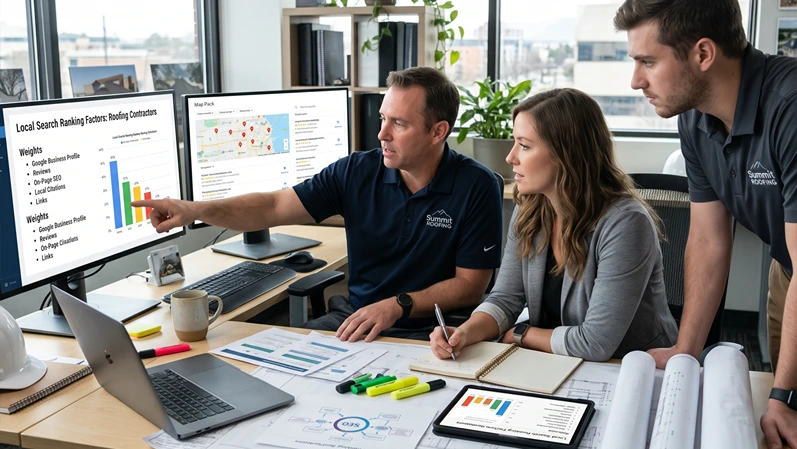
Google identifies three main factors that influence local rankings: relevance, distance, and prominence. You can improve some of these directly, while others depend on where your business is located and who’s searching.
Relevance: How Well Your Roofing Services Match Local Searches
Relevance is about how closely your business matches what someone needs. If a homeowner searches for commercial roof repair, Google looks for businesses that appear to offer that service.
Make your services clear on your website and Google Business Profile. There’s no need to repeat “roofing contractor” everywhere, but customers and search engines should have no trouble understanding what you do.
Distance: How Location Affects Roofing Contractors’ Rankings
Location matters, especially for Google Maps. A homeowner searching in downtown Houston may see different roofing companies than someone searching from Katy.
You can’t change your physical location through SEO, and adding more cities to your Google Business Profile won’t automatically improve your rankings in those areas. Focus on accurately representing where you operate rather than trying to make your business appear closer than it is.
Prominence: Building Authority and Trust in the Roofing Industry
Prominence reflects how established and well-known your business appears to Google. Customer reviews, relevant backlinks, and information about your company across the web can contribute to this factor.
A roofing company with a solid reputation and credible online presence has a stronger foundation than one with little information available. Building that reputation takes time, but it’s worth the effort.
Read more: Local Search Intent: Shaping Google Maps Ranking and Local Visibility
Google Business Profile Optimization for Roofing Contractors
Your Google Business Profile is often the first thing homeowners see when searching for nearby roofers. It shows your services, reviews, photos, contact information, and other details without requiring customers to visit your website.
A complete profile won’t guarantee the top spot, but missing or inaccurate information certainly doesn’t help.
Choosing the Right Google Business Profile Categories
For most roofing companies, Roofing Contractor is the appropriate primary category. You can add secondary categories if they accurately describe other services you provide.
Stick to what your company actually does. Adding unrelated categories just to appear in more searches isn’t a useful strategy.
Optimizing Roofing Business Information
Keep your company name, phone number, website, and operating hours accurate. Your business description should explain what you offer and where you work without reading like a list of keywords.
If you travel to customers and don’t receive visitors at your business address, follow Google’s service-area business guidelines, including hiding your address when required.
Adding Roofing Services to Your Google Business Profile
List your main services, such as roof replacement, leak repair, inspections, and storm damage restoration. Include commercial roofing if it’s part of your actual scope.
Short, straightforward descriptions help homeowners figure out whether you’re the right contractor before they call.
Uploading High-Quality Roofing Project Photos
Homeowners want to see your work, not another generic picture of a roof. Upload clear photos of completed installations, repairs, and projects in progress.
Before-and-after images can be especially helpful because they show what your team accomplished. Use genuine project photos that accurately represent your work.
Keeping Your Google Business Profile Active
Review your listing regularly, respond to reviews, and update your photos when you complete new projects. You can also share business updates through Google posts.
These activities make your profile more useful to customers, although posting more frequently doesn’t automatically raise your Google Maps ranking.
Local Keyword Optimization Strategies for Roofing Contractors
Ranking for “roofing” sounds great, but that broad keyword isn’t necessarily going to bring you customers. Someone searching for “roof replacement in Houston” is much closer to hiring a contractor than someone looking up general roofing information.
The key is finding searches that match your services and locations.
Finding High-Intent Local Keywords for Roofing Companies
Focus on phrases that indicate someone needs roofing work, such as “emergency roof repair near me,” “commercial roofing contractors in Houston,” or “roof replacement in Katy.”
Use keyword research tools and Google Search Console to find relevant opportunities. Prioritize searches that could realistically lead to inquiries instead of chasing traffic for its own sake.
Incorporating Local Keywords Into Website Content
Include your primary service and location keywords in relevant page titles, headings, and descriptions. Then write the rest of the content naturally, explaining what customers can expect from your company.
Repeating the same city name in every paragraph won’t make your page more helpful. Clear service information matters much more than forcing in extra keywords.
Creating Location-Specific Roofing Service Pages
If you serve multiple cities, dedicated location pages can help you reach homeowners in those markets. Each page should include useful local information, relevant services, and project examples when available.
Avoid publishing identical pages that only swap one city name for another. Give visitors a reason to read each page.
How Online Reviews Influence Local SEO for Roofing Contractors
Reviews affect how homeowners perceive your company and can contribute to local prominence. A roofing business with genuine feedback gives potential customers something to evaluate before requesting an estimate.
Encouraging Genuine Customer Reviews
Ask customers to leave an honest review after completing their roofing project. Sending a direct Google review link through email or text makes it easier for them to share their experience.
Don’t offer rewards for reviews or request feedback only from customers you expect to leave five stars. Authenticity matters, and Google’s policies prohibit incentivized reviews and certain forms of selective solicitation.
Responding to Positive and Negative Reviews
Thank customers for positive feedback and address complaints professionally. If someone raises a legitimate concern, acknowledge it and offer a reasonable way to resolve the issue.
Your responses aren’t only for the person who wrote the review. Future customers may read them to see how your business handles feedback.
Using Roofing Customer Testimonials to Build Trust
Feature relevant testimonials on your website, especially when customers describe the roofing services you completed. With permission, you can pair their feedback with project photos to give visitors a better understanding of your work.
Website Optimization Factors That Support Local SEO for Roofing Contractors
Your Google listing may get homeowners interested, but your website often determines whether they contact you. If it’s slow, confusing, or difficult to use on a phone, potential customers may leave before requesting an estimate.
Mobile-Friendly Website Design
Make your website easy to navigate on smaller screens. Use readable text, straightforward menus, and contact buttons that don’t require visitors to hunt for your phone number.
Keep estimate forms simple, especially for homeowners who need urgent repairs.
Website Speed and Core Web Vitals
Large project photos, unnecessary scripts, and poorly configured hosting can slow down your website. Compress images and use tools like Google PageSpeed Insights to identify problems.
Core Web Vitals measure loading performance, responsiveness, and visual stability. Improving these areas helps visitors use your website comfortably, although faster loading alone won’t guarantee higher rankings.
Optimizing Roofing Service Pages
Give your main services their own pages rather than squeezing everything into one general description. A roof repair page, for example, should explain common problems, what the service involves, and how to request an inspection.
Include relevant project examples and clear contact information. Homeowners shouldn’t have to guess what happens after they reach out.
Implementing Local Business Schema Markup
Local business schema markup helps search engines interpret information about your company. You can use the RoofingContractor schema type to identify relevant business details.
Make sure the structured data matches the information on your website. Schema supports clearer interpretation, but it isn’t a guaranteed ranking boost.
Read more: Roofing Website Design Features That Turn Visitors Into Estimate Requests
Local Citations and Business Listings for Roofing Contractors
Local citations are mentions of your business information on directories and other websites. They help customers find you and make your company’s online presence easier to verify.
Maintaining Consistent Business Information Across Directories
Keep your business name, phone number, and publicly listed address accurate across your online profiles. If your company moves or changes numbers, update your important listings before customers start contacting outdated information.
Relevant Online Directories for Roofing Companies
Focus on established platforms where homeowners might look for contractors, including Yelp, Better Business Bureau, Angi, Houzz, and local chamber of commerce websites.
Industry-specific directories can also be useful. Choose credible listings rather than submitting your business to every directory you find.
Avoiding Common Local Citation Mistakes
Duplicate profiles, outdated details, and fake business locations create unnecessary problems. Review your major listings periodically and correct anything that’s inaccurate.
Read more: What Is a Local Citation and How To Set Up One
Local Link Building Strategies for Roofing Contractors
Backlinks from relevant websites can support your roofing company’s online authority. But collecting random links isn’t the point. You want genuine mentions from businesses, organizations, and resources connected to your industry or community.
Building Relationships With Local Businesses
Builders, property managers, and real estate professionals can be valuable business connections. Project collaborations may lead to referrals and legitimate website mentions.
Focus on relationships that make sense for your business rather than exchanging links purely to influence rankings.
Earning Backlinks Through Community Involvement
Community projects and local events can help introduce your company to new customers. Supporting a nonprofit initiative or participating in a neighborhood improvement project may also lead to mentions on relevant websites.
Creating Link-Worthy Roofing Content
Publish resources that people might genuinely want to share, such as storm damage checklists or guides to preparing roofs for hurricane season.
Useful, accurate information gives local publications and other websites a reason to reference your content.
Content Marketing Strategies to Improve Local Search Visibility for Roofing Contractors
Some homeowners are ready to book an inspection. Others are still trying to figure out whether a stain on their ceiling means they need a new roof.
Helpful content allows you to reach both groups without turning every page into a sales pitch.
Publishing Educational Roofing Blog Posts
Answer common customer questions about roof damage, repair costs, replacement timelines, and maintenance. Explain the details clearly so homeowners can make informed decisions.
Creating Location-Relevant Roofing Content
Address roofing concerns specific to your area. A Houston contractor, for example, could cover hurricane preparation, storm damage, and roofing materials suited to the local climate.
This gives your content a local focus without stuffing city names into every heading.
Strengthening Internal Linking Across Roofing Pages
Connect related articles and services so readers can find the next piece of information they need. A storm damage guide could link to your emergency repair page, while a roof replacement article could direct visitors to completed projects.
How Roofing Contractors Can Track Local SEO Performance
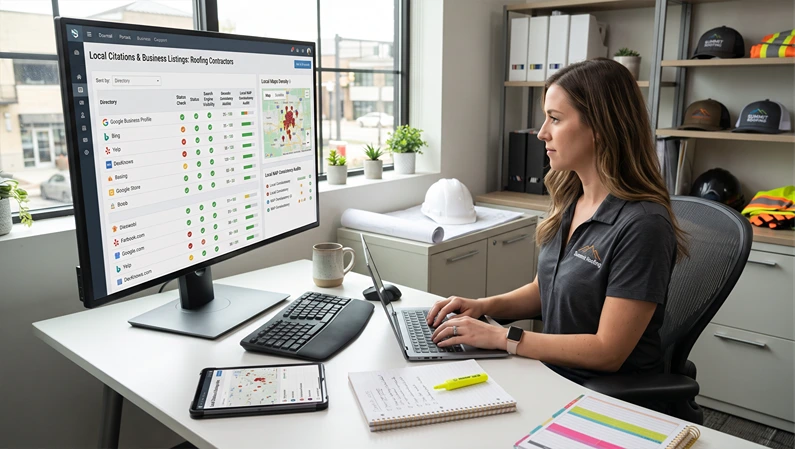
Better rankings are encouraging, but they don’t pay the bills. What matters is whether your search visibility brings in qualified inquiries and actual roofing jobs.
Monitoring Google Maps Visibility and Local Rankings
Track your position for relevant roofing searches across your service area. Remember that Google Maps results vary based on the searcher’s location, so one ranking check won’t tell the whole story.
Look for consistent improvements over time rather than obsessing over daily fluctuations.
Measuring Google Business Profile Performance
Google Business Profile performance reports can show customer actions such as calls and website clicks. These metrics help you understand how people interact with your listing after finding it.
Using Google Search Console and Google Analytics
Google Search Console shows which searches bring impressions and clicks to your website. Google Analytics helps you understand visitor behavior and track conversions when properly configured.
Use both to identify pages that attract potential customers and those that may need improvement.
Evaluating Roofing Lead Quality and Conversions
Not every inquiry is worth the same amount. A homeowner requesting a roof replacement within your service area is usually a stronger lead than someone asking about work your company doesn’t offer.
Track estimate requests, qualified calls, and booked projects to understand which search efforts actually contribute to revenue.
Turn Local Search Visibility Into Roofing Leads With LeadOrigin
Getting your roofing company to appear on Google is one part of the job. The other is giving homeowners enough information and trust to choose your business when they’re ready to hire.
A strong local search strategy connects your Google Business Profile, website, reviews, and content with the services people are actively searching for. You don’t need to chase every ranking tactic. Focus on the improvements that help the right customers find and contact you.
LeadOrigin helps businesses improve their digital marketing strategies and generate qualified leads. If your roofing company wants to reach more homeowners in its service area, a focused local SEO strategy can help you get there.
Ready to bring in more local roofing leads? Contact LeadOrigin to strengthen your online visibility and turn more local searches into business opportunities.
Frequently Asked Questions
What Are the Most Important Local Search Ranking Factors for Roofing Contractors?
Google’s main local search ranking factors are relevance, distance, and prominence. Roofing contractors can improve their local visibility through an accurate Google Business Profile, genuine customer reviews, useful website content, and relevant backlinks. Their physical location also affects Google Maps rankings.
How Can Roofing Contractors Rank Higher on Google Maps?
Roofing contractors can improve Google Maps visibility by completing their Google Business Profile, choosing accurate categories, keeping business information current, and earning authentic customer reviews. Relevant website content and a credible local reputation can also help, although rankings depend partly on where the customer searches.
How Long Does Local SEO Take to Work for Roofing Contractors?
Local SEO improvements may become noticeable within weeks, but meaningful results often take several months. The timeline depends on competition, your existing online presence, and the work required. Consistent optimization is important, and specific ranking improvements aren’t guaranteed.
Should Roofing Contractors Create Separate Pages for Each Service Area?
Yes, when each page provides useful information about a city the company genuinely serves. Include relevant services, local project examples, and details that matter to homeowners in that area. Avoid duplicate pages that simply replace one location name with another.
Can Roofing Contractors Rank in Multiple Cities Without a Physical Office?
Yes. Roofing contractors can rank in organic search results for multiple cities through relevant website content and location-specific service pages. However, Google Maps rankings depend partly on the company’s actual location, and adding service areas doesn’t guarantee visibility throughout those cities. Fake addresses or ineligible Google Business Profiles should never be used.