
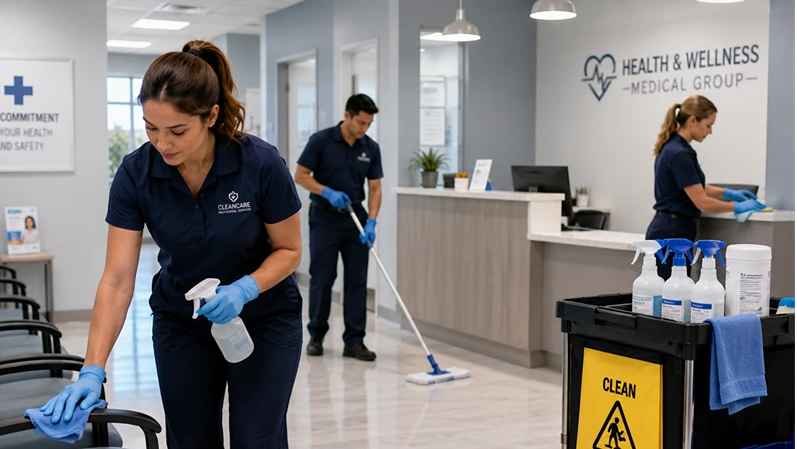
A medical office cannot be maintained the same way as a typical corporate space. Patients arrive with weakened immune systems, exam rooms handle bodily fluids and sharps, and a single lapse in disinfection can spread infection rather than simply leaving a room looking untidy. That difference is exactly why medical offices require specialized cleaning services rather than a standard commercial cleaning contract.
Higher Infection Control Standards in Healthcare Settings
Unlike a typical office where the goal is a tidy, presentable space, a medical facility’s cleaning standard exists to directly protect patient health.
Cross-Contamination Risks Unique to Healthcare
Exam rooms, waiting areas, and shared equipment all carry a higher risk of transferring infection between patients than a typical office environment. A patient with a compromised immune system sitting in a chair recently used by someone with a contagious illness faces a real health risk that a general office cleaning routine is not designed to address, regardless of how diligent that routine might otherwise be.
Why General Cleaning Standards Fall Short
Standard commercial cleaning focuses on visible cleanliness and general sanitation, which is simply not the same standard required to prevent the spread of pathogens in a clinical setting. Surfaces that look spotless can still carry infectious agents if the wrong disinfectant or contact time was used during cleaning.
Consistency Matters More in a Clinical Setting
A medical practice depends on predictable, repeatable cleaning standards in a way that a typical office simply does not.
Staff Turnover and Institutional Knowledge
Frequent turnover among cleaning staff in a medical facility means retraining on infection control protocols has to happen constantly, which increases the chance that a newer or less experienced staff member misses a critical step. Providers who retain trained healthcare cleaning staff long-term tend to deliver more consistent, reliable results than those relying on a constantly rotating crew.
Scheduling Around Patient Flow
Cleaning in a medical office often has to happen between patient appointments rather than only before or after business hours, which requires tighter coordination between the cleaning provider and practice staff than a typical office cleaning arrangement demands. A provider experienced in healthcare settings understands how to work within that flow without disrupting the practice’s daily schedule. Practices that already coordinate carefully across their own website and patient scheduling systems recognize how much this kind of operational precision matters.
Regulatory Compliance Medical Facilities Must Meet
Medical offices operate under a layer of regulatory requirements that most commercial spaces never have to consider.
OSHA Bloodborne Pathogen Standards
Facilities that handle blood or other potentially infectious materials must follow OSHA’s bloodborne pathogen standard, which dictates specific protocols for cleaning, disinfecting, and disposing of contaminated materials. A cleaning provider unfamiliar with these requirements puts the practice at risk of a compliance violation, regardless of how thoroughly a room appears to have been cleaned on the surface.
State and Local Health Department Requirements
Many states impose additional health department requirements specific to medical facilities, covering everything from disinfectant selection to documentation of cleaning schedules. A practice’s own compliance obligations extend directly to whichever cleaning provider services the facility, making this an area where cutting corners on vendor selection carries real regulatory risk.
Patient Perception and Trust
A patient’s confidence in a practice is shaped heavily by the visible cleanliness of the space they walk into, often before they even see a provider.
First Impressions Affect Patient Confidence
Patients form quick judgments about a practice’s overall quality of care based on how clean and well-organized the facility appears. A spotless, well-maintained waiting room and exam area signals attentiveness and competence, while a neglected space can quietly undermine confidence even when the actual clinical care is excellent.
Online Reviews Increasingly Mention Cleanliness
Patient reviews on platforms like Google increasingly reference how clean a facility felt during a visit, and negative comments about cleanliness can affect a practice’s reputation just as much as clinical feedback. Practices that invest in strong review management understand how much a single comment about a dirty waiting room can influence prospective patients browsing reviews before booking an appointment.
Specialized Areas That Require Extra Attention
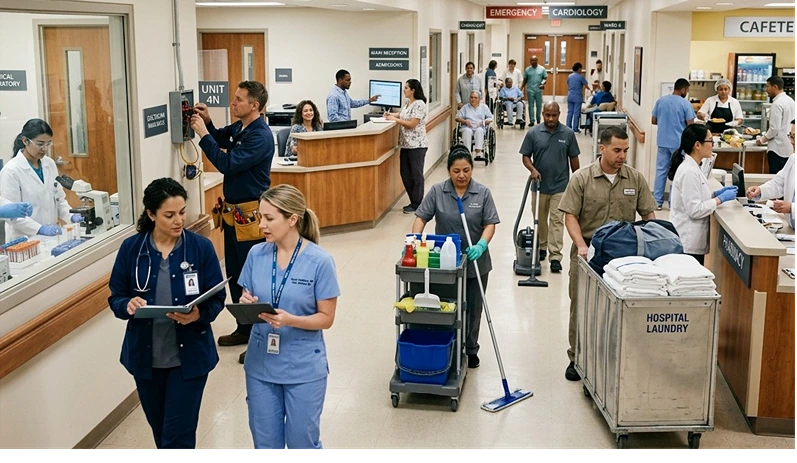
Certain areas within a medical office carry disproportionate risk and require a level of attention that general commercial cleaning protocols simply do not address.
Exam Rooms and Procedure Areas
Exam tables, countertops, and any surface that comes into contact with patients need disinfection between every single patient visit, not just at the end of the day. This turnaround cleaning requires staff trained specifically in the correct protocol and contact time for medical-grade disinfectants.
Waiting Rooms and Reception Areas
Waiting rooms see a constant rotation of patients, some of whom are actively contagious, making high-touch surfaces like chair armrests, door handles, and check-in kiosks a significant transmission risk if not disinfected frequently throughout the day rather than just once in the evening.
Transitioning to a Specialized Provider Without Disruption
Practices currently using a general commercial cleaning contract can move to a specialized healthcare provider without a chaotic transition if it is planned properly.
Overlapping Contracts During Transition
Running a brief overlap period between an outgoing general provider and an incoming specialized one allows a practice to verify the new provider’s protocols firsthand before fully cutting over, reducing the risk of any gap in coverage during the switch.
Auditing Current Practices First
Before switching providers, a practice benefits from a quick internal audit of current cleaning gaps, whether that is inconsistent exam room turnaround, missed biohazard protocols, or simply outdated disinfectant products. That audit gives the incoming provider a clear starting point rather than a vague instruction to simply “do better.”
Proper Handling of Biohazardous Materials
Medical facilities generate waste and materials that require handling procedures entirely absent from a typical office cleaning contract.
Sharps and Biohazard Waste Disposal
Needles, other sharps, and materials contaminated with bodily fluids require specific disposal protocols and containers, and cleaning staff must know how to handle these materials safely without creating an exposure risk to themselves or others in the facility.
Personal Protective Equipment for Cleaning Staff
Staff cleaning a medical facility need appropriate personal protective equipment, including gloves and sometimes additional barrier protection, along with training on when and how to use it correctly. This is a meaningful departure from the equipment and training required for a standard office cleaning role.
Training Requirements for Medical Facility Cleaning Staff
The people performing the cleaning need training that goes well beyond what a general commercial cleaning role requires.
Bloodborne Pathogen and Infection Control Training
Staff working in medical facilities should receive documented training on bloodborne pathogen exposure control, proper use of medical-grade disinfectants, and correct procedures for handling contaminated materials. A provider unable to produce documentation of this training is not equipped to service a healthcare facility responsibly.
Correct Use of Medical-Grade Disinfectants
Medical-grade disinfectants often require specific contact times and dilution ratios that differ meaningfully from standard commercial cleaning products. Staff need training on these specifics, since using the wrong contact time can leave a surface looking clean while pathogens remain active on it.
The Cost of Cutting Corners on Facility Cleaning
The consequences of inadequate cleaning in a medical setting extend far beyond appearance and carry real financial and reputational risk.
Infection Outbreaks Tied to Facility Cleanliness
Healthcare-associated infections traced back to inadequate facility cleaning can result in serious harm to patients, and the reputational damage to a practice once such a connection becomes public is difficult to repair. Practices that invest heavily in their local seo to attract new patients have far more to lose from a preventable infection story than the cost of a properly qualified cleaning provider would ever represent.
Regulatory Penalties and Compliance Violations
Failing an inspection tied to cleaning and infection control standards can result in fines, corrective action requirements, and in serious cases, threats to a facility’s operating license. These penalties, along with the disruption of an inspection failure, far outweigh the cost difference between a general cleaning contract and a properly specialized one.
Choosing a Provider Experienced in Healthcare Cleaning
Not every commercial cleaning company has the training, equipment, and compliance knowledge required to service a medical facility properly.
Ask About Healthcare-Specific Experience Directly
Request examples of other medical facilities a provider currently services, along with documentation of staff training specific to bloodborne pathogens and infection control. A provider that primarily services general office space is unlikely to have the specialized background a medical practice actually requires.
Confirm Documentation and Reporting Practices
A qualified healthcare cleaning provider should be able to produce documented cleaning logs, disinfectant usage records, and training certifications on request, giving a practice the paper trail needed to demonstrate compliance during an inspection. Practices that already maintain this level of documentation in their own content writing and patient communications should expect the same rigor from every vendor touching the facility.
Frequently Asked Questions
Why do medical offices need specialized cleaning services instead of standard cleaning?
Medical office cleaning requires infection control protocols, specific disinfectant contact times, biohazard handling procedures, and staff training that standard commercial cleaning does not typically include.
Is medical facility cleaning more expensive than general office cleaning?
Yes, typically. The specialized training, equipment, and compliance requirements involved in medical facility cleaning generally make it a higher-cost service than standard commercial cleaning of comparable square footage.
How often should exam rooms be disinfected?
Exam rooms and any surfaces in direct contact with patients should be disinfected between every patient visit, not just at the end of the business day.
What certifications should a medical facility cleaning provider have?
Look for documented bloodborne pathogen training, OSHA compliance knowledge, and experience servicing similar healthcare facilities, along with proper insurance and bonding for staff.
Can a general commercial cleaning company be trained to handle medical office requirements?
Some can, but it requires a genuine investment in specialized training, proper equipment, and documented compliance procedures rather than simply applying their standard cleaning protocol to a medical setting.
Protecting Patients Starts With the Right Cleaning Partner
Medical offices require specialized cleaning services because the stakes involved, patient health, regulatory compliance, and a practice’s reputation, are simply higher than in a typical commercial space. Practices ready to pair the right facility standards with a stronger strategy for attracting new patients can connect with LeadOrigin to talk through what a full-service partnership looks like.