Plastic surgery practices lose qualified leads every day because their ad traffic lands on pages that fail to convert. High-performing plastic surgery landing pages help practices turn expensive clicks into booked consultations by aligning messaging, visuals, trust signals, and clear calls to action.
Strong landing pages also improve plastic surgery PPC performance by lowering bounce rates and increasing conversion rates. This guide explains how better landing pages support plastic surgery lead generation, improve ROI, and help cosmetic practices compete more effectively in local markets.
Why Landing Pages Matter for Plastic Surgery Paid Ads
Dedicated landing pages increase conversion rates because they focus on one procedure, one audience, and one action. Practices running plastic surgery paid ads need pages built specifically for ad traffic instead of generic website pages.
A focused landing page helps visitors quickly understand the procedure, pricing expectations, recovery details, and next steps. This clarity reduces hesitation and increases consultation requests.
What happens when paid ad traffic lands on the wrong page?
Visitors leave quickly when the page does not match the ad they clicked. That disconnect wastes ad spend and lowers conversion rates.
Patients searching for rhinoplasty, facelift surgery, or body contouring expect targeted information immediately. Generic pages force users to search for answers themselves, which increases drop-offs.
Why do landing pages improve paid advertising ROI?
Landing pages improve Quality Score, increase conversions, and reduce cost per lead. Better user experience signals also help advertising platforms reward campaigns with lower click costs.
Practices that invest in optimized cosmetic surgery landing pages often see stronger consultation volume without increasing ad budgets. This creates a more scalable acquisition strategy.
The Problem With Sending Paid Traffic to the Homepage
Homepages are designed for broad navigation, not high-conversion ad campaigns. A homepage introduces the entire practice instead of guiding users toward one specific action.
Most paid visitors make decisions in under 10 seconds. If the page lacks procedure-specific messaging, they leave before contacting the practice.
Why does homepage traffic convert poorly for plastic surgery ads?
Homepage visitors encounter too many menu options, service links, and distractions. Too many choices reduce conversion momentum.
Paid traffic performs best when users move through a focused journey with minimal friction. Dedicated landing pages eliminate unnecessary navigation and distractions.
What problems do homepages create for ad campaigns?
Homepages rarely match the exact language used in ad copy. This mismatch weakens user trust and hurts campaign performance.
Many practices also fail to place consultation forms above the fold on homepages. Visitors often leave before finding the next step.
What Makes a Strong Plastic Surgery Landing Page?
Strong landing pages focus on clarity, trust, and conversion. The best-performing pages answer patient concerns immediately while guiding users toward consultation booking.
Effective pages also combine persuasive visuals, educational content, testimonials, and mobile optimization. Every section should support one conversion goal.
What elements should every landing page include?
High-converting pages usually include:
- Procedure-specific headlines
- Consultation forms above the fold
- Before-and-after galleries
- Surgeon credentials
- Financing information
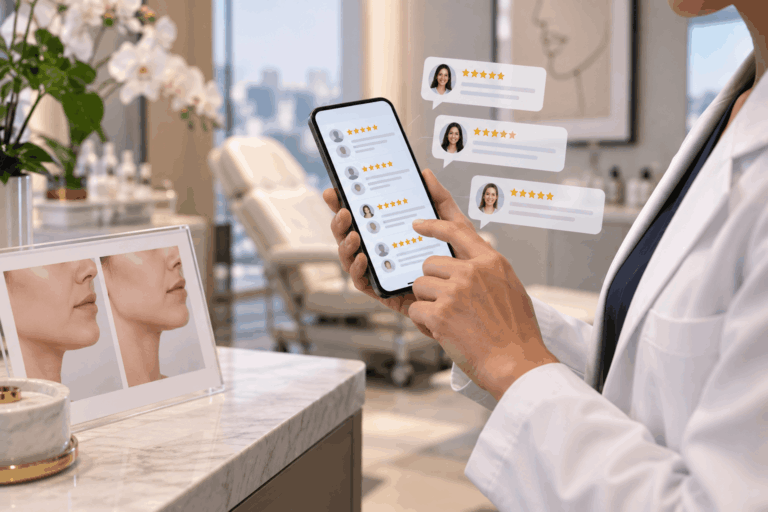
- Testimonials and reviews
- Mobile-friendly layouts
- Clear CTA buttons
- Fast loading speeds
These elements improve credibility and reduce uncertainty during the decision-making process.
Why is page structure important for conversions?
Users scan pages instead of reading every sentence. Organized layouts help visitors find important information quickly.
Practices that use clean formatting, short sections, and visible CTAs often generate more consultation requests. Better usability creates smoother conversion paths.

Create Procedure-Specific Landing Pages
Procedure-specific pages convert better because they address one patient intent at a time. A patient searching for breast augmentation has different concerns than someone researching liposuction.
Dedicated pages improve message relevance and create more personalized user experiences. This increases engagement and lead quality.
Why should every procedure have its own landing page?
Separate pages allow practices to target unique keywords, concerns, and demographics. This improves ad relevance and conversion potential.
A facelift campaign should discuss aging concerns, recovery expectations, and rejuvenation outcomes. A body contouring page should focus on sculpting, weight loss support, and contour refinement.
Which procedures benefit most from dedicated landing pages?
The highest-performing procedure pages often include:
| Procedure | Why Dedicated Pages Work |
| Facelift Surgery | Patients want detailed recovery and aging information |
| Breast Augmentation | Implant options require focused education |
| Rhinoplasty | Patients need visual examples and technical explanations |
| Liposuction | Users compare sculpting techniques and recovery times |
| Mommy Makeover | Multi-procedure pages simplify consultation planning |
These pages create stronger alignment between search intent and page content.
Match the Landing Page Message to the Paid Ad
Message consistency improves conversions because users immediately recognize they landed in the right place. Strong alignment between ad copy and landing page copy reduces confusion.
Practices running plastic surgery PPC campaigns should mirror headlines, offers, and procedure terminology from the ads directly on the landing page. Consistency strengthens trust and campaign efficiency.
Why does message matching increase conversions?
Patients expect the page to continue the exact conversation started in the ad. Matching language creates a seamless experience.
If an ad promotes “Natural-Looking Breast Augmentation Results,” the landing page should repeat that same message prominently. Consistent wording improves confidence.
What should stay consistent between the ad and landing page?
Important elements to align include:
- Procedure names
- Promotional offers
- Geographic targeting
- Consultation incentives
- Recovery messaging
- Visual branding
- CTA language
Consistent messaging also improves Google Ads relevance scores and lowers ad costs.
Build Trust Before Asking for the Consultation
Trust is the biggest conversion factor in cosmetic healthcare marketing. Patients need reassurance before submitting personal information or scheduling consultations.
Strong trust signals reduce anxiety and help practices stand out in competitive local markets. Trust-building should appear throughout the page, not just near the bottom.
What trust signals matter most for plastic surgery patients?
The most effective trust builders include:
- Board certification details
- Real patient testimonials
- Before-and-after galleries
- Verified review ratings
- Media features
- Financing transparency
- Recovery education
These elements help patients feel safer moving forward with consultation requests.
Why do trust signals affect conversion rates?
Plastic surgery is a high-cost, emotionally sensitive service. Patients research extensively before making decisions.
Landing pages that establish expertise early tend to generate stronger conversion rates. Educational content also reduces perceived risk.
Make the Consultation CTA Clear and Easy
Clear CTAs increase conversions because they remove uncertainty about the next step. Patients should never have to search for the consultation button.
High-performing pages repeat CTAs strategically throughout the page. Multiple conversion opportunities help capture users at different decision stages.
What makes a consultation CTA effective?
Strong CTAs use action-oriented language and clear value propositions. Specific wording usually outperforms generic buttons.
Effective CTA examples include:
- Schedule Your Consultation
- Request a Personalized Treatment Plan
- Book Your Cosmetic Surgery Consultation
- Get Your Procedure Pricing Guide
Clear language improves conversion intent.
Where should CTAs appear on the page?
The best-performing pages place CTAs:
- Above the fold
- After testimonials
- Below procedure benefits
- Near before-and-after galleries
- At the bottom of the page
Repeating CTAs improves accessibility without overwhelming the user.

Use Before-and-After Photos Strategically
Before-and-after photos help patients visualize outcomes and build confidence in the surgeon’s capabilities. Visual proof is one of the strongest conversion tools for aesthetic medicine.
Well-organized photo galleries also keep users engaged longer. Increased engagement often leads to higher consultation rates.
Why do before-and-after photos improve conversions?
Patients evaluate cosmetic procedures visually before making decisions. Real results reduce uncertainty and strengthen credibility.
High-quality images also help differentiate the practice from competitors. Strong galleries communicate expertise faster than long text explanations.
What makes a before-and-after gallery effective?
The best galleries include:
- Consistent lighting
- Multiple patient angles
- Procedure labels
- Recovery timelines
- Diverse patient examples
- Mobile-friendly image displays
Strategic visual organization improves user trust and retention.
Optimize the Page for Mobile Conversions
Mobile optimization is essential because most cosmetic surgery searches now happen on smartphones. Slow or poorly formatted pages lose leads quickly.
Mobile-friendly design improves usability, ad performance, and consultation form completion rates. Google also favors mobile-optimized experiences in paid campaigns.
Why does mobile performance affect ad ROI?
Users abandon pages that load slowly or display poorly on smaller screens. Poor mobile experience increases bounce rates significantly.
Fast-loading pages help practices maximize returns from plastic surgery paid ads campaigns. Better usability supports stronger lead conversion.
What mobile features improve landing page performance?
Important mobile optimization features include:
- Click-to-call buttons
- Fast page speed
- Large readable fonts
- Simplified forms
- Sticky CTA buttons
- Compressed image files
- Thumb-friendly navigation
These features reduce friction during the conversion process.
Write Copy That Educates and Converts
Educational copy performs better because patients want informed decision-making support before scheduling consultations. Conversion-focused content answers concerns directly while guiding action.
Strong copy also improves SEO visibility and ad relevance. Well-structured educational content increases authority signals across search platforms.
What type of content converts best for cosmetic surgery pages?
The highest-performing content explains:
- Procedure benefits
- Recovery timelines
- Candidate qualifications
- Pricing expectations
- Surgical techniques
- Expected outcomes
- Consultation process
Clear educational language reduces hesitation and improves lead quality.
Why should landing page copy stay concise?
Visitors scan pages quickly before deciding to continue reading. Concise copy improves readability and engagement.
Dense text blocks often overwhelm users and increase exits. Short paragraphs create better content flow and mobile usability.
Track Landing Page Performance
Tracking performance helps practices identify which pages produce consultations and which pages waste ad spend. Data-driven optimization improves campaign efficiency over time.
Practices investing in plastic surgery lead generation should continuously test landing page performance metrics. Consistent refinement produces stronger long-term ROI.
Which landing page metrics matter most?
Key performance indicators include:
| Metric | Why It Matters |
| Conversion Rate | Measures consultation performance |
| Bounce Rate | Indicates user engagement quality |
| Cost Per Lead | Evaluates advertising efficiency |
| Form Completion Rate | Tracks usability effectiveness |
| Time on Page | Measures content engagement |
Tracking these metrics supports smarter optimization decisions.
How often should practices update landing pages?
Landing pages should be reviewed monthly for conversion improvements. Frequent testing helps practices adapt to changing patient behavior.
Many agencies, including LeadOrigin, use A/B testing to improve headlines, CTAs, and form layouts. Small adjustments often produce significant gains.
Common Landing Page Mistakes to Avoid
Poor landing page decisions reduce conversion rates and waste advertising budgets. Many practices lose leads because their pages create friction instead of clarity.
Avoiding common mistakes improves both user experience and ad profitability. Even minor issues can impact consultation volume significantly.
What are the most common plastic surgery landing page mistakes?
Common conversion killers include:
- Slow loading speeds
- Generic headlines
- Long consultation forms
- Weak CTA placement
- Missing trust signals
- Poor mobile design
- Stock photography
- Too much navigation
These issues reduce credibility and increase page abandonment.
Why do overly complex pages perform poorly?
Complex pages overwhelm users with unnecessary information and distractions. Simpler layouts help visitors focus on the consultation process.
High-converting plastic surgery landing pages prioritize clarity over excessive design elements. Focused user journeys consistently outperform cluttered experiences.

Frequently Asked Questions About Why Plastic Surgery Practices Need Better Landing Pages for Paid Ads
What is a plastic surgery landing page?
A plastic surgery landing page is a standalone webpage designed specifically to convert visitors from paid advertising campaigns into consultation leads. These pages focus on one procedure, one audience, and one conversion action.
Why do plastic surgery practices need landing pages for paid ads?
Practices need dedicated landing pages because focused pages convert better than generic website pages. Optimized landing pages improve user experience, increase consultation requests, and reduce wasted ad spend.
Should paid ads go to the homepage or a landing page?
Paid ads should usually direct users to a dedicated landing page instead of the homepage. Landing pages provide more targeted messaging and create stronger conversion paths.
What should a cosmetic surgery landing page include?
Effective cosmetic surgery landing pages should include procedure-specific messaging, before-and-after photos, testimonials, consultation forms, trust signals, and clear CTAs. Mobile optimization and fast loading speed are also essential.
How do landing pages improve plastic surgery lead generation?
Landing pages improve plastic surgery lead generation by creating focused user experiences that reduce distractions and encourage consultation requests. Better messaging alignment and conversion optimization also increase lead quality.
Turn More Ad Clicks Into Consultations
Better landing pages directly improve conversion rates, consultation volume, and advertising efficiency. Practices investing in optimized plastic surgery PPC strategies need focused pages that guide visitors toward action quickly and clearly.High-converting plastic surgery landing pages combine strong messaging, trust-building elements, mobile optimization, and procedure-specific content to maximize results. Practices looking to improve plastic surgery paid ads performance and increase qualified consultations can benefit from partnering with LeadOrigin for strategic landing page development and conversion-focused marketing support. Contact us today!