
A plastic surgery patient evaluating your practice online makes a trust decision in seconds. Your website is not just a digital brochure; it is the first physical representation of your standard of care. A plastic surgery website that feels safe, professional, and premium signals to prospective patients that your results will match your presentation, and practices that get this right convert significantly more visitors into booked consultations.
First Impressions Are Made in Milliseconds
Visual Design Sets the Expectation
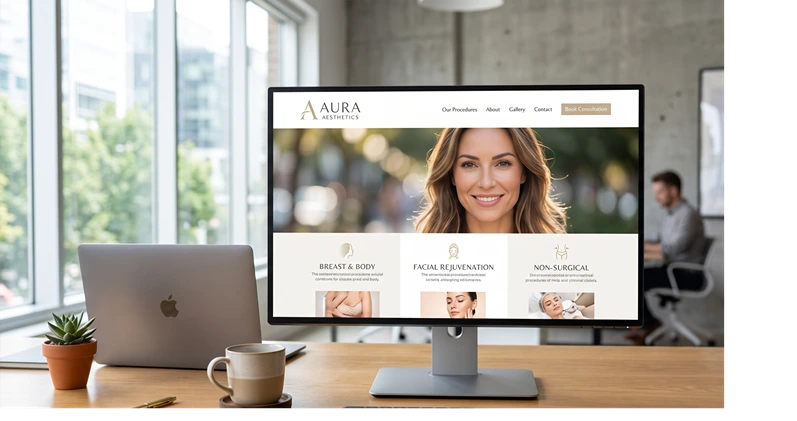
A cluttered layout, outdated typography, and low-resolution images communicate the wrong things about a practice that charges thousands of dollars for precision procedures. Patients draw an immediate parallel between a website’s appearance and how a surgery will be performed. Clean white space, high-quality photography, refined typography, and a consistent color palette create a visual language that says: this practice is meticulous, modern, and trustworthy.
The design does not need to be flashy. It needs to be intentional. Every visual choice, from the hero image to the button style to the spacing between sections, contributes to whether a patient feels safe enough to take the next step.
Page Speed and Mobile Experience Signal Professionalism
A slow-loading website or one that breaks on mobile does not just frustrate visitors; it creates doubt. If a practice cannot maintain a functional digital presence, a patient may wonder what else is not being maintained. Website design for medical and aesthetic practices must prioritize performance as much as aesthetics because both contribute to the perception of professionalism.
More than 60 percent of healthcare-related searches happen on mobile devices. A plastic surgery website that is not optimized for mobile is losing a majority of its prospective patients before they ever read a single word of content.
The Elements That Build Trust on a Plastic Surgery Website
Surgeon Credentials Displayed Prominently
Patients considering a surgical procedure need to know who is operating on them. Board certification, fellowship training, medical school, years of experience, and professional memberships should appear above the fold on the surgeon’s bio page, not buried at the bottom after marketing copy. A plastic surgery website that leads with credentials tells patients that the practice is confident in its qualifications and has nothing to hide.
This transparency directly influences how a patient evaluates risk. A clearly credentialed surgeon reduces the perceived danger of the decision, which is one of the primary barriers to booking. Credential prominence is not just good design; it is a good conversion strategy.
Before-and-After Galleries That Are Easy to Navigate
The gallery is often the most-visited section of a plastic surgery website, yet most galleries are poorly organized. Patients want to filter by procedure, find patients with a similar body type, and view results that feel realistic rather than cherry-picked. A gallery that is searchable, well-organized, and populated with diverse patient profiles builds far more trust than a handful of ideal results presented without context.
Content writing paired with gallery entries, short captions that explain the patient’s goals, the procedure performed, and the recovery timeline, adds depth that makes results feel real rather than promotional.
Patient Testimonials With Specific Detail
Generic five-star reviews do not move plastic surgery patients. Detailed testimonials that describe the consultation experience, the surgeon’s communication style, the recovery process, and the emotional impact of the results are what build genuine confidence. Video testimonials are even more powerful because they remove the anonymity that makes written reviews feel manufactured.
Your review management strategy should include a systematic process for collecting detailed post-procedure testimonials and featuring them prominently throughout the website, not just on a dedicated reviews page.
What a Premium Website Communicates About Your Practice
It Signals That You Take Quality Seriously
A premium website is consistent in every detail: fonts do not clash, image quality does not vary, button styles do not change between pages, and copy is free of errors. That consistency signals that your practice maintains the same level of attention to detail in the operating room. Patients making high-stakes aesthetic decisions are highly sensitive to inconsistency. They notice when something feels off, even if they cannot articulate why.
It Reduces the Friction of Reaching Out
A plastic surgery website that feels safe and professional makes it easier for a patient to take the next step. Clear calls to action, a consultation booking form that does not feel like a data-collection exercise, an easy-to-find phone number, and a contact page that explains what to expect from the consultation process all reduce the psychological friction of reaching out. The goal is to make booking feel like a natural next step, not a leap of faith.

It Differentiates You From Competitors
Most plastic surgery websites look the same: a rotating hero image, a procedure menu, a gallery, and a contact form. A website that invests in premium design, thoughtful content architecture, and a clear brand identity stands out in a market where patients are evaluating multiple practices simultaneously. Branding is not a luxury for plastic surgery practices; it is a competitive advantage.
Technical Trust Signals That Patients Notice
HTTPS and Security Indicators
Patients submitting personal information via a contact or booking form need to be assured that your website is secure. An HTTPS certificate is the baseline. Practices that go further by using clear privacy policy language, simple form design, and reassurance about how patient information is handled convert more form submissions by removing the hesitation patients feel about sharing sensitive details online.
Consistent NAP and Contact Information
Name, address, and phone number should appear consistently across every page of the website and match exactly what is listed in your Google Business Profile. Inconsistencies create confusion and erode the sense of professionalism that the rest of your site is working to build. Local SEO performance also depends on NAP consistency across your entire digital presence.
A Blog That Demonstrates Expertise
An active, well-written blog signals that your practice is engaged, current, and confident in sharing knowledge. It also supports your search visibility for procedure-related queries. A blog that has not been updated in two years sends a different message entirely: this practice may not be actively growing or investing in its patients’ information needs.
Frequently Asked Questions for Plastic Surgery Website Design
Why does website design matter so much for plastic surgery practices?
Patients make trust decisions about your practice based on your website before they ever speak to your team, and a poorly designed site signals a lack of attention to detail. In a category where patients are evaluating whether to trust someone with their appearance and health, first impressions carry enormous weight. A professional, premium website reduces perceived risk and increases the likelihood of a consultation booking.
What should be on the homepage of a plastic surgery website?
The homepage should immediately communicate who the surgeon is, what procedures are offered, why this practice is trustworthy, and how to book a consultation. Prominent surgeon credentials, a curated gallery preview, patient testimonials, and a clear call to action above the fold give first-time visitors everything they need to decide whether to explore further.
How important is mobile optimization for a plastic surgery website?
Critical. The majority of healthcare-related searches happen on mobile, and a site that does not function well on a phone loses patients before they see your content. Mobile optimization includes fast load times, easy navigation, tap-friendly buttons, and forms that are simple to complete on a small screen.
How often should a plastic surgery website be updated?
Procedure pages, gallery content, and blog posts should be reviewed and updated regularly, at a minimum, quarterly for high-traffic pages. Outdated information, broken links, or an unchanged gallery signal to patients that the practice is not actively maintaining its digital presence, undermining the premium impression the site is meant to create.
What role does branding play in a plastic surgery website?
Consistent branding across typography, color, imagery, and tone creates the visual coherence that signals professionalism and premium quality. Patients evaluating multiple practices simultaneously will gravitate toward the one whose digital presence feels most intentional and polished. A strong brand identity is a direct conversion tool, not just a design preference.
Build a Website That Converts Visitors Into Consultations
A plastic surgery website that feels safe, professional, and premium is one of the most powerful patient acquisition tools a practice can have. Every design decision, every content choice, and every technical detail contributes to the trust a patient needs to book. LeadOrigin builds conversion-focused websites for healthcare and aesthetics practices across Texas and nationwide. Talk to our team to see how a premium digital presence can boost your consultation volume.