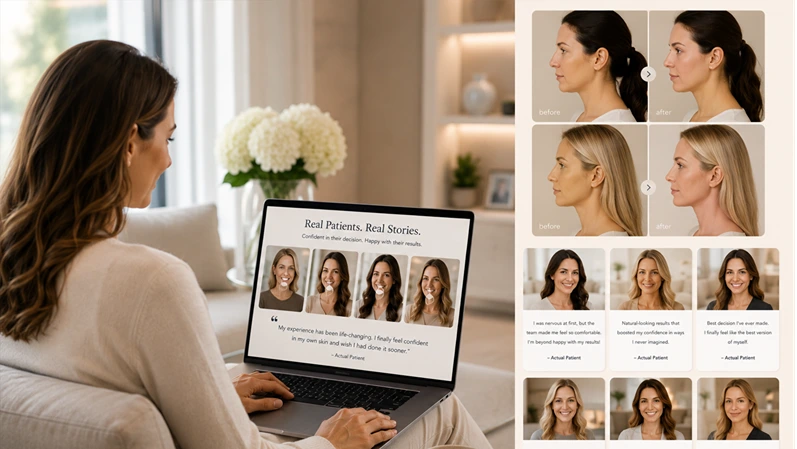
Potential cosmetic surgery patients do not make decisions quickly. Before booking a consultation, they research extensively, look for proof that results are real, and want to know that someone like them has had a positive experience. Patient stories are one of the most powerful tools a cosmetic surgery practice can use to move prospects from curious to committed.
Why Social Proof Matters More in Aesthetic Medicine

The Emotional Weight of a Cosmetic Decision
Cosmetic procedures carry personal weight. Patients are not just spending money; they are trusting a surgeon with their bodies and their confidence. Generic marketing language does not resolve that kind of hesitation. What resolves it is hearing from real patients who faced the same concerns and came out satisfied.
Authenticity drives conversions in this space more than almost any other industry. When a prospective patient reads a detailed account of someone’s recovery, emotional journey, and final outcome, the barrier to scheduling drops significantly.
Trust as the Primary Conversion Factor
Cosmetic surgery practices that lead with clinical credentials alone often lose prospects to competitors who lead with a human connection. Credentials matter, but they are table stakes. What separates a practice that fills its consultation calendar from one that struggles is the volume and visibility of real patient experiences.
Building a strong reputation management strategy that includes patient stories across your website, Google profile, and social platforms creates a consistent layer of trust that compounds over time.
How to Collect and Use Patient Stories Effectively
Ask at the Right Moment
Timing determines whether a patient agrees to share their story. The ideal window is shortly after they have expressed satisfaction with their results, typically at a follow-up appointment. At this stage, the experience is fresh, the emotional high is real, and the patient is most likely to be generous with their words.
Train your front desk and coordinators to make the ask feel natural rather than transactional. A simple “We’d love to share your experience if you’re open to it” is far more effective than a scripted request.
Choose the Format That Fits the Story
Not every patient story belongs in the same format. A short, emotional review works well on your Google Business Profile and social media. A longer written testimonial with a before-and-after narrative is well-suited to your website’s procedure pages. A video story is ideal for social media and paid advertising, where authenticity and movement stop the scroll.
Social media management plays a direct role in how far these stories travel. A practice with a consistent posting cadence that regularly features real patient voices builds an engaged audience that organically refers new patients.
Obtain Proper Consent
Every patient story used in marketing must be covered by a signed HIPAA-compliant release. This protects the patient and the practice. Work with your legal or compliance team to ensure your release form covers all channels: website, social, paid ads, email, and print. Practices that skip this step risk violations that far outweigh any short-term marketing gain.
Where Patient Stories Should Live in Your Marketing Ecosystem
Website Procedure Pages
Each procedure page on your website should include at least one patient testimonial relevant to that specific procedure. A patient who had a rhinoplasty explaining their experience belongs on the rhinoplasty page, not a generic testimonial wall. This contextual placement increases the conversion rate on individual procedure pages because the social proof matches the prospect’s intent.
Strong website design ensures these testimonials are visible without requiring a visitor to scroll endlessly or click away from their primary browsing flow.
Paid Advertising
Patient stories translate exceptionally well into paid social ads. A short video clip of a patient describing their result, paired with a simple CTA to book a consultation, consistently outperforms stock imagery and promotional copy. Real people speaking authentically about real results trigger an emotional response that no designed graphic can replicate.
Working with a paid social ads team that understands the compliance requirements specific to healthcare advertising ensures these campaigns run without interruption.
Email Marketing and Follow-Up Sequences
Practices with a robust lead-nurturing sequence use patient stories in their email flows. A prospect who filled out a contact form but has not booked is more likely to convert after receiving an email featuring a patient story from someone who was in the same position. This indirect persuasion is more effective than another discount offer.
Email marketing designed around education and social proof builds the relationship that converts cold leads into consultations.
The Long-Term Marketing Value of Patient Stories
Patient stories are not one-time assets. A single compelling video testimonial can appear in ads, on your website, in email sequences, on social media, and in your Google Business Profile. The initial investment in collecting and producing that story pays returns for months or years.
Practices that build a library of diverse patient stories across multiple procedures, demographics, and outcomes create a marketing resource that continuously drives new consultations without requiring constant production of new creative. This is especially valuable for content writing strategies that depend on authentic voices to support long-form procedure guides and educational content.
Frequently Asked Questions About Patient Stories In Cosmetic Surgery Marketing
How do patient stories differ from standard reviews?
Patient stories go deeper than a star rating or a short review. They walk through the patient’s experience from their initial concern, through the consultation and procedure, to the final result. This narrative arc is more persuasive because it mirrors the journey a prospective patient expects to take.
Can patient stories be used in Google Ads?
Yes, with the right compliance steps in place. Google has specific policies for healthcare advertising, including restrictions on before-and-after imagery in certain placements. A digital marketing agency experienced in healthcare can structure compliant campaigns that still leverage the emotional power of real patient experiences.
How many patient stories should a practice have on its website?
There is no upper limit. The more diverse the library, the broader the audience you can speak to. At a minimum, aim for at least one story per major procedure category. Practices that rotate featured stories also give returning visitors a reason to engage again.
What makes a patient’s story ineffective?
Vague or overly polished stories lose credibility. Phrases like “Dr. X changed my life” without specific detail do not move prospects the way a specific, relatable account does. Encourage patients to describe their previous state honestly, what made them choose your practice, and exactly what surprised them about the experience or result.
Should practices feature patient stories on TikTok and Instagram Reels?
Yes, short-form video featuring authentic patient experiences performs strongly on both platforms. Keep the content focused on the emotional journey rather than graphic procedure footage. Use captions for accessibility and include a clear call to action. A compliance review is still required before posting.
Turn Patient Stories Into Your Most Powerful Cosmetic Surgery Marketing Asset
Patient stories in cosmetic surgery marketing are not optional content fillers; they are the primary driver of trust in an industry where trust determines who gets the consultation. The practices that invest in building, collecting, and strategically placing real patient voices across their digital presence consistently outperform those relying on clinical messaging alone. LeadOrigin helps cosmetic surgery practices build reputation and content strategies that put the right stories in front of the right prospects. Contact us to build a patient story marketing system that fills your consultation calendar.