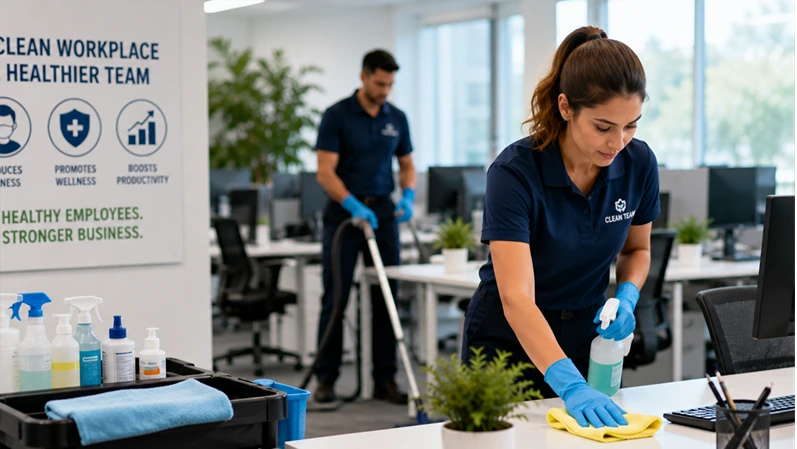
Flu season, cold outbreaks, and the steady churn of everyday illness all move through a workplace the same way: contact with surfaces and shared spaces that never get properly disinfected between visits. A structured plan to reduce employee sick days starts with something far simpler than most businesses expect, a consistent, professional cleaning program built around disinfection rather than appearance alone.
The Link Between Workplace Hygiene and Illness
Offices are dense environments where dozens or hundreds of people touch the same doorknobs, appliances, and equipment every day, which makes them efficient places for germs to travel from one person to the next.
How Illness Actually Spreads in Shared Spaces
Cold and flu viruses can survive on hard surfaces for hours, sometimes days, which means a single infected employee can leave a trail across a breakroom microwave, an elevator button, and a shared printer long before symptoms even appear. Without regular disinfection, that trail simply waits for the next unsuspecting person to make contact and carry it further through the building.
The High-Touch Surfaces Most Businesses Overlook
Door handles and light switches get attention in most basic cleaning routines, but keyboards, phone receivers, break room appliance handles, and shared conference room equipment are touched just as often and cleaned far less consistently. These overlooked surfaces are often where the real transmission risk sits, quietly undermining an otherwise reasonable cleaning schedule that focuses mostly on visible dirt and floor appearance rather than germ transmission specifically.
Key Areas Where Cleaning Reduces Illness Risk
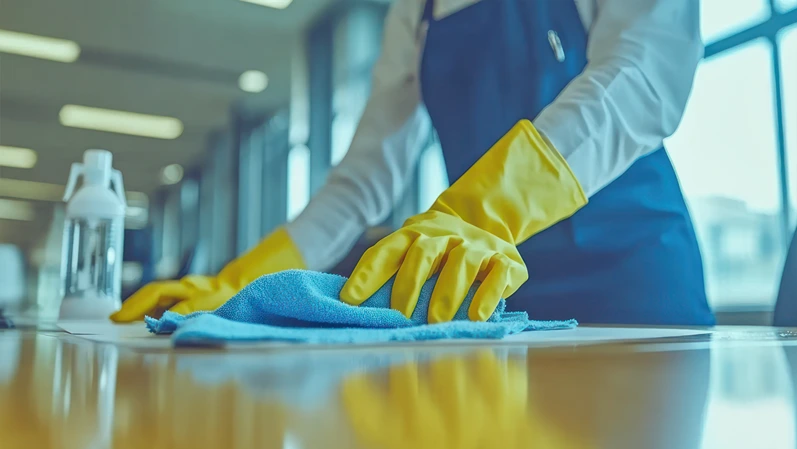
Not every part of a facility carries equal risk, which means an effective program focuses extra attention on the areas that matter most.
Restrooms and Break Rooms
These two spaces see the heaviest concentrated contact of any area in a typical office and require the most frequent disinfection, particularly on faucet handles, stall latches, and refrigerator or microwave handles that everyone touches multiple times a day.
Shared Desks, Equipment, and Meeting Rooms
Hot desking arrangements, shared workstations, and conference rooms used by multiple teams throughout the day need a wipe-down protocol between uses, not just an end-of-day pass. Businesses that have moved to flexible seating arrangements often underestimate how much this specific gap contributes to illness spreading faster than it would in a traditional assigned-desk office.
Why Office Density Makes This Problem Worse Than People Assume
Open floor plans and shared amenities, while great for collaboration, also create more opportunities for illness to move between people than most facility managers account for.
The Impact of Open Floor Plans
Traditional offices with individual, enclosed workspaces naturally limited how far germs could travel between employees. Open floor plans remove those physical barriers, which means an illness that might have stayed contained to one department in an older office layout can now spread across an entire floor within days.
Shared Amenities Multiply Contact Points
Communal coffee stations, shared printers, and open kitchen areas all function as contact points that did not exist, or existed on a much smaller scale, in more compartmentalized office designs. Each one represents another surface where illness can pass from one employee to the next multiple times a day.
The Business Case for Cutting Absenteeism Through Cleaning
The financial argument for investing in a stronger cleaning program becomes clear once the true cost of employee illness is added up across a full year.
What Sick Days Actually Cost a Business
Beyond the visible cost of paid sick leave, an absent employee creates ripple effects: delayed projects, coverage gaps, and colleagues picking up extra work that pulls them away from their own responsibilities. When illness spreads through a team rather than staying contained to one person, those costs multiply quickly, turning what looked like a single employee’s absence into a department-wide slowdown that lasts for weeks.
Flu Season Preparation and Seasonal Adjustments
Many businesses only think about disinfection reactively once an illness is already spreading through the office. A more effective approach increases cleaning frequency proactively as flu season approaches, rather than waiting for a wave of absences to justify the extra attention. Facilities that already invest in strong local SEO to attract new business understand the value of being proactive rather than reactive, and the same mindset applies directly to protecting workforce health.
Measuring Whether the Investment Is Working
A cleaning program aimed at health outcomes should be measurable, not just a general sense that the office feels cleaner than before.
Tracking Absenteeism Trends Over Time
Comparing sick day usage year over year, particularly during the same seasonal periods, gives a business a concrete way to evaluate whether a more rigorous cleaning program is actually moving the needle. A drop in absenteeism during a flu season that hit competitors harder is a strong signal the investment is paying off.
Employee Feedback as a Leading Indicator
Simple, anonymous feedback about how clean employees perceive shared spaces to be often shifts before the hard absenteeism numbers do. Facility managers who check in on that perception periodically can catch a slipping standard before it turns into a wave of avoidable sick days. Businesses that already rely on data to guide decisions in their national SEO and marketing strategy tend to bring that same evidence-based approach naturally to facility management.
What an Effective Cleaning Program Looks Like
Reducing illness transmission requires more than a general tidy-up. It requires a program built specifically around disinfection, not just appearance.
Disinfection Protocols That Actually Work
Effective programs use EPA-registered disinfectants with the correct contact time, meaning the product stays wet on a surface long enough to actually kill germs rather than being wiped away before it has done its job. Speed without proper contact time looks clean but does very little to reduce transmission risk.
Increased Frequency During Outbreaks
A responsive provider adjusts cleaning frequency during flu season or when illness is actively circulating through a building, rather than sticking rigidly to a standard schedule regardless of circumstances. That flexibility is often the difference between an outbreak that fizzles out quickly and one that sweeps through an entire department.
Getting Employee Buy-In for a Healthier Workplace
Even the most rigorous cleaning program works better when employees understand and support the effort rather than viewing it as background noise they never notice.
Communicating the Why Behind the Investment
A short internal note explaining why cleaning frequency is increasing during flu season, or why new disinfection protocols are being introduced, helps employees see the connection between the facility changes and their own health rather than dismissing it as an unexplained cost-cutting or spending decision.
Encouraging Personal Hygiene Habits Alongside Facility Standards
Posters or reminders near sinks and shared equipment encouraging basic habits, like washing hands after using shared equipment, reinforce the facility-wide effort with individual behavior. Neither approach fully replaces the other, but together they close most of the gaps that allow illness to spread despite a strong cleaning program.
Supporting a Healthier Workplace Culture Beyond Cleaning
A strong cleaning program works best as one part of a broader approach to workplace health rather than the only line of defense.
Hand Sanitizer Stations and Visible Reminders
Placing hand sanitizer stations at entrances, near shared equipment, and outside restrooms gives employees an easy way to reduce their own exposure between professional cleaning visits, reinforcing the standard the facility is already working to maintain.
Encouraging Employees to Stay Home When Sick
No cleaning program can fully offset the effect of a visibly sick employee coming into the office and working through illness out of obligation. Clear, supportive sick leave policies that do not penalize employees for staying home complement a clean facility rather than working against it, and the two together do far more to keep a team healthy than either measure alone.
Choosing a Cleaning Partner Focused on Health Outcomes
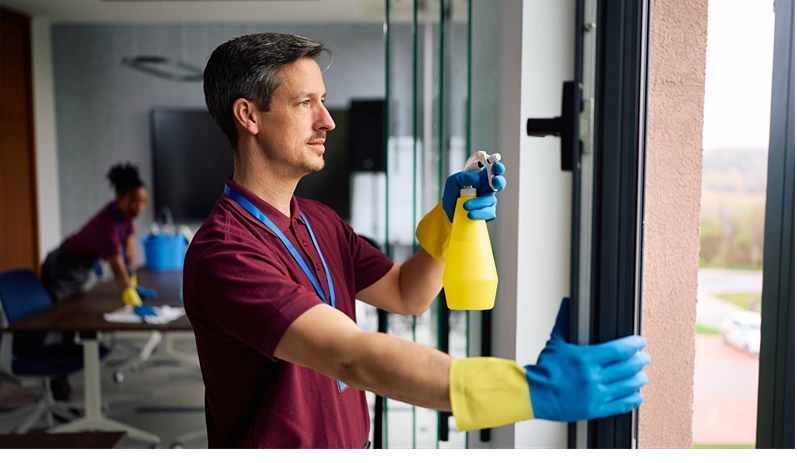
Not every provider treats illness prevention as a core part of their service, which makes the selection process worth approaching carefully.
Ask About Products and Contact Time
A knowledgeable provider can explain exactly which disinfectants they use, the required contact time for each, and how that protocol changes for high-risk areas like restrooms and break rooms. Vague answers about “hospital-grade” products without specifics are a sign to keep evaluating other options, since the label alone says very little about how effective a product actually is against common cold and flu viruses circulating in a shared workplace.
Look for Data and Reporting
Some providers now offer basic reporting on cleaning frequency and areas serviced, giving facility managers a way to track consistency over time. Businesses that already track performance closely in their own content writing and marketing efforts tend to appreciate applying that same measurable standard to a facility vendor.
Frequently Asked Questions
How quickly can a business see fewer sick days after improving its cleaning program?
Many businesses notice a reduction in illness-related absences within one to two flu seasons of implementing a more rigorous disinfection protocol, though results vary based on office density and existing hygiene habits.
What surfaces should be disinfected most frequently to reduce illness?
Door handles, light switches, shared keyboards, break room appliance handles, and restroom fixtures carry the highest transmission risk and should be disinfected daily, with high-traffic periods warranting more frequent attention.
Does commercial cleaning really reduce employee sick days significantly?
Yes. Studies on workplace hygiene consistently link regular, proper disinfection of high-touch surfaces to measurable reductions in the spread of colds, flu, and other common illnesses among office workers.
Should cleaning frequency increase during flu season?
Yes. Many facilities benefit from a temporary increase in disinfection frequency during peak cold and flu months, particularly in restrooms, break rooms, and shared equipment areas.
Is standard office cleaning enough, or does a business need a specialized disinfection service?
Standard cleaning covers general appearance and basic sanitation, but businesses specifically focused on cutting absenteeism often benefit from a provider that uses hospital-grade disinfectants and follows documented contact-time protocols.
A Healthier Workplace Starts With a Cleaner One
A clean facility does more than look good to visitors. It plays a direct, measurable role in how much illness spreads through a team and how many employees end up staying home as a result of that exposure. Businesses ready to reduce employee sick days through a more rigorous, disinfection-focused cleaning program, and pair that operational improvement with a broader growth strategy, can connect with LeadOrigin to talk through what a full-service partnership looks like.