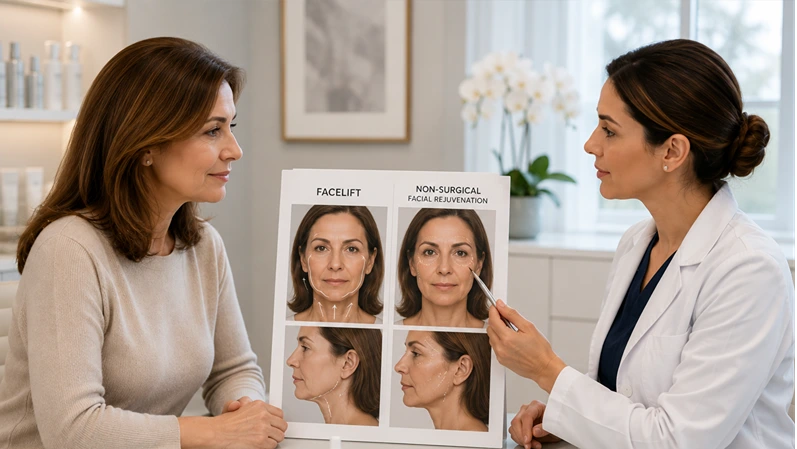
Patients noticing early signs of aging often assume the choice comes down to committing to a full facelift or settling for temporary injectables. The real comparison of facelift vs. non-surgical facial rejuvenation is more nuanced than that, and the right answer depends heavily on the degree of aging present and how long a patient wants results to last.
What Each Approach Actually Corrects
Understanding what each option can and cannot fix is the starting point for making an informed decision.
Surgical Facelifts Address Structural Sagging
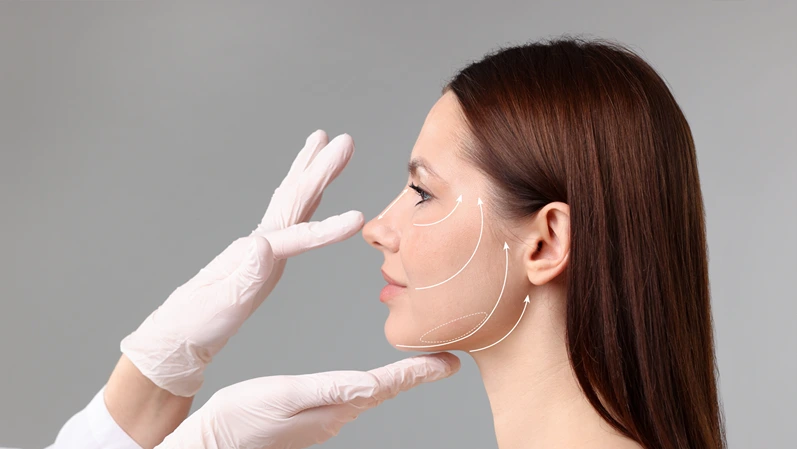
A facelift repositions underlying facial muscle and tissue, removes excess skin, and directly corrects sagging along the jawline, cheeks, and neck. It addresses the physical descent of tissue that occurs with age, something no injectable or surface treatment can fully replicate.
Non-Surgical Options Address Volume and Surface Texture
Injectables, energy-based skin tightening devices, and dermal fillers primarily restore lost volume, smooth fine lines, and stimulate modest collagen production. They work well for early signs of aging but cannot reposition tissue that has meaningfully descended, which is the fundamental limitation patients need to understand upfront.
Comparing Results and How Long They Last
Longevity is often the deciding factor once patients understand the physical difference between the two approaches.
Surgical Results Last Considerably Longer
A well-performed facelift typically produces results that remain visible for ten years or more, though the natural aging process continues throughout that time. Patients researching how long a surgical facelift result typically lasts get a clearer sense of just how much longer surgical results hold compared to non-surgical maintenance.
Non-Surgical Results Require Ongoing Maintenance
Injectables and energy-based treatments typically last anywhere from several months to about two years, depending on the specific treatment, and require repeated sessions to maintain results indefinitely. Over a decade, the cumulative cost of ongoing non-surgical maintenance can approach or exceed the cost of a single surgical procedure.
Recovery Differences Patients Should Weigh Carefully
Downtime is frequently the deciding factor for patients with limited flexibility in their schedule.
Facelift Recovery Requires Real Downtime
Surgical facelift recovery typically involves one to two weeks before returning to work, with residual swelling and bruising visible for several weeks beyond that. Patients need to plan meaningfully around this downtime rather than assuming a quick return to normal activity.
Non-Surgical Options Involve Little to No Downtime
Most injectable treatments allow patients to resume normal activity immediately, with only minor, short-lived swelling or bruising at injection sites. This is the single biggest appeal of the non-surgical route for patients who cannot take extended time away from work or family responsibilities.
Choosing Based on Degree of Aging, Not Just Preference
The physical reality of a patient’s specific aging pattern often narrows the decision more than personal preference alone.
Early Signs Respond Well to Non-Surgical Treatment
Patients in their late thirties to mid-forties with mild volume loss and early fine lines, but without significant skin laxity or jowling, are frequently excellent candidates for non-surgical approaches alone, sometimes for several years before surgery becomes a consideration.
Significant Sagging Generally Requires Surgery
Once meaningful skin laxity, jowling, or neck banding develops, non-surgical treatments can improve texture and volume but cannot meaningfully lift or reposition the sagging tissue itself. Patients in this category who pursue non-surgical treatment alone are often disappointed with results that fall well short of what they were hoping for.
Age Is a Guideline, Not a Strict Rule
While age ranges offer a general reference point, individual aging patterns vary widely enough that age alone should never be the deciding factor.
Genetics Influence the Timeline Significantly
Some patients in their early forties already show the kind of structural sagging that typically prompts a surgical recommendation, while others in their fifties still see meaningful improvement from non-surgical treatment alone. Family history and individual skin characteristics matter more than a specific birthday when it comes to timing either option.
Revisiting the Decision Periodically
Patients who start with non-surgical treatments in their late thirties or early forties often benefit from periodically revisiting the conversation with their surgeon every few years, since the right approach for a specific face can shift meaningfully as aging progresses. Treating the decision as a one-time choice rather than an ongoing conversation is one of the more common planning mistakes patients make.
Comparing the True Cost Over Time
Upfront price tags do not tell the whole story, and patients focused only on the initial quote often miss the bigger financial picture.
Facelift Cost Is Concentrated in One Payment
A facelift involves a single, larger upfront cost covering surgeon fees, facility charges, and anesthesia. While the number can feel significant at once, it represents a complete investment with no ongoing payments required to maintain the initial result.
Non-Surgical Costs Add Up Over Years
Non-surgical treatments carry a lower cost per session, but because results fade and require repeated treatments, the cumulative cost over five to ten years frequently rivals or exceeds the cost of surgery. Patients evaluating long-term value should calculate this cumulative cost rather than comparing only the price of a single session against the surgical quote.
How Skin Quality Affects the Right Choice
Beyond the degree of visible sagging, the underlying quality and elasticity of a patient’s skin play a meaningful role in which approach will actually deliver a satisfying result.
Skin Elasticity Determines Non-Surgical Success
Patients with good skin elasticity tend to respond well to volume restoration and skin-tightening treatments, since the skin itself still has the capacity to conform to underlying changes. Patients with significantly reduced elasticity often find that non-surgical treatments alone cannot achieve the tightening effect they are hoping for.
Sun Damage and Lifestyle Factors
Cumulative sun exposure, smoking history, and genetics all affect how skin ages and how well it responds to either surgical or non-surgical intervention. A thorough consultation should account for these individual factors rather than applying a generic age-based recommendation to every patient.
The Role of Combination Approaches
Many patients ultimately benefit most from combining elements of both approaches rather than choosing one exclusively.
Surgery Plus Maintenance Injectables
Patients who undergo a facelift often continue occasional injectable treatments afterward to maintain volume and address fine lines that surgery alone does not correct, extending the fresh appearance of their surgical result over time.
Comparing Non-Surgical Options to Each Other First
Before deciding between surgery and non-surgical treatment broadly, many patients benefit from understanding how the non-surgical options compare to one another, since injectables target very different concerns and are not interchangeable with each other, let alone with surgery.
Middle-Ground Options Worth Understanding
Beyond the binary framing of surgery versus injectables, several less invasive surgical options occupy a middle ground that many patients never fully explore.
Limited-Incision Surgical Alternatives
Smaller-scope surgical procedures address early to moderate jowling and neck laxity with shorter incisions and a faster recovery than a traditional full facelift, though the correction is more limited in scope. Patients curious whether a limited procedure could delay the need for full surgery should discuss candidacy directly with a board-certified surgeon rather than assuming it is simply a smaller version of the same operation.
Setting Expectations for a Middle-Ground Approach
These limited procedures work best for patients who are past the point where non-surgical treatment alone is effective but are not yet candidates for the more extensive correction a full facelift provides. A clear-eyed conversation about where a patient actually falls on that spectrum prevents both under-treatment and unnecessary surgery.
What a Thorough Consultation Should Cover
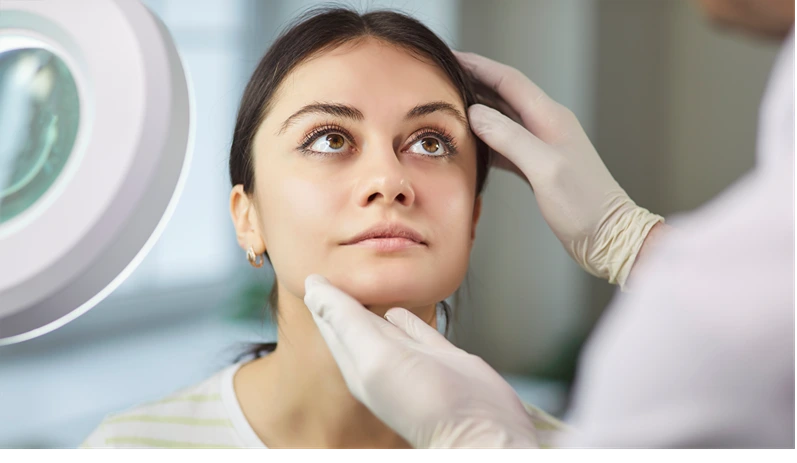
A proper evaluation of facelift vs. non-surgical facial rejuvenation weighs individual anatomy and goals rather than defaulting to whichever treatment a practice happens to promote most heavily.
An Honest Assessment of What Each Option Can Deliver
A trustworthy surgeon will be direct about whether a patient’s specific concerns are realistically addressable with non-surgical treatment or genuinely require surgery, rather than upselling a more expensive option that will not meaningfully change the outcome. Patients evaluating lighter, less invasive alternatives to a full facelift should ask directly whether their specific concerns fall within what that approach can realistically achieve.
Setting a Realistic Timeline Expectation
Patients should leave a consultation with a clear understanding of not just which option is recommended, but how long results from that specific option are expected to last, so they can make an informed decision about long-term value rather than just upfront cost.
How Practices Present This Choice Honestly
The way a practice frames this decision in its marketing materials shapes how prepared patients feel walking into a consultation.
Educational Content Builds Long-Term Trust
Practices that clearly explain the tradeoffs between surgical and non-surgical options, rather than pushing whichever service carries a higher margin, build the kind of trust that leads to repeat business and referrals over time. This approach to marketing high-ticket procedures consistently outperforms generic promotional content in both consultation quality and long-term patient loyalty.
Attracting Patients Ready to Commit
Clear educational content also helps filter out patients who are not yet ready for either option, allowing practices to focus consultation time on prospects genuinely prepared to move forward. Practices focused on generating qualified consultation requests benefit directly from this kind of upfront clarity.
Frequently Asked Questions
Is a facelift better than non-surgical treatments?
Neither option is universally better. A facelift addresses structural sagging that non-surgical treatments cannot correct, while non-surgical options work well for early aging signs without the recovery time surgery requires.
How long do facelift results last compared to non-surgical treatments?
Facelift results typically last ten years or more, while non-surgical treatments generally require repeated sessions every several months to two years to maintain results.
Can non-surgical treatments fix significant sagging?
Not effectively. Once meaningful skin laxity or jowling develops, non-surgical treatments can improve texture and volume but cannot reposition sagging tissue the way surgery can.
Is recovery from non-surgical facial treatments really that much shorter?
Yes. Most injectable treatments involve little to no downtime, while a surgical facelift typically requires one to two weeks before returning to normal activity.
Can I combine a facelift with non-surgical treatments later?
Yes. Many patients undergo a facelift and then continue periodic injectable treatments afterward to maintain volume and address fine lines that surgery alone does not correct.
Making the Choice That Actually Fits Your Face
Deciding between facelift vs. non-surgical facial rejuvenation comes down to an honest look at the degree of aging present, not simply a preference for less downtime or a lower upfront cost. Practices that want to attract patients ready to make this decision with clear eyes can look at how LeadOrigin supports plastic surgery practices in building exactly this kind of educational, trust-first marketing approach.