Patients researching cosmetic procedures often ask about cost and recovery long before they ask the question that matters most for long-term satisfaction: How long will this actually last once the swelling fully resolves? Plastic surgery results vary considerably in longevity depending on the specific procedure, and setting realistic expectations upfront prevents disappointment years down the road.
Why Longevity Varies So Much Between Procedures
Not every procedure ages the same way, and understanding why helps patients set appropriate expectations for their specific surgery.
Structural Changes Last Longer Than Volume Additions
Procedures that reposition or remove tissue, like a facelift or tummy tuck, tend to produce longer-lasting change than procedures that simply add volume, since the underlying structural correction is not subject to the same gradual reabsorption that affects added material like fat grafting or fillers.
The Body Keeps Aging Regardless of Surgery
No procedure stops the natural aging process. A facelift resets the visible signs of aging to an earlier point, but skin continues to age normally afterward, which is why even excellent results eventually show some of the same changes that prompted the original surgery.
Facial Procedure Longevity

Facial procedures vary widely in how long their results typically remain visible.
Facelift Results Typically Last a Decade or More
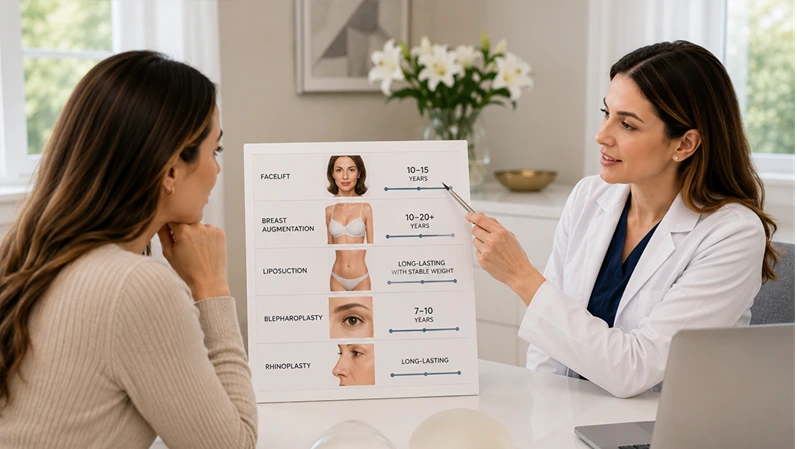
A well-performed facelift generally produces visible improvement for ten years or longer, though this varies by individual skin quality, sun exposure, and lifestyle factors. Patients can review a detailed explanation of how long facelift results typically last to understand the specific factors that influence this timeline.
Eyelid Surgery Offers Some of the Longest-Lasting Results
Blepharoplasty, or eyelid surgery, often produces results that last well over a decade, sometimes indefinitely, since the procedure removes excess skin that does not typically return in the same way volume loss or sagging can recur elsewhere. Detailed information on how long eyelid surgery results tend to last helps set realistic long-term expectations for this specific procedure.
Rhinoplasty and Structural Facial Procedure Longevity
Nasal and other structural facial procedures behave somewhat differently than soft tissue procedures when it comes to long-term stability.
Why Nasal Surgery Results Are Typically Permanent
Rhinoplasty reshapes cartilage and bone, which do not regenerate or shift back to their original position the way soft tissue can. Once the nose has fully healed, typically within a year, results are generally considered permanent barring an injury or significant intentional revision surgery later.
Chin and Jaw Augmentation Follow a Similar Pattern
Implant-based chin and jaw procedures also tend to produce long-lasting, often permanent results, since the underlying implant does not degrade the way filler or fat grafting material does. Patients researching how long chin augmentation results typically last will find this category among the most stable and predictable in terms of longevity.
Body Contouring Longevity Beyond Liposuction
Body procedures carry their own set of variables that affect how long results remain visible.
Breast Augmentation and Implant Lifespan
Breast implants are not designed to last a lifetime, and most patients will need a revision or replacement within ten to twenty years, depending on implant type and how the body responds over time. Recovery from any initial procedure also plays a role in long-term outcomes, and patients can review what breast augmentation recovery typically involves to understand how the healing process affects final, lasting results.
Body Contouring Results Depend Heavily on Weight Stability
Liposuction and body contouring procedures remove fat cells permanently from treated areas, but significant future weight gain can still affect the treated area’s appearance by expanding any remaining fat cells nearby. Maintaining a stable weight after these procedures is the single biggest factor patients control that affects long-term results.
Fat Transfer and Buttock Augmentation Have Their Own Timeline
Procedures using a patient’s own fat, like a Brazilian butt lift, involve a period where a percentage of transferred fat is naturally reabsorbed by the body before the remaining volume stabilizes permanently. Patients researching how long BBL results typically last should understand this initial settling period so they do not mistake normal, expected reabsorption for a failed procedure.
Injectable and Non-Surgical Treatment Longevity
Non-surgical treatments sit at the opposite end of the longevity spectrum compared to most surgical procedures.
Neuromodulators Require the Most Frequent Maintenance
Botox and similar injectables typically last three to four months before requiring another treatment to maintain results, making them the shortest-lived option among common cosmetic treatments. Patients choosing this route should factor ongoing, recurring costs into their long-term budget rather than viewing any single treatment as a lasting solution.
Dermal Fillers Last Longer But Still Require Upkeep
Depending on the specific product and treatment area, dermal fillers typically last six months to two years before the body gradually metabolizes the material, requiring a repeat treatment to maintain the original result.
Factors That Extend or Shorten Results
Certain lifestyle and health factors have a measurable effect on how long any procedure’s results remain visible, regardless of the specific surgery performed.
Sun Exposure and Skin Care Habits
Consistent sun protection and a good skincare routine meaningfully slow the visible aging process after any facial procedure, while unprotected sun exposure accelerates the return of fine lines, texture changes, and pigmentation regardless of how well the original surgery was performed.
Smoking and Overall Health
Smoking significantly impairs healing and accelerates skin aging, which shortens the effective lifespan of most cosmetic procedures. Patients who stop smoking before and after surgery consistently see better, longer-lasting results than those who continue.
Tracking How Results Change Over Time
Patients benefit from having a clear way to monitor how their results evolve in the years following surgery, rather than only noticing changes once they become significant.
Annual Photos Provide an Objective Record
Taking a simple photo in consistent lighting once a year gives patients an objective way to track gradual changes that are easy to miss day to day when looking in a mirror. This record also gives a surgeon useful reference material if a patient later considers a touch-up or revision procedure.
Scheduling Periodic Check-Ins With Your Surgeon
Even years after the initial procedure, an occasional check-in appointment allows a surgeon to assess how results are holding up and flag any early signs that a revision might eventually be worth considering. Patients who maintain this relationship long-term often catch opportunities for simple, minor maintenance before more significant intervention becomes necessary.
Setting Realistic Expectations Before Surgery
A thorough consultation should address longevity honestly rather than leaving patients to assume results are permanent.
Why This Conversation Matters for Patient Satisfaction
Patients who understand upfront that a procedure’s results will gradually evolve over years, rather than remaining frozen in time, report significantly higher long-term satisfaction than those expecting an unchanging outcome indefinitely. This honest framing is a core part of setting expectations that hold up well beyond the initial recovery period.
Planning for Future Touch-Ups or Revisions
Some procedures naturally lead to an eventual touch-up or revision, and discussing this possibility during the initial consultation helps patients plan financially and mentally for that eventuality rather than being caught off guard years later.
Individual Variability Patients Should Expect
Even within the same procedure category, no two patients age at exactly the same rate, which makes generalized timelines a starting reference rather than a guarantee.
Skin Type and Collagen Production Differ by Patient
Genetics play a substantial role in how quickly skin loses elasticity and collagen production slows with age, meaning two patients who undergo the identical procedure at the identical age can see meaningfully different timelines before results begin to visibly shift. A surgeon familiar with a patient’s specific skin type can offer a more tailored estimate than a general published average.
Why Averages Are a Starting Point, Not a Promise
Published longevity figures represent an average across many patients, not a guarantee for any individual case. Patients should treat these numbers as a useful planning reference while understanding that their own results could reasonably last somewhat shorter or considerably longer depending on their specific circumstances.
How Practices Communicate Longevity Honestly
The way a practice discusses longevity in its marketing content directly shapes how prepared patients feel when results naturally begin to evolve over time.
Transparent Content Builds Long-Term Trust
Practices that address longevity honestly in their educational content, rather than implying permanent results, build the kind of long-term trust that leads to repeat business, referrals, and higher patient satisfaction scores. This kind of substantive plastic surgery marketing consistently outperforms vague promotional claims over the long run.
Encouraging Repeat and Referral Business
Patients who feel their surgeon was honest about longevity during the original consultation are far more likely to return for future touch-up procedures or refer friends and family. Practices focused on adding new surgical revenue consistently benefit from this kind of long-term patient relationship built on realistic expectations.
Frequently Asked Questions
Which plastic surgery procedures last the longest?
Procedures that reposition or remove tissue, such as facelifts and eyelid surgery, tend to last the longest, often ten years or more, compared to volume-based treatments like fillers or fat grafting.
Do breast implants need to be replaced eventually?
Yes. Most breast implants require revision or replacement within ten to twenty years, depending on implant type and individual factors, since they are not designed to last a lifetime.
How long do Botox and filler results last?
Botox typically lasts three to four months, while dermal fillers generally last six months to two years depending on the specific product and treatment area.
Can lifestyle habits affect how long plastic surgery results last?
Yes, significantly. Sun exposure, smoking, and weight stability all play a meaningful role in how long surgical and non-surgical results remain visible over time.
Will I need a touch-up procedure eventually?
Many patients eventually choose a touch-up or revision procedure as natural aging continues, though the timeline varies widely by procedure type and individual factors discussed during the original consultation.
Planning for Results That Evolve Over Time
Understanding realistic longevity for a specific procedure, rather than assuming plastic surgery results are permanent, leads to far greater long-term satisfaction and better financial planning. Practices ready to build this kind of honest, trust-first approach into their content can explore how LeadOrigin supports plastic surgery practices with marketing built around realistic, long-term patient expectations.