
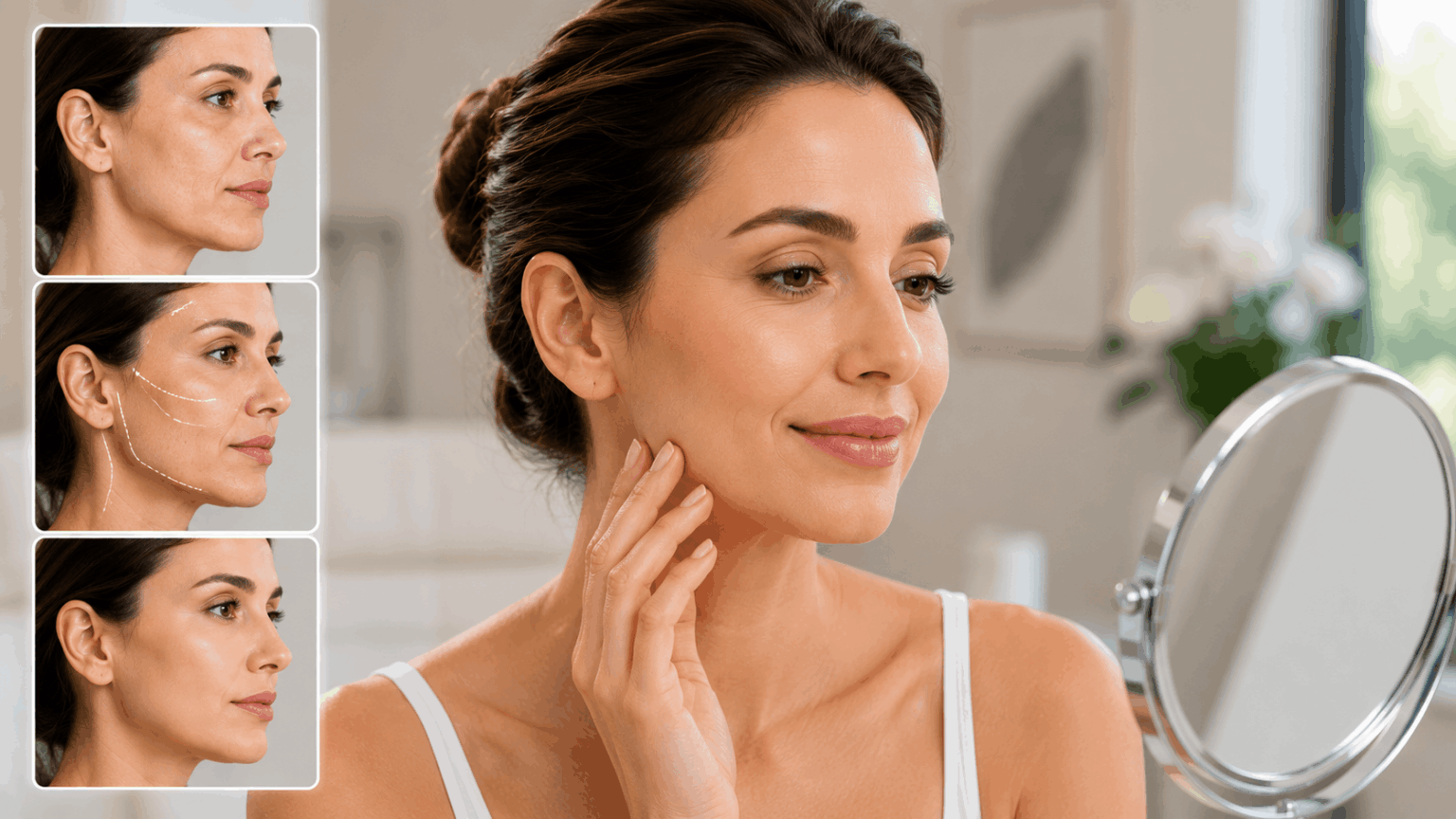
Most patients considering cosmetic surgery share one underlying goal regardless of the specific procedure: they want to look like an improved, refreshed version of themselves, not obviously altered or surgically changed. Natural-looking cosmetic surgery results depend on a combination of surgeon skill, honest patient communication, and realistic expectations set well before the first incision is ever made.
Considering How Results Will Age Over Time
A result that looks natural on the day of the reveal needs to also age naturally over the following years, which requires thinking beyond the immediate outcome.
Overcorrection Often Becomes More Obvious With Age
Results that look acceptable immediately after surgery can appear increasingly unnatural years later as normal aging continues around a more dramatically altered feature, creating a mismatch that becomes more noticeable over time. Surgeons who account for this long-term trajectory, not just the immediate post-operative result, tend to produce outcomes that continue looking natural a decade later.
Building in Room for Natural Aging
A skilled surgeon plans a result that leaves room for the patient’s face or body to continue aging in a proportionate, believable way, rather than creating a fixed point that will look increasingly out of place as the years pass. This kind of long-term thinking is a hallmark of experienced, judgment-driven surgical planning.
Why “Natural” Depends More on Judgment Than Technique
The technical steps of most procedures are well established, which means the meaningful differences between natural and obvious results usually come down to judgment rather than raw surgical skill alone.
Proportion Matters More Than Maximum Change
Surgeons who prioritize proportion relative to a patient’s existing facial structure or body frame consistently produce more natural-looking results than those who chase the maximum possible change a procedure technically allows. A result that looks harmonious with a patient’s existing features reads as natural to friends, family, and colleagues, even when it represents significant improvement over the starting point.
Restraint Is a Skill, Not a Limitation
Experienced surgeons often talk patients out of an overly aggressive change, not because it cannot be done, but because their judgment recognizes it would look less natural on that specific patient. This kind of restraint reflects expertise rather than a limitation in what the surgeon is capable of achieving.
Supporting Surgical Results With Skin Health
Surgery addresses structure and volume, but skin quality plays its own separate role in how natural and refreshed the overall result appears.
Skin Texture Affects Perceived Naturalness
Even a technically excellent surgical result can look less convincing if surrounding skin texture, tone, or sun damage does not match the improved structure underneath. Patients focused on an overall natural appearance often benefit from addressing skin quality alongside any structural procedure, rather than treating them as entirely separate concerns.
Non-Surgical Treatments as a Complement, Not a Replacement
Light non-surgical treatments addressing skin texture and tone can meaningfully enhance how natural a surgical result looks in context, without attempting to replace what surgery specifically addresses. This complementary approach rounds out a result rather than competing with the surgical outcome itself.
Choosing a Surgeon Whose Aesthetic Matches Your Goals
Every surgeon develops a certain aesthetic signature over years of practice, and finding one whose style aligns with a patient’s own goals is a critical, often overlooked step.
Reviewing a Surgeon’s Actual Portfolio Carefully
Patients should review a surgeon’s before-and-after portfolio specifically looking for results that appear natural and proportionate, not simply dramatic, since a portfolio full of aggressive transformations suggests that the surgeon’s aesthetic leans in that direction. A surgeon’s full range of procedures and portfolio gives patients a much clearer sense of an individual practice’s typical results than marketing copy alone.
Confirming Board Certification and Specific Training
Confirming that a surgeon holds board certification and has specific training in the procedure being considered is essential, since technique quality and result consistency both improve considerably with focused expertise. Reviewing a surgeon’s training and professional background helps patients understand the specific credentials behind a practice’s reputation for natural results.
When a Second Opinion Is Worth Seeking
For patients considering a significant or high-stakes procedure, a second consultation can meaningfully improve confidence in the eventual approach chosen.
Comparing Recommendations Across Surgeons
Different surgeons sometimes recommend meaningfully different approaches to the same concern, and hearing more than one perspective helps patients understand the range of reasonable options rather than assuming the first recommendation is the only path forward. This is particularly valuable for patients considering combined or more extensive procedures.
Trusting Consistency Across Opinions
When multiple experienced surgeons independently arrive at similar recommendations, that consistency gives patients added confidence in the proposed approach. Significant disagreement between opinions is a useful signal to ask more detailed questions before proceeding with either recommendation.
Honest Communication During Consultation
The consultation itself plays a direct role in whether a patient ultimately achieves a natural-looking outcome.
Bringing Reference Photos With Realistic Context
Reference photos help communicate a patient’s goals, but they work best when discussed alongside an honest conversation about which elements are realistically achievable given the patient’s own anatomy, rather than assuming any reference photo can be directly replicated regardless of starting point.
A Good Surgeon Sets Expectations, Not Just Goals
A thorough consultation should include the surgeon explaining specifically why a certain approach will look natural on that patient’s frame or face, not just agreeing to whatever the patient initially requests. Patients should feel comfortable asking directly how a surgeon defines and pursues natural-looking results.
Procedure-Specific Considerations for Natural Results
Certain procedures carry their own specific considerations that most directly influence how natural the final result appears.
Facial Procedures Require Attention to Proportion and Movement
Facial procedures like a facelift need to preserve natural facial movement and expression, avoiding the overly tight or frozen appearance sometimes associated with aggressive technique. Reviewing what a well-executed facelift actually involves helps patients understand the difference between a subtle refresh and an obviously altered appearance.
Breast and Body Procedures Depend on Frame-Appropriate Sizing
For breast augmentation, choosing implant size and profile appropriate to a patient’s existing frame, rather than the largest size a patient initially requests, is one of the clearest examples of how restraint produces a more natural, proportionate outcome over the long term.
The Role of Gradual, Staged Approaches
Sometimes achieving a natural result means resisting the urge to make every desired change in a single dramatic procedure.
Staging Changes Over Time
Patients considering significant change sometimes benefit from a staged approach, addressing one area at a time and allowing results to settle before deciding whether further adjustment is genuinely warranted, rather than pursuing maximum change all at once.
Avoiding the Pressure of a Single Dramatic Transformation
Patients who resist the pressure to achieve every desired change in one aggressive procedure often end up with results that age better and look more consistently natural over the following years, compared to a single, maximally aggressive intervention.
Recovery and Healing Also Shape the Final Look
The healing process itself plays a meaningful role in how natural a result ultimately appears, beyond just the surgical technique.
Patience During the Healing Timeline
Swelling and tissue settling can temporarily make results look less refined than they will eventually appear, and patients who judge their results too early, before healing has fully progressed, sometimes request unnecessary revisions based on an incomplete picture of the final outcome.
Following Post-Operative Care Guidance Closely
Closely following a surgeon’s specific post-operative care instructions, including activity restrictions and scar care, supports the kind of smooth healing that allows a naturally proportionate result to fully emerge over the following months.
How Practices Communicate This Standard Effectively
The way a practice presents its approach to natural results in marketing materials directly shapes the expectations patients bring into a consultation.
Showcasing Realistic Results, Not Just Dramatic Ones
Practices that feature a range of before-and-after results, including subtle, proportionate transformations alongside more significant cases, give prospective patients a more accurate sense of what natural-looking cosmetic surgery results actually look like across different patient goals. This honest approach to plastic surgery marketing attracts patients whose expectations already align with what the practice specializes in delivering.
Building Long-Term Trust Through Consistent Messaging
Practices that consistently emphasize natural, proportionate results throughout their website, consultation process, and patient communication build a reputation that attracts the right patients from the very first search result. Focusing on generating qualified consultation requests built around this specific value proposition tends to produce more aligned, satisfied patients over time.
Frequently Asked Questions
What is the biggest factor in achieving natural-looking results?
Surgeon judgment, particularly the ability to recommend proportionate change rather than the maximum technically possible alteration, is generally the single biggest factor in how natural a result ultimately looks.
Can reference photos help achieve a natural result?
Yes, when discussed honestly alongside a surgeon’s assessment of what is realistically achievable given a patient’s own anatomy, rather than assuming any reference can be directly replicated.
Does a bigger or more dramatic change always look less natural?
Not necessarily, but more aggressive changes require more surgical judgment to keep proportionate, and less experienced surgeons are more likely to produce an obviously altered look when pursuing maximum change.
How long does it take for results to look fully natural after healing?
Most procedures require several weeks to a few months for swelling to resolve and tissue to settle into its final, natural-looking position, with facial procedures often taking longer to fully mature than body procedures.
Should I choose a surgeon based on their most dramatic before-and-after photos?
No. Reviewing a surgeon’s full portfolio for consistently natural, proportionate results across many patients is a better indicator of their typical approach than a handful of the most dramatic cases they choose to showcase.
Achieving a Result That Looks Like You, Only Better
Natural-looking cosmetic surgery results come down to choosing the right surgeon, communicating honestly during consultation, and resisting the pull toward maximum change over proportionate improvement. Practices ready to attract patients who share this same goal can explore how LeadOrigin supports plastic surgery practices with marketing built around exactly this kind of honest, results-focused approach.