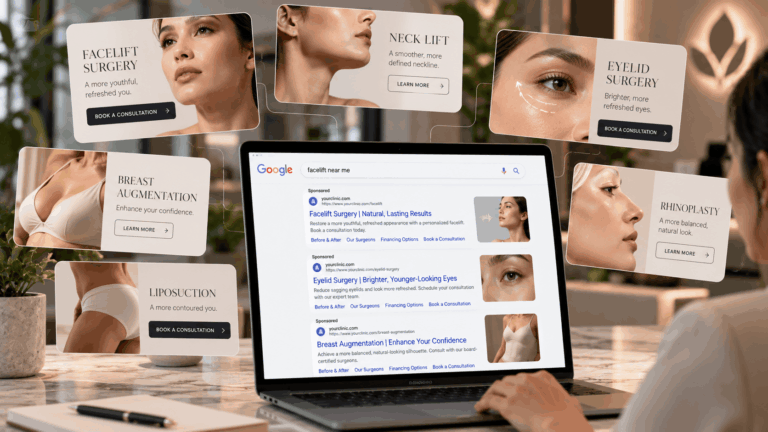

Most cosmetic practices do not have a traffic problem. They have a consultation problem: plenty of clicks, a full inbox of price shoppers, and a surgical calendar with gaps. Paid ads for cosmetic surgery only work when every part of the system, from keywords to landing pages to the front desk, is built around booking a qualified consult rather than generating a visit.
Why Cosmetic Surgery Campaigns Underperform
Before adjusting bids or rewriting headlines, it helps to understand where the money usually goes. In most underperforming accounts, the waste is structural rather than tactical.
Broad Targeting Buys Curiosity, Not Intent
Campaigns built around general terms like cosmetic surgery, plastic surgeon, or before-and-after photos attract researchers who are years away from a decision, students writing papers, and patients shopping in a different price tier entirely. The click-through rate can look healthy while the consultation rate stays flat.
Intent lives in specificity. Someone searching for a named procedure plus a city, a technique, a recovery question, or a cost range is materially closer to booking than someone searching a category term. Structuring campaigns around that specificity raises cost per click and lowers cost per consult at the same time, which is the trade every practice should want.
The Offer Is Usually the Problem
A free consultation is not an offer. Every competitor within 30 miles says the same thing, and for surgical procedures it can even signal desperation. Stronger offers reduce the perceived risk of the next step: a virtual candidacy assessment, a personalized cost and financing breakdown, a recovery timeline for a specific procedure, or a same-week consult slot with a named surgeon.
The offer sets the tone for who responds. Vague offers attract vague interest. Specific, useful offers attract patients ready to have a real conversation.
Ad Policy Restrictions Are Treated as an Afterthought
Both Google and Meta apply heightened scrutiny to health and appearance-related advertising. Ads that imply personal attributes, use dramatic transformation imagery, or make outcome guarantees are disapproved or quietly throttled. Accounts that repeatedly trip these rules accumulate delivery problems that no bid adjustment can fix. Building compliant creative from the start is cheaper than rebuilding an account with a damaged history.
Structuring Search Campaigns Around Procedure Intent
Search advertising is where near-term surgical demand actually lives. The structure determines whether you capture it profitably.
Separate Campaigns by Procedure and Margin
Rhinoplasty, breast augmentation, tummy tuck, and injectables have distinct case values, patient profiles, and competitive dynamics. Grouping them into a single campaign lets the cheapest, easiest conversions consume the budget while the high-value procedures starve.
One campaign per major procedure gives you control over budget, bidding, and messaging. It also makes performance legible. When cost per consult for one procedure doubles, you can see it and respond instead of watching a blended average slowly drift. Practices that run well-structured paid search advertising typically find that two or three procedures generate the majority of surgical revenue, which is impossible to see in a consolidated account.
Negative Keywords Protect the Budget
Cosmetic surgery terms overlap heavily with searches that will never convert. Job seekers, insurance questions, celebrity news, medical training programs, cheap or free options, and out-of-market locations all quietly pull on the budget. A negative keyword list built in the first month and reviewed against the search terms report every two weeks routinely recovers 15 to 30 percent of wasted spend in accounts that have never had one.
Geographic negatives deserve particular attention. Cosmetic patients do travel for surgery, but a practice paying premium prices to appear in markets it has no referral presence in is usually funding awareness for competitors. Start tight around the actual patient catchment area, prove the economics, then expand deliberately.
Make the Phone the Primary Conversion
Cosmetic patients frequently prefer to call. Call extensions, call-only campaigns during business hours, and dedicated call tracking numbers per campaign capture that behavior and, more importantly, make it measurable. Recording and reviewing those calls also reveals whether the practice is losing bookings at the front desk, which is a far more common problem than most owners expect.
Using Paid Social to Build Demand
Search captures existing demand. Social creates it, which matters for procedures patients have not yet decided to research.
Creative Within Policy Limits
Transformation imagery draws attention and also draws disapprovals. The safer and often better-performing alternative is surgeon-led video: a two-minute explanation of who is a good candidate for a procedure, what recovery realistically looks like, or how a technique differs from the alternatives. This content builds authority, passes review, and pre-qualifies viewers before they ever click.
Consistency matters more than polish. A practice publishing weekly, credible video content through a structured paid social program builds a warm audience that converts at a fraction of cold acquisition costs.
Retargeting Is Where the Return Lives
Someone who read your rhinoplasty page for four minutes and left is worth substantially more than a cold prospect. Segment retargeting audiences by the pages they viewed and serve messaging matched to that procedure: patient stories, financing information, a surgeon Q and A, an invitation to book.
Because cosmetic decisions take months, retargeting windows should be measured in months, not days. An 180-day window with rotating creative keeps the practice present through the entire consideration period without exhausting the audience.
Landing Pages That Convert Consultation Traffic
Ad quality rarely fails alone. When paid ads for cosmetic surgery underdeliver, the landing page is usually the reason.
One Procedure, One Page, One Action
Sending rhinoplasty traffic to a general procedures page forces the visitor to navigate, and a meaningful share of them will not. Each campaign needs a dedicated page covering that procedure: candidacy, technique, recovery, cost range, gallery, surgeon credentials, and a single clear booking action repeated throughout.
Remove competing calls to action. A page asking a visitor to book a consult, download a guide, call, chat, and follow on social media converts worse than a page asking for one thing.
Speed, Forms, and Mobile Reality
The majority of this traffic arrives on a phone, often at night. Pages that take more than three seconds to load lose a substantial share of visitors before anything renders. Forms asking for eight fields lose more. Ask for name, phone, email, and procedure of interest, then collect the rest during the booking call.
Adding online scheduling directly to the page removes the largest remaining friction point. Patients who can select a consultation time themselves book at meaningfully higher rates than those asked to wait for a callback, and the practice absorbs fewer no-shows. Pairing that with conversion-focused web design across the rest of the site keeps the experience consistent when patients research further before committing.
Budget, Bidding, and the Real Cost of a Consult

Work Backward From Case Value
Start with average revenue per surgical case, the percentage of consults that convert to surgery, and the percentage of leads that show up for a consult. Those three numbers tell you what you can afford to pay for a lead. A practice with a 25,000-dollar average case, a 40 percent consult-to-surgery rate, and a 60 percent show rate can profitably pay far more per lead than most owners assume, and pulling budget from a campaign that looks expensive on cost per lead often destroys the most profitable channel in the account.
Give Campaigns Room to Learn
Automated bidding requires conversion volume before it can perform. Changing budgets, bids, and creative weekly resets the learning process, repeatedly producing an account that never stabilizes. Set a structure, feed it accurate conversion data including offline surgical outcomes where possible, and evaluate on a 30- to 60-day cycle rather than a daily one.
Measure Consults and Cases, Not Form Fills
Platform conversion counts are a proxy, not a result. A campaign reporting 40 conversions may have produced eight qualified consultations and 32 price inquiries from outside your service area. Until the practice management system and the ad platform share data, every optimization decision is being made on incomplete information.
The fix is straightforward and repeatedly underused: pass consultation attendance and surgical bookings back into the ad platforms as offline conversions. Once the algorithm knows which leads became cases, it optimizes toward patients who look like buyers rather than patients who look like form-fillers. Practices that make this connection often see cost per surgical case drop by a third within a quarter without increasing spend at all.
Close the Loop With Follow-Up
Roughly half of cosmetic inquiries do not book on first contact. Without a follow-up sequence, that half is simply lost spend. A short email and SMS nurture sequence delivering recovery information, financing options, and patient stories recovers a meaningful share of them at almost no incremental media cost.
Common Questions About Paid Ads for Cosmetic Surgery
What is a realistic cost per consultation?
In most U.S. metros, the cost per booked cosmetic consultation ranges from roughly $ 150 to $ 600, depending on the procedure, competition, and market size. Surgical procedures sit at the higher end. Judge the figure against case value rather than against other industries.
How much budget does a practice need to start?
Meaningful search campaigns for a single competitive procedure generally require at least $ 3,000 to $ 5,000 per month to gather enough data for optimization. Spreading a smaller budget across many procedures produces data too thin to act on.
Should the practice run Google and Meta simultaneously?
Ideally yes, but sequence matters. Establish search first to capture existing demand and validate that intake converts, then add social to build demand and retarget. Launching both cold splits attention and budget before either has proven out.
How long before results appear?
Search campaigns often produce consultations within the first two to four weeks, though cost per acquisition typically improves substantially between months two and four as data accumulates. Social campaigns take longer because they build demand rather than capture it.
Why do leads come in but never book?
Almost always intake, offer, or targeting. Check response time first, since inquiries contacted within five minutes book at far higher rates. Then review whether the ad promised something the landing page and phone conversation actually deliver.
Turning Ad Spend Into Booked Consultations
Profitable cosmetic surgery advertising is a system, not a campaign: intent-matched targeting, compliant creative that builds authority, dedicated landing pages, and an intake process that responds fast. LeadOrigin has built that system for practices across Texas and nationwide, tying media spend directly to consultations and surgical revenue rather than clicks. If your ad budget is driving traffic rather than cases, start a conversation with LeadOrigin about where the breakdown is occurring. with the LeadOrigin team about where your pipeline is leaking and what to fix first.