

A homeowner searching for a clogged drain or leaking pipe usually wants help now, not a long list of everything a plumber does. So, can they quickly find the exact plumbing services they need on a company’s website?
Strong plumbing service pages help a local plumber show up for specific searches, explain the service clearly, and make it easy for customers to get in touch. They also support plumbing website SEO and plumbing lead generation, giving each important service a better chance to bring in local business.
Why Plumbing Service Pages Matter for Local Lead Generation
Dedicated pages give each plumbing service room to target the people actually searching for it. Instead of sending everyone to one general services page, a plumbing company can match individual pages to specific customer needs.
Capture High-Intent Local Plumbing Searches
Someone searching for “water heater repair near me” has a much clearer need than someone simply searching for “plumbing.” A dedicated water heater repair page gives the business a relevant page to show that potential customer.
The same applies to drain cleaning, sewer repair, leak detection, repiping, and other local plumbing services. Specific pages help connect specific searches with the right solution.
Improve the Relevance of Your Plumbing Website
Dedicated plumbing service pages allow the company to explain each service properly, including common problems, solutions, processes, and FAQs.
That gives both search engines and visitors clearer information about what the business offers. It also creates a cleaner, easier-to-navigate website.
Generate More Qualified Plumbing Leads
People landing on a page that directly matches their problem are already showing clear intent. If the page answers their questions and gives them an easy way to call or request service, there is less work needed to move them toward contacting the company.
How to Structure Plumbing Service Pages for Better Local SEO
A good service page should answer the customer’s basic questions without making them hunt for information. It should clearly explain what the service is, when someone might need it, and what to do next.
Use a Clear, Service-Focused H1
The H1 should tell visitors exactly what the page covers. Simple headings such as “Water Heater Repair” or “Residential Drain Cleaning Services” are usually clearer than clever marketing phrases.
Relevant location information can also be included when it fits naturally. The goal is to immediately confirm that the visitor landed on the right page.
Clearly Explain the Plumbing Service
Start by explaining what the service includes and what problems it addresses. Keep the language simple enough for homeowners who may not understand plumbing terminology.
For residential plumbing services, this could include the types of fixtures or systems serviced, common repair needs, and when professional help may be necessary.
Explain Common Signs Customers Need the Service
Customers do not always know exactly what is wrong. They usually know what they can see, hear, or smell.
A drain cleaning page, for example, could mention signs such as:
- Slow drains
- Frequent clogs
- Gurgling sounds
- Unpleasant drain odors
- Water backing up
This helps visitors connect their problem with the service being offered.
Describe Your Plumbing Service Process
Explain how the company inspects the problem, recommends a solution, provides pricing information, and completes the work. Keep it straightforward rather than turning it into a technical manual.
Explain Why Customers Should Choose Your Plumbing Service Company
Give visitors concrete reasons to choose the business. That may include licensing, experience, warranties, emergency availability, financing, service guarantees, or specific areas of expertise.
Avoid vague claims that could apply to any plumbing service company. Specific proof is much more useful.
Local SEO Elements Every Plumbing Service Page Should Include
Good content is important, but the page also needs the right SEO structure. These elements can help professional plumbing services compete for relevant local searches.
Optimize Plumbing Service Pages Around Local Search Intent
Each page should focus on what local customers actually search for. That may combine a service with a city, neighborhood, or broader service area when appropriate.
Location terms should fit naturally into useful content. Repeating the city name in every paragraph will not make the page better.
Optimize the Page Title and Meta Description
The title should clearly identify the service and, when relevant, the location. The meta description can briefly explain the service and give searchers a reason to click.
Both should reflect what visitors will actually find on the page. Misleading titles may generate clicks but create a poor experience afterward.
Use Internal Links Between Relevant Plumbing Services
Plumbing problems often overlap. A sewer repair page might naturally link to drain cleaning or sewer camera inspection.
These links help visitors explore related services. They also help search engines understand the structure and relationships between pages.
Link Plumbing Service Pages to Relevant Service-Area Pages
Service pages explain what the company does. Service-area pages explain where it does it.
Connecting the two helps customers find information relevant to their location while creating a clearer website structure.
Add Relevant Local Business and Service Schema
Structured data can give search engines additional information about the company and its services. The markup should accurately represent information already available on the website.
Schema is not a replacement for useful content or strong local SEO. It is another technical signal that can support a properly optimized site.
How to Turn Plumbing Service Pages Into Lead-Generation Pages
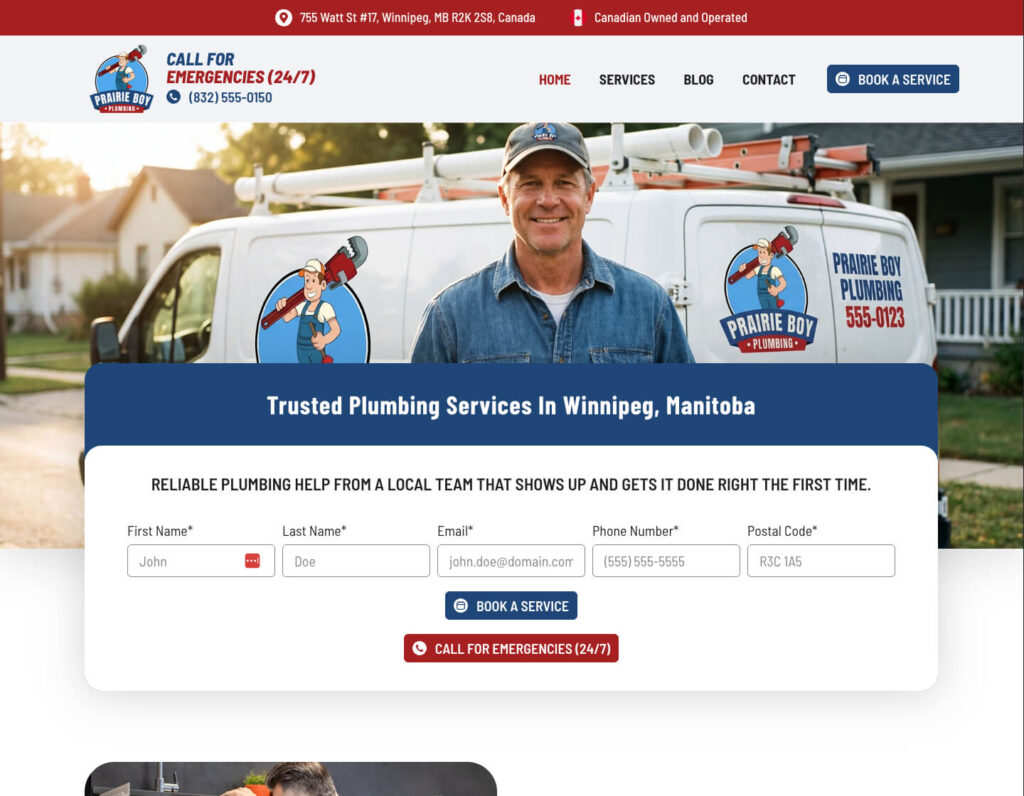
Traffic alone does not pay the bills. Plumbing service pages should make the next step obvious for someone who needs help.
Place Clear Calls to Action Throughout the Page
Customers should not have to reach the bottom before finding out how to contact the plumber. Calls to action can appear naturally after important sections throughout longer pages.
Keep them direct. “Schedule Service,” “Request an Estimate,” or “Call for Plumbing Repair” clearly tells visitors what happens next.
Make Phone Numbers Easy to Find
Many plumbing searches happen when someone needs an answer quickly. A visible, clickable phone number makes contacting the company much easier, especially on mobile.
For emergency services, phone visibility becomes even more important. Customers should not have to search through menus to find it.
Keep Plumbing Lead Forms Simple
Long forms create unnecessary work for someone who simply wants help with a plumbing problem. Ask only for information needed to start the conversation.
A name, contact information, service needed, and short description of the issue may be enough initially. More details can be collected later.
Add Trust Signals Near Conversion Points
Customers may hesitate before calling a company they have never used. Reviews, licenses, guarantees, certifications, years of experience, and other relevant proof can make that decision easier.
Place important trust signals near forms and CTAs. They are most useful when visitors are deciding whether to take action.
Use Real Plumbing Project Photos
Real project photos show customers the company’s actual work. They can also make the website feel much more credible than pages filled entirely with generic stock photos.
Photos can show technicians, equipment, completed installations, or before-and-after results. Just make sure the company has permission to use them.
Content Elements That Can Make Plumbing Service Pages More Helpful
A strong page should do more than describe the service. It should answer the questions someone is likely to have before booking.
Common Plumbing Problems and Solutions
Explain the common issues connected to the service and how they may be addressed. A water heater page, for example, could cover inconsistent temperatures, leaks, unusual noises, and lack of hot water. This makes the page useful even when the customer does not know the exact cause of the problem.
Repair vs. Replacement Guidance
Some customers will wonder if repairing the problem is still worth it. Give them practical factors to consider rather than pushing one option.
Age, repair history, condition, efficiency, and expected costs may all affect the decision. The final recommendation should depend on the actual inspection.
Plumbing Service Cost Factors
Customers often want pricing information, even when an exact price cannot be given online. Explain what typically affects the cost.
This could include the extent of damage, required parts, accessibility, labor, equipment, and the type of plumbing system. Clear explanations help customers know what to expect.
Plumbing Service Pages vs. Location Pages: What Is the Difference?
These pages serve different search intents, so a plumbing website may need both.
| Page Type | Main Purpose | Example |
| Plumbing service page | Explains a specific service | Water Heater Repair |
| Location page | Targets a geographic service area | Plumber in Austin |
| Service + location page | Targets a specific service in a specific market | Water Heater Repair in Austin |
Plumbing Service Pages
A service page focuses on one specific offering. It gives the business enough space to explain that service thoroughly and target relevant searches. These pages form the core of a plumbing website’s service content.
Plumbing Location Pages
Location pages focus on the areas the business serves. They can discuss availability, locally relevant information, services offered in that market, and how customers can contact the company.
Each page should contain genuinely useful local information rather than swapping city names into identical copy.
When Service + Location Pages Make Sense
Separate service-and-location pages may make sense when there is meaningful search demand and the company genuinely provides that service in the area.
They should still offer unique value. Creating hundreds of nearly identical pages simply to target keyword combinations can lead to thin, repetitive content.

Common Plumbing Service Page Mistakes That Can Hurt Local Leads
Even a well-built website can lose potential customers if its service pages make basic mistakes. Common problems include:
- Putting every plumbing service on one page: Important services have little room to rank or answer specific questions.
- Creating thin or nearly identical service pages: Changing a few keywords does not make a page genuinely useful.
- Keyword stuffing: Repeating “local plumber” or similar terms unnaturally makes content harder to read.
- Missing local relevance: Customers should know where the company actually provides service.
- Weak or missing calls to action: Visitors need a clear next step.
- Ignoring mobile users: Forms, phone numbers, buttons, and content need to work properly on smaller screens.
How to Build a Plumbing Service Page Content Strategy
A basic content plan keeps each page tied to a real service and search intent.
Step 1: Identify Your Core Plumbing Services
Start with the services that actually drive the business. These might include drain cleaning, leak repair, water heater services, sewer repair, repiping, fixture installation, and emergency plumbing. Prioritize meaningful services customers actively search for.
Step 2: Research Service-Specific Keywords
Look at how customers describe each problem and service. Search behavior may differ from the terminology plumbers use internally. Keyword research can uncover those differences. It can also reveal related questions worth answering on the page.
Step 3: Map One Primary Search Intent to Each Page
Each page should have a clear purpose. Avoid creating several pages that essentially compete for the same keyword and customer. A simple keyword map can prevent unnecessary overlap. It also makes future content planning easier.
Step 4: Prioritize High-Value Plumbing Services
Start with services that matter most to the company. Consider demand, profitability, competition, seasonality, and lead quality. This keeps SEO work connected to actual business goals. Rankings alone should not determine which pages receive the most attention.
Step 5: Build Supporting Internal Links
Connect related services, educational articles, and location pages. These links give visitors useful paths through the website instead of leaving each page isolated.
Step 6: Track Leads From Each Plumbing Service Page
The company should know which pages generate calls, forms, and booked jobs. Without tracking, it is difficult to tell which pages are actually contributing to plumbing lead generation. Use that data to identify pages that need stronger CTAs, better content, or additional traffic.
How to Measure Whether Your Plumbing Service Pages Are Generating Leads
Do not judge a page only by traffic. A page with fewer visitors but several qualified service requests may be much more valuable than one attracting lots of visitors who never contact the company.
Useful metrics include organic traffic, keyword visibility, phone calls, form submissions, booked appointments, conversion rate, and qualified leads. Tracking performance by service also shows which residential plumbing services are producing actual business.
Build Plumbing Service Pages That Turn Local Searches Into Leads
Strong plumbing service pages connect what people are searching for with the local plumbing services a company provides. They explain the problem, show how the company can help, answer common questions, and give visitors a clear way to request service.
For plumbing businesses that want to turn more local searches into actual customers, LeadOrigin can help build a strategy around SEO, content, and lead generation instead of treating each channel separately. Talk to LeadOrigin about building a stronger digital marketing strategy for your plumbing company.
Frequently Asked Questions
Do Plumbers Need a Separate Page for Every Service?
Not necessarily every small service, but major plumbing services should generally have dedicated pages when they represent distinct customer needs and search intent. Separate pages give companies more room to explain each service and target relevant searches.
How Do Plumbing Service Pages Help Generate Local Leads?
Plumbing service pages target people searching for specific plumbing solutions in the areas a company serves. Helpful content, local optimization, trust signals, and clear CTAs can then turn those visitors into calls and service requests.
How Long Should Plumbing Service Pages Be?
There is no required word count. A page should be long enough to explain the service, common problems, process, relevant costs, FAQs, and next steps without adding filler simply to increase length.
What Is the Difference Between a Plumbing Service Page and a Service-Area Page?
A plumbing service page focuses on what the company provides, such as drain cleaning or water heater repair. A service-area page focuses on where the plumbing service company operates, such as a specific city or community.
How Can Plumbers Improve Conversions From Their Service Pages?
Plumbers can improve conversions with visible phone numbers, simple forms, strong calls to action, reviews, real project photos, clear service information, and a mobile-friendly experience. The easier it is to understand the service and contact the company, the easier it is for interested visitors to take the next step.