

Every business owner can point to the obvious, recurring costs of running a facility: rent, payroll, utilities, insurance. Far fewer can point to what poor workplace cleaning is actually costing them, because those costs rarely appear as a single line item. They show up scattered across sick days, equipment repairs, employee turnover, and lost deals, which makes the true price of a neglected facility easy to underestimate.
Why the Real Cost Stays Hidden
Facility neglect rarely causes a dramatic, single event that forces a business to confront the problem. Instead, it accumulates in small increments that are easy to write off individually but add up to a significant drag on the bottom line over a full year.
The Accounting Blind Spot
Most accounting systems have no category for lost productivity due to a dusty HVAC system or a carpet that has not been professionally extracted in two years. Because there is no line item, leadership teams rarely connect the dots between a shrinking cleaning budget and rising costs elsewhere in the business.
A Slow Build, Not a Sudden Spike
A neglected facility tends to worsen gradually. A skipped deep clean here, a delayed carpet extraction there, and within a year a building can look and feel noticeably worse without anyone flagging it as a budget priority. By the time the decline becomes visible to visitors or new hires, the damage to reputation and morale has already been accumulating for months.
The Health-Related Costs of a Neglected Facility
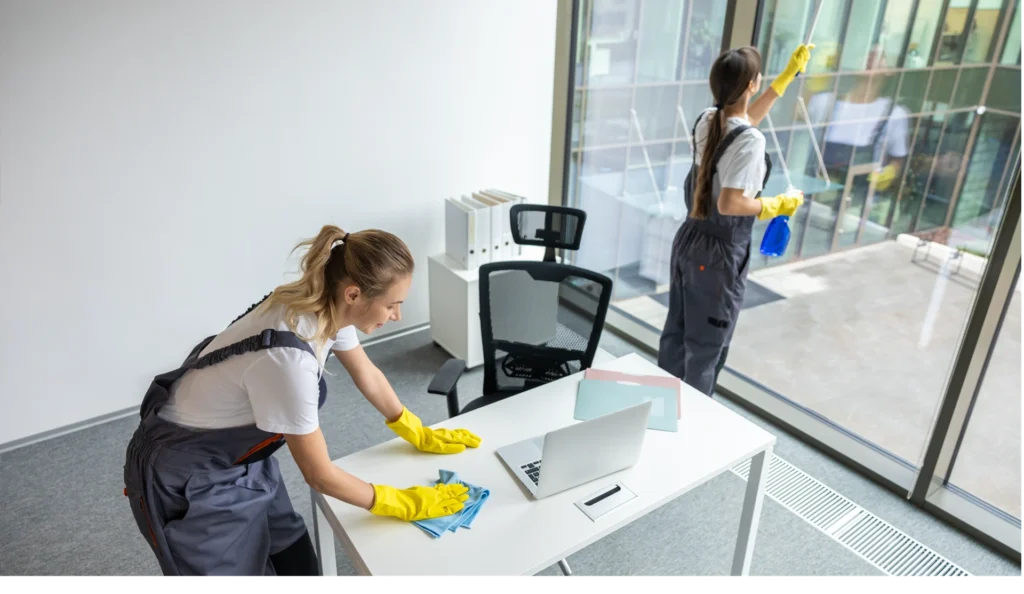
Cleanliness and employee health are directly connected, and the financial impact of ignoring that connection is one of the largest hidden costs on this list.
Increased Sick Days and Lost Output
Shared surfaces like doorknobs, keyboards, and breakroom equipment become reservoirs for bacteria and viruses when cleaning schedules lapse. That leads to more illness circulating through a team, more unplanned absences, and more scrambling to cover critical tasks when key staff are out. The cost of covering that lost output, whether through overtime or delayed projects, is rarely tracked back to its actual source.
Indoor Air Quality and Chronic Fatigue
Buildings that go too long between deep cleanings accumulate dust, allergens, and mold spores in carpets, vents, and upholstery. Employees working in that environment report more headaches, allergy flare-ups, and general fatigue, all of which reduce the quality and speed of their work even on days they technically show up.
Financial Costs Tied to Equipment and Property Damage
A facility that is not properly maintained wears out faster than one that receives consistent professional care, and replacing worn assets is far more expensive than maintaining them.
Flooring, Carpet, and Surface Deterioration
Dirt and grit act like sandpaper on flooring surfaces every time someone walks across them. Without regular cleaning, that abrasive effect shortens the life of carpet, tile, and hardwood significantly, turning what should be a decade-long asset into one that needs costly replacement in half that time.
Equipment Downtime From Dust and Debris
Dust buildup inside computers, printers, and HVAC systems causes overheating, jams, and premature failure. Neglected workstations and server rooms directly increase the frequency of IT support tickets and equipment replacement costs, both of which eat into budgets that were meant for growth initiatives instead.
Operational Disruptions That Ripple Through the Business
Beyond health and equipment costs, a neglected facility introduces friction into daily operations that rarely gets traced back to its actual cause.
Meeting and Client-Facing Space Disruptions
Conference rooms and client-facing areas that are not consistently maintained often need a last-minute scramble before an important meeting, pulling an employee away from their actual job to tidy a space that should already be presentable. That reactive scrambling is a quiet but recurring tax on staff time.
Inconsistent Standards Across Departments
Without a structured facility plan, cleanliness standards tend to vary widely from one part of a building to another. One department’s break area might be spotless while another’s is neglected, creating uneven employee experiences that breed resentment and make facility complaints harder to manage consistently.
The Compounding Effect on Company Culture
Small inconsistencies in how a facility is maintained send mixed signals about what a company actually values day to day, regardless of what its mission statement says. Over time, that gap between stated values and lived experience erodes trust in leadership more than most managers realize.
The Reputational Cost Businesses Rarely Calculate
A facility’s appearance is a direct signal to clients, partners, and job candidates about how seriously a company takes its own standards.
Client Perception and Lost Deals
Prospective clients touring a facility form judgments quickly, and a visibly neglected space raises doubts that are hard to undo with a good sales pitch afterward. Businesses that invest in strong local seo to attract new clients can undercut that same investment if the physical location fails to match the polished impression created online.
Difficulty Attracting and Retaining Talent
Job candidates notice the state of a facility during interviews and onboarding, and a neglected space sends a message about company culture before a single conversation happens. Retaining existing staff becomes harder too, since a consistently unkempt environment is cited in workplace satisfaction surveys as a quiet but real driver of dissatisfaction.
Insurance and Liability Exposure
Facility neglect can also create liability exposure that most business owners do not connect to their cleaning budget until a claim actually happens.
Slip, Trip, and Fall Risk
Spills left unaddressed, cluttered walkways, and worn flooring are common causes of workplace injury claims. Beyond the direct cost of an incident, a pattern of avoidable injuries can raise insurance premiums over time, adding a recurring cost that a consistent cleaning schedule would have prevented.
Compliance Gaps in Regulated Industries
Facilities that serve food, healthcare, or other regulated environments face inspection standards that a neglected cleaning routine can quietly fail to meet. A citation or failed inspection carries both a direct financial penalty and a reputational cost that takes far longer to repair than the inspection itself.
Calculating What Neglect Actually Costs
Business owners who add up sick day coverage, early equipment replacement, flooring restoration, and turnover costs are often surprised at how quickly those numbers exceed what a proper cleaning contract would have cost across the same period.
Building a Realistic Budget Comparison
A useful exercise is comparing twelve months of a reduced or informal cleaning arrangement against twelve months of a structured, professional contract, factoring in every downstream cost above. In nearly every case, the properly maintained facility comes out ahead once the hidden costs are accounted for honestly.
Making the Case to Leadership
Facility managers making the case for a stronger cleaning budget often find more traction when they present these hidden costs in dollar terms rather than describing cleanliness in general terms. A content writing partner can help translate that internal case into client-facing materials too, showing prospects that a company holds itself to the same standard it markets externally.
Preventing the Hidden Costs Before They Compound

The good news is that these costs are almost entirely preventable with the right facility partner and a consistent schedule.
Choosing a Provider With Documented Standards
A provider that follows a written, documented cleaning plan, with clear accountability for high-touch surfaces and deep cleaning intervals, closes most of the gaps that allow these hidden costs to build in the first place.
Pairing Facility Standards With Business Visibility
Companies that invest in a strong website and a clear online presence should hold their physical space to the same standard, since the two work together to build the trust that turns a prospect into a client and a client into a repeat customer.
Building a Facility Standard That Holds Up Over Time
Reversing the hidden costs of neglect is less about a single deep clean and more about establishing a standard that does not slip once the initial improvement is visible.
Written Standards Beat Verbal Agreements
A written scope of work, with specific frequencies for each task and area, gives both the business and the cleaning provider a shared reference point. That clarity prevents the slow slide back into inconsistent service that often happens when expectations are only ever discussed verbally.
Regular Walkthroughs and Feedback Loops
Facility managers who schedule brief, regular walkthroughs with their cleaning provider catch small issues before they become larger problems. That ongoing feedback loop is often the difference between a facility that stays consistently clean and one that slowly drifts back toward the conditions that created the hidden costs in the first place.
Treating Facility Standards as a Growth Metric
Companies that are actively working on their onsite seo and digital presence already understand the value of consistent, measurable standards. Applying that same discipline to the physical facility protects the brand experience a company is working so hard to build online.
Frequently Asked Questions
What are the most common hidden costs of poor workplace cleaning?
The most common hidden costs include increased employee sick days, premature equipment and flooring replacement, higher turnover, and lost deals from a poor first impression on clients or candidates.
How can a business measure the cost of neglecting cleaning?
Compare absenteeism rates, equipment repair frequency, and flooring or carpet replacement cycles before and after implementing a consistent professional cleaning schedule to see the financial difference clearly.
Does poor cleaning really affect employee retention?
Yes. Workplace satisfaction surveys consistently show that a neglected physical environment is one of the quieter but real contributors to employee dissatisfaction and eventual turnover.
Is it cheaper to clean in-house or hire a commercial cleaning company?
For most mid-size and larger facilities, a professional commercial cleaning company is more cost-effective once hidden costs like turnover, equipment repair, and absenteeism are factored into the comparison.
How quickly can a business reverse the effects of years of neglect?
Visible improvements in air quality and appearance often show up within the first few weeks of a consistent professional schedule, while the full financial benefits, like reduced turnover and fewer equipment repairs, typically become clear over six to twelve months.
Add Up the Real Cost Before You Cut the Cleaning Budget
Poor workplace cleaning rarely announces itself with a single expensive failure. It builds quietly across sick days, equipment repairs, employee turnover, and missed deals until the total cost far exceeds what a professional cleaning contract would have required. Business owners who take the time to add up these hidden numbers usually find the case for change more convincing than any general appeal to appearances. Businesses ready to close that gap and pair it with a stronger growth strategy can connect with LeadOrigin to talk through what a full-service partnership looks like.